Sunday, 5th April 2026

Khabor Wala Desk
Published: 18th March 2026, 7:51 AM
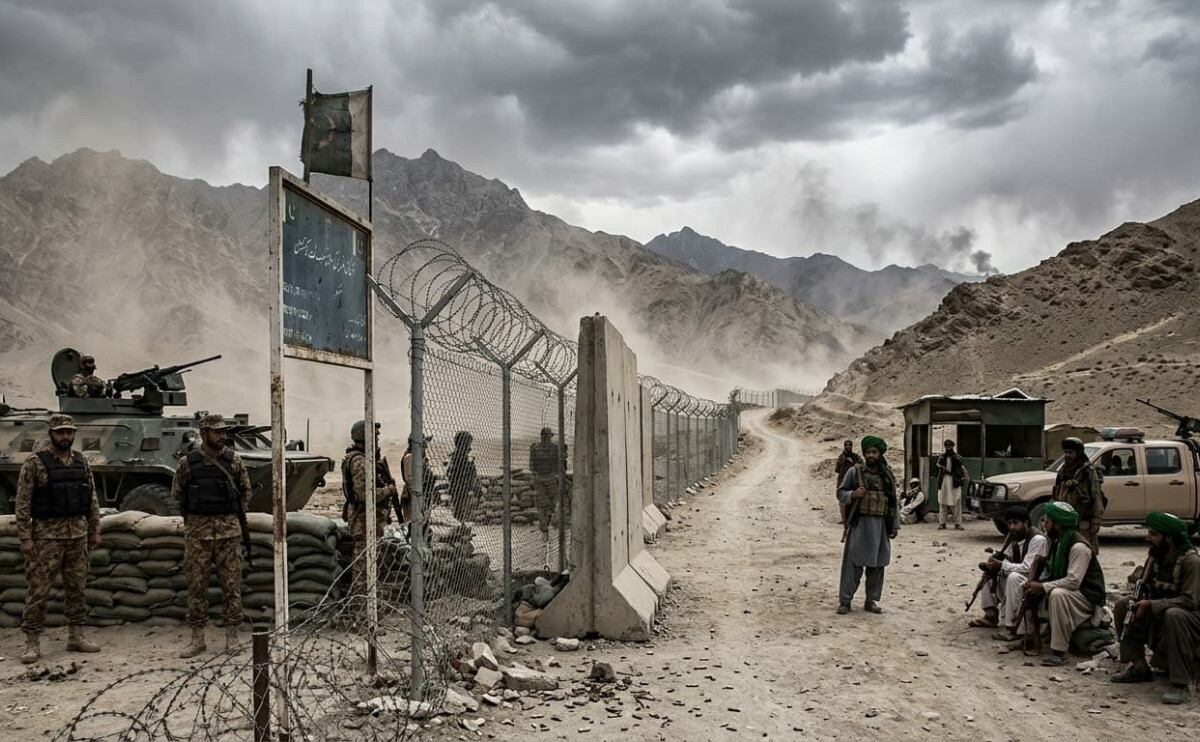
Tensions between Afghanistan and Pakistan have intensified markedly over the past six months, evolving into a sustained and increasingly complex conflict. Although not formally declared a war, the scale and persistence of hostilities—ranging from airstrikes to cross-border militant activity—suggest a de facto state of war between the two neighbours.
Recent developments have drawn particular attention to the Afghan capital, Kabul, where Pakistan is alleged to have conducted significant air raids. Afghan authorities claim that civilian sites, including a drug rehabilitation facility, were targeted. Pakistan, however, has firmly denied these allegations, asserting instead that the strikes were directed at facilities used for training suicide attackers. As is often the case in modern conflicts, verifying such claims remains difficult, especially amid the proliferation of sophisticated disinformation and artificially generated media.
At the heart of the crisis lies a battle of narratives. Afghan officials and analysts frequently attribute the escalation to broader geopolitical manoeuvring, particularly the strategic interests of the United States in Central and South Asia. Some observers argue that Washington seeks renewed access to the Bagram Airfield, a former military hub that could provide strategic oversight of the region, including neighbouring Iran.
Conversely, Pakistani analysts emphasise security concerns. Islamabad has long accused Afghan-based militants, particularly the Tehrik-i-Taliban Pakistan (TTP), of orchestrating attacks within its borders. Pakistani officials argue that cross-border strikes are a necessary response to militant sanctuaries in Afghanistan.
| Factor | Explanation |
|---|---|
| Disputed Border | The Durand Line remains a longstanding source of tension, dividing ethnic Pashtun populations. |
| Militancy | The presence of TTP fighters in Afghanistan fuels Pakistani security concerns. |
| Strategic Depth | Pakistan seeks influence in Afghanistan to counter regional rivals, particularly India. |
| Ideological Divide | Differences in governance models and interpretations of Islamic rule create friction. |
| External Influence | Alleged involvement of global powers adds another layer of complexity. |
Pakistan’s military actions are also shaped by domestic pressures. A surge in militant attacks within its territory has heightened public demand for decisive action. Airstrikes along the Afghan border may therefore serve both tactical and political purposes, projecting strength and control.
Afghanistan, meanwhile, faces its own constraints. While it reportedly holds thousands of TTP fighters in custody, analysts suggest that fully controlling these groups is nearly impossible due to ideological alignment and historical alliances. The Afghan leadership must carefully balance internal cohesion with external diplomatic pressures.
Despite shared religious and cultural ties—both populations are predominantly Sunni Muslim—the two nations now find themselves at odds. Historically, external invasions, such as the Soviet invasion of Afghanistan and the United States invasion of Afghanistan, united cross-border communities. Today, however, internal divisions and geopolitical rivalries have reversed that dynamic.
The Afghan–Pakistan conflict is no longer a mere border dispute; it is a multifaceted struggle involving security concerns, ideological divergence, and international power dynamics. With a border stretching approximately 2,600 kilometres, the potential for further escalation remains high.
While global attention may currently be diverted by other crises, the rising toll and strategic implications suggest that the international community may soon be compelled to engage more directly with this volatile situation.

Comments