Sunday, 5th April 2026

Khabor Wala Desk
Published: 5th December 2025, 1:58 AM
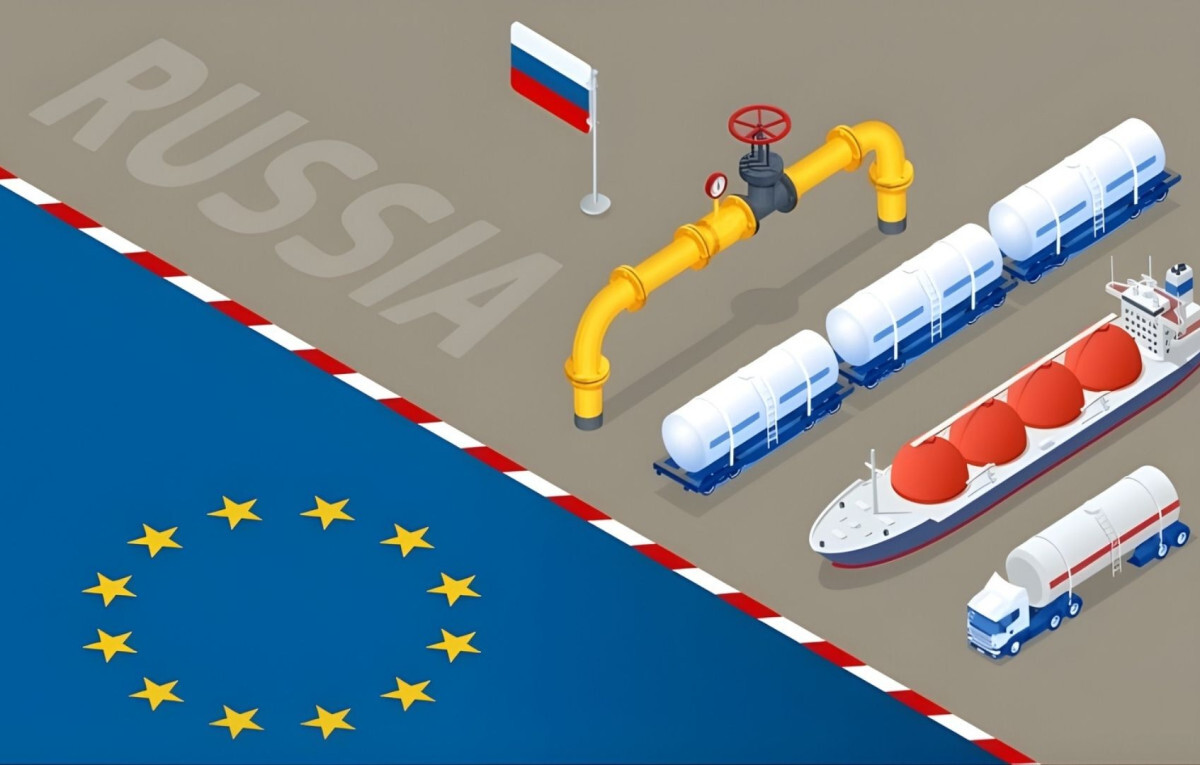
In a significant and unprecedented move, the European Union is preparing to cut all gas imports from Russia following a detailed and coordinated plan supported by all member states. The agreement, announced on Wednesday, reflects a historic policy shift aimed at breaking the bloc’s long-standing energy dependence on Moscow. News agency AFP described the deal as a milestone in Europe’s response to Russia’s growing geopolitical assertiveness and its weaponisation of energy supply.
The announcement comes after prolonged discussions between the European Parliament and representatives of the member states. Although the Parliament initially pushed for faster implementation, the final compromise sets a clear and binding timeline, offering European nations time to adjust and diversify their energy sources. The move serves as a continuation of the EU’s broader sanctions strategy, developed in response to Russia’s offensive actions in Ukraine and its increasing use of energy infrastructure as leverage in political negotiations.
In an official statement, the European Council underscored the rationale for the ban: Russia’s manipulation of gas supplies over recent years has convinced Europe that maintaining dependence on Russian energy poses a long-term threat. According to the Council, eliminating Russian gas entirely is now essential to safeguarding the bloc’s political and economic stability.
The agreement outlines a two-tiered timeline for withdrawing from both pipeline gas and liquefied natural gas (LNG). Under long-term contractual agreements, pipeline gas imports from Russia will be banned from 1 November 2027. Similarly, LNG supplied under long-term contracts will be prohibited from 1 January 2027.
The schedule for short-term imports is even more accelerated. LNG delivered under short-term arrangements will be banned starting 25 April 2026, while short-term pipeline gas imports will cease from 17 June 2026. These stepped deadlines are designed to prevent loopholes and ensure that no European company enters into new agreements shortly before the final ban is enforced.
Before the new rules can take effect, they must receive the formal approval of both the European Parliament and the governments of the 27 member states. Most observers expect the legislation to pass, though some energy-dependent nations have voiced concerns about cost, infrastructure readiness and the speed of the transition.
Europe’s energy landscape, however, has already changed dramatically since Russia’s invasion of Ukraine. The EU has reduced its reliance on Russian gas from more than 40 per cent of total supply to a fraction of that figure within two years. New import arrangements with Norway, the United States, Qatar and Algeria, combined with the rapid expansion of renewable energy production, have strengthened Europe’s capacity to weather energy shocks.
Energy experts argue that the new agreement represents more than a sanction; it marks a strategic reconfiguration of Europe’s energy identity. For decades, the EU’s relationship with Russian gas was shaped by convenience and mutual economic advantage. The crisis of recent years, however, demonstrated how such dependency can quickly transform into vulnerability.
If endorsed, the plan will propel Europe into a new phase of energy independence and geopolitical autonomy. It will also accelerate the continent’s transition towards cleaner, renewable energy sources, as EU nations work to close the gap left by the withdrawal of Russian gas.
European leaders have described the decision as a turning point — the moment when Europe finally commits to freeing itself not only from Russia’s influence but also from the instability that accompanies heavy reliance on any single energy source. Once implemented, the ban will stand as one of the most consequential energy decisions in EU history.


Comments