Sunday, 5th April 2026

Khabor Wala Desk
Published: 25th November 2025, 11:47 AM
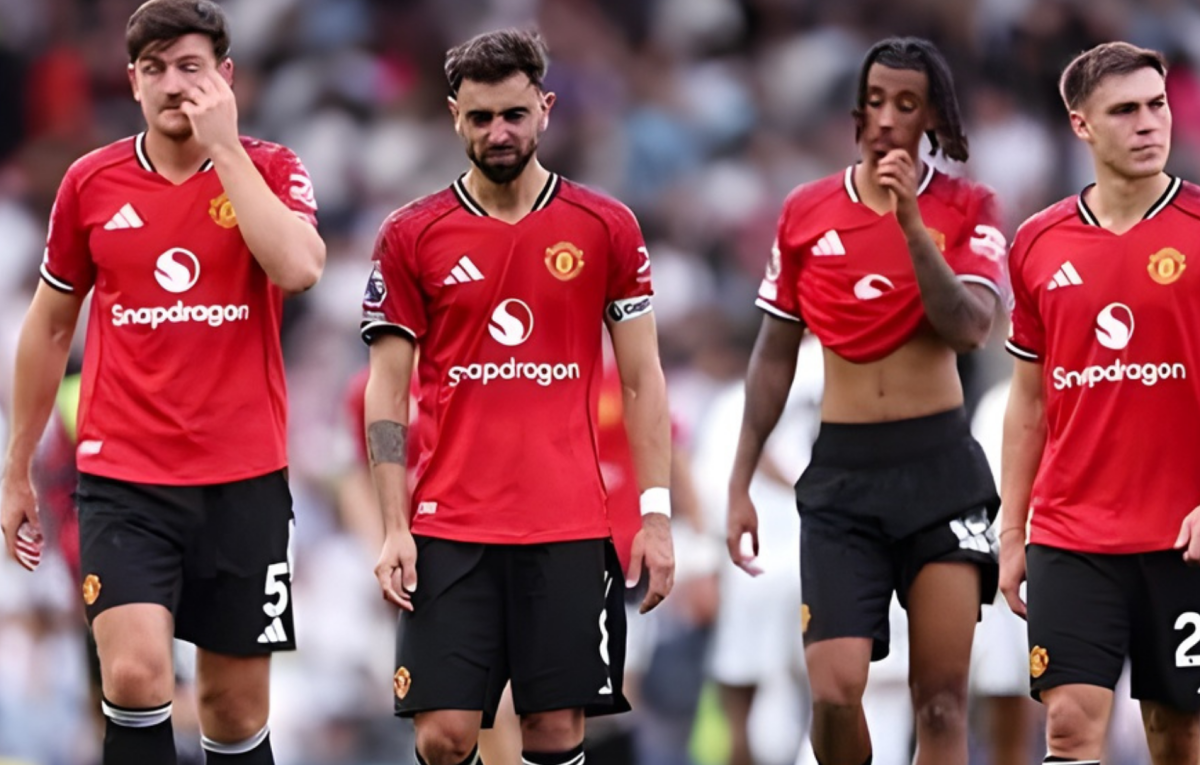
Manchester United’s 1–0 home defeat to Everton on Tuesday has intensified concerns about the team’s long-term direction under Ruben Amorim. What should have been a straightforward victory against a side reduced to ten men for most of the match instead revealed deep tactical flaws and an alarming lack of leadership across the pitch.
Even before Idrissa Gueye’s red card in the 26th minute, Everton looked the more cohesive and energetic side. United, in contrast, were flat-footed, slow in transition, and unable to impose themselves in midfield. Supporters, who expected a confident showing in a crucial stage of the campaign, were stunned by the early statistics:
| Category | Everton | Manchester United |
|---|---|---|
| Dangerous Passes | 5 | 1 |
| Shots | 3 | 0 |
| Possession | 62% | 38% |
The red card should have served as a turning point. Instead, it became a symbol of United’s ongoing decline. Everton reorganised instantly and defended with remarkable discipline. United, however, appeared directionless, struggling to build meaningful attacks even with numerical superiority.
Just four minutes after the sending-off, Everton struck the decisive blow. Kieran Dewsbury-Hall capitalised on United’s failure to track runners and fired in a thunderous long-range effort. It was the kind of goal that highlighted United’s biggest weaknesses—poor positioning, slow reactions, and a lack of communication between midfield and defence.
Despite dominating possession after the goal, United’s play lacked imagination. Their approach consisted largely of speculative crosses, predictable runs, and hopeful long balls. None of it was enough to unlock Everton’s resolute defensive block.
| Indicator | Manchester United |
|---|---|
| Total Shots | 25 |
| On Target | 6 |
| Big Chances | 2 |
| Missed Chances | 5 |
Ruben Amorim admitted after the match that the team are far from where they need to be:
“We haven’t reached the required standard yet. It’s evident in our performances. We need significant improvement.”
David Moyes, understandably proud of his side, said:
“To come here, go down to ten men, and still win—it speaks volumes about the mentality of these players.”
United’s struggles cannot be dismissed as a one-off setback. Over the past year, the club have attempted multiple tactical adjustments, signed new players, and promoted youth talent. Yet the same issues persist: inconsistent defending, predictable attacking patterns, and a worrying fragility whenever the opposition applies pressure.
The defeat raises uncomfortable questions for both management and supporters. Is there a clear system in place? Are the players suited to Amorim’s style? And most importantly, why does a team with such resources look so ordinary against a side fighting for points?
With Champions League hopes hanging in the balance, Manchester United must confront an uncomfortable truth: the identity they once prided themselves on—intensity, creativity, dominance—has all but vanished.



Comments