Sunday, 5th April 2026

Khabor Wala Desk
Published: 3rd March 2026, 12:21 AM
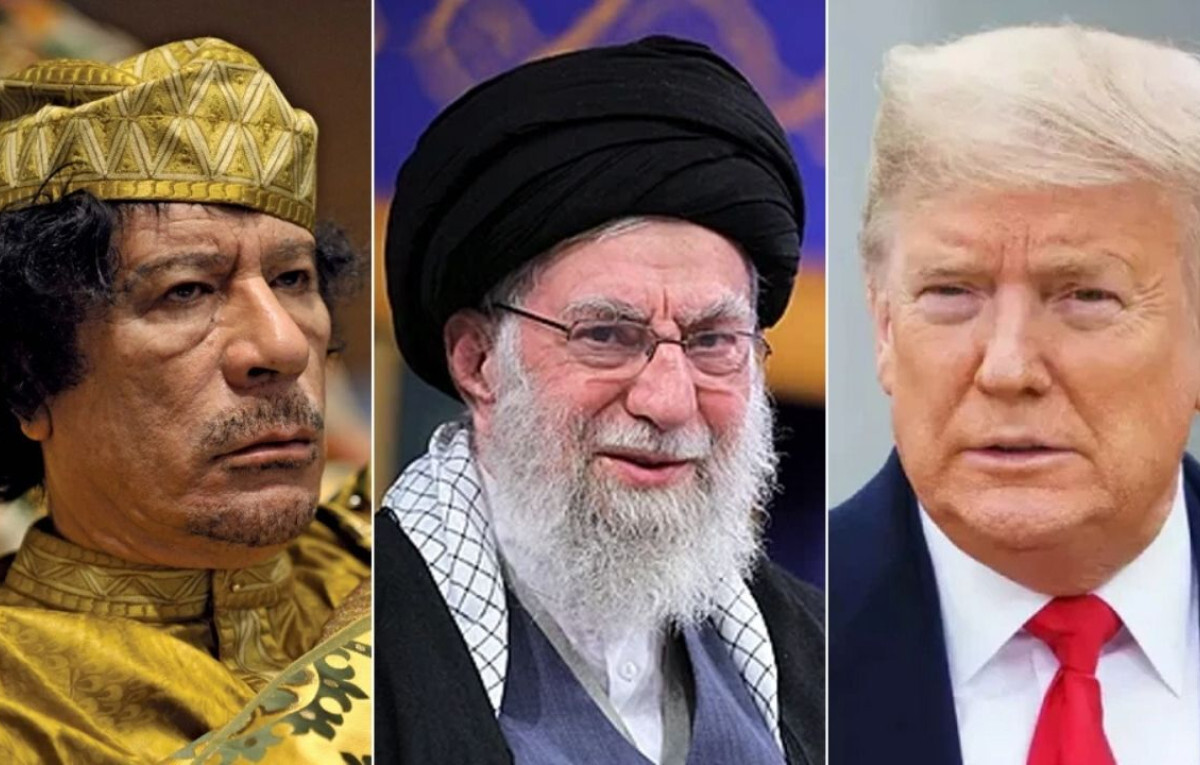
The targeted assassination of Grand Ayatollah Ali Khamenei by United States and Israeli air strikes has presented the West with a formidable question: will his death trigger the collapse of the Iranian regime? Western strategists appear to have wagered on a repetition of the “Libya Model”—the premise that decapitating a regime by removing its central figure, as seen with Muammar Gaddafi, inevitably leads to state dissolution. However, geopolitical analysts, including Ali Hashem of the University of London, suggest this strategy is fundamentally flawed when applied to the Islamic Republic.
Unlike the person-centric autocracies of Gaddafi’s Libya or Saddam Hussein’s Iraq, Iran operates as a sophisticated “institutionalised system.” Built upon the foundations laid by Ayatollah Ruhollah Khomeini after the 1979 Revolution, the state is designed to outlive any single individual. Khomeini’s enduring doctrine—that the preservation of the Islamic Republic is a “divine duty” superior even to the lives of the Imams—serves as the ultimate fail-safe for the ruling elite.
The Iranian Constitution provides a definitive roadmap for leadership transitions, ensuring that a power vacuum does not persist. Under Article 111, the death or incapacity of the Supreme Leader triggers the immediate transfer of authority to a provisional council. The resilience of this framework was recently demonstrated in 2024 following the sudden death of President Ebrahim Raisi; the state apparatus managed the transition and subsequent elections with remarkable bureaucratic efficiency.
| Governance Body | Role in Transition | Stability Impact |
|---|---|---|
| Assembly of Experts | Responsible for electing and overseeing the Supreme Leader. | High: Ensures religious and political continuity. |
| Guardian Council | Vets candidates and ensures laws align with Islamic principles. | High: Maintains ideological purity during crises. |
| IRGC | Secures internal borders and protects the revolutionary structure. | Critical: Provides the kinetic force to prevent civil unrest. |
| Expediency Council | Mediates disputes between Parliament and the Guardian Council. | Medium: Ensures legislative deadlock does not occur. |
In the wake of Khamenei’s death, the Islamic Revolutionary Guard Corps (IRGC) has moved to consolidate internal security. Unlike military forces in fragmented states, the IRGC is ideologically wedded to the survival of the system rather than a specific man. Their “deep state” architecture is mirrored after the Russian and Chinese models, where command and control are decentralised enough to survive a decapitation strike on the high command.
Historians note that for the Iranian establishment, the death of a leader is often framed through the lens of martyrdom, an emotive force that galvanises the public and stifles dissent. Rather than collapsing into civil war, the various factions—military, clerical, and political—are incentivised to seek consensus to avoid foreign domination.
While Western strikes may have degraded Iran’s physical infrastructure, the political scaffolding of the Islamic Republic appears built to withstand the storm. Instead of a Libyan-style collapse, the assassination of Khamenei may simply push the nation into a more radicalised, defensive, and unified posture, rendering the “Libya Model” a strategic miscalculation of historic proportions.
Comments