Sunday, 5th April 2026

Khabor Wala Desk
Published: 27th July 2025, 3:36 PM
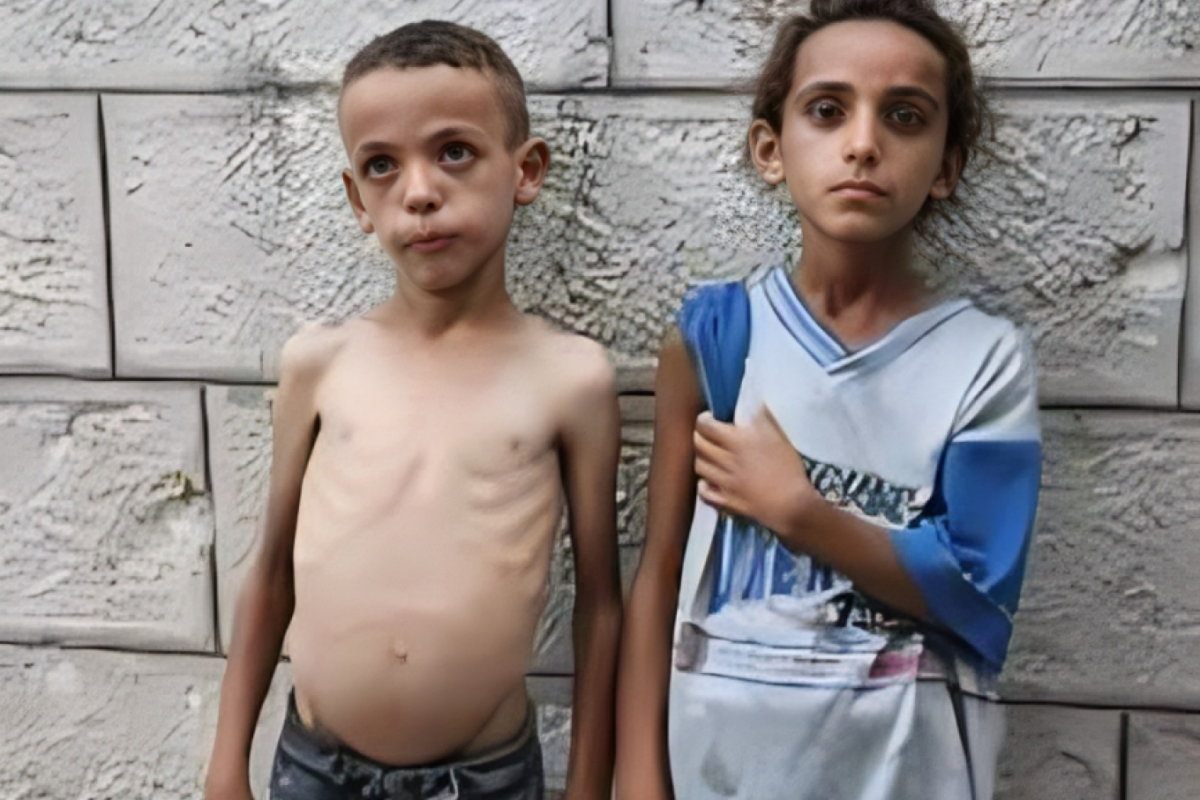
The United Nations and multiple non-governmental organisations (NGOs) have issued warnings of an imminent famine in the Gaza Strip—a designation grounded in strict scientific criteria. However, the region’s blockade and conflict have created significant challenges in collecting the data required to officially declare such a crisis.
What Constitutes a Famine?
The definition of famine is internationally standardised through the Integrated Food Security Phase Classification (IPC), a framework developed by a coalition of 21 agencies, including UN bodies and aid organisations.
A famine is declared only when all three of the following criteria are met:
| IPC Famine Criteria | Threshold |
| Households facing extreme food deprivation | ≥ 20% |
| Acute malnutrition (children under 5) | > 30% |
| Daily death rate | ≥ 2 per 10,000 people |
Once these benchmarks are fulfilled, governments and UN bodies may formally declare a famine.
The Situation in Gaza
While an official famine declaration has not yet been made, multiple international bodies report a catastrophic food crisis in Gaza, exacerbated by war and siege conditions.
“A large proportion of the population of Gaza is starving,”
— Dr Tedros Adhanom Ghebreyesus, Director-General, World Health Organization (WHO)
The World Health Organization, Doctors Without Borders (MSF), and the World Food Programme (WFP) have all described conditions of mass starvation, asserting that food deliveries are far below what is required for survival.
Indicators of Crisis
| Indicator | Status in Gaza (July 2025) |
| Children & women malnourished (MSF clinics) | 25% |
| Population not eating for days | Nearly 33% |
| Reported child deaths from malnutrition (72 hrs) | 21 |
| Price of flour per kg | $100 |
| Daily aid trucks permitted | ≈ 20 (for over 2 million people) |
MSF has accused Israel of the “deliberate use of starvation as a weapon”, while the WFP emphasises the man-made nature of the hunger crisis.
“We’re hurtling towards famine — that’s a certainty.”
— Amande Bazerolle, MSF Emergency Response Lead for Gaza
Data Collection Challenges
NGOs and UN agencies face severe limitations in collecting the data needed to meet the IPC’s scientific thresholds due to security and access restrictions:
“There are challenges regarding data, regarding access to information.”
— Nabil Tabbal, WHO Incident Manager, Emergency Programme
Can Famine Still Be Prevented?
France’s foreign ministry blames the crisis on the blockade imposed by Israel, while the Israeli military claims it is not obstructing aid, asserting that 950 truckloads of humanitarian goods are currently awaiting distribution inside Gaza.
“There is no famine caused by Israel. There is a man-made shortage engineered by Hamas.”
— David Mencer, Israeli Government Spokesperson
These claims are disputed. A New York Times investigation quoted senior Israeli military officials who admitted there was no proof of Hamas hoarding aid.
NGO Accusations and Pleas
Over 100 international NGOs—including MSF, Save the Children, Amnesty International, Christian Aid, and Oxfam—have jointly urged Israel to open all land crossings and restore full food access to Gaza.
What a Famine Declaration Really Means
A new IPC assessment for Gaza is expected soon. But many experts argue that the technical process of famine declaration often comes too late to save lives.
“Any famine declaration… comes too late. By the time famine is officially declared, many lives have already been lost.”
— Jean-Martin Bauer, Director of Food Security and Nutrition Analysis, WFP
Case Study: Somalia, 2011
| Event | Impact |
| Famine declared (Somalia, 2011) | 50% of deaths had already occurred by the time of declaration |
The War’s Human Cost
The current war in Gaza erupted after a Hamas attack on Israel on 7 October 2023, which resulted in 1,219 deaths, most of them civilians, according to AFP’s tally from official Israeli sources.
In response, Israel launched a military campaign that has since led to the deaths of nearly 60,000 Palestinians, the majority of whom are civilians, according to the Gaza Health Ministry under Hamas governance.
The humanitarian situation in Gaza teeters on the brink of catastrophe. While debates persist over terminology, the reality on the ground is undeniable: millions are suffering, and thousands of lives are at risk without immediate, unrestricted access to food and humanitarian aid.



Comments