Monday, 6th April 2026

Khabor Wala Desk
Published: 15th March 2026, 10:48 AM
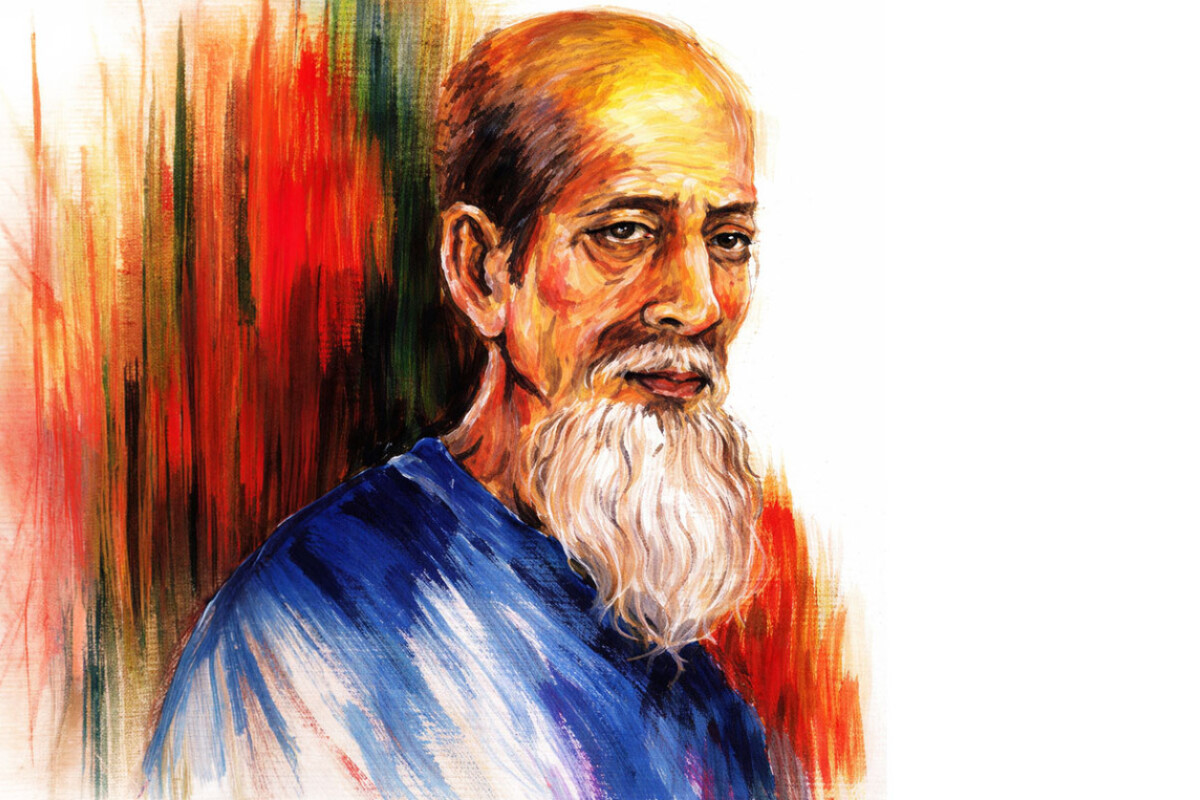
In the intellectual history of Bengal, some individuals emerge like secluded stars—casting light yet remaining distant from the centre of attention. Their thoughts and courageous questions transcend the boundaries of time, stirring society’s depths. One such remarkable figure is Arz Ali Matubbar, who, despite the limitations of formal education, established a luminous example in Bengali thought through rational inquiry, scepticism, and humanism.
He was born on 3rd Poush 1307 in the remote village of Lamchhari, Barisal. The village lacked educational institutions, leaving him with almost no opportunity for formal schooling during his childhood. Around the age of thirteen, however, he gained access to learning when Abdul Karim Munshi, a local enthusiast, established a maktab in his home. His education began with Sitaram Basak’s Adarsha Lipi, but it was short-lived; the maktab closed due to financial constraints, leaving him with only basic literacy.
Yet his thirst for knowledge was undeterred. It was here that his true education began—in the vast classroom of the world. Building upon his literacy, he developed an insatiable reading habit. He collected books from students in Barisal and later studied regularly in the public library and the library of Brajmohan College, Barisal. His intellectual pursuits were supported by Golam Qadir, a philosophy professor at the college. Gradually, his horizons expanded, and this very passion for knowledge inspired him to establish the Arz Manzil Public Library in his own village—a lasting testament to his reflective spirit.
From the very beginning, he faced harsh realities. Early orphanhood, loss of family land due to inability to pay taxes, and other adversities pushed him towards a life of struggle. During these difficult times, his mother was his sole support. A profound incident surrounding her death deeply influenced his worldview. When he wished to have her photograph taken by a photographer to preserve her memory, the villagers, deeming it sacrilegious, refused to allow the burial. With the help of friends and relatives, he ultimately completed her funeral. This experience sparked a lifelong question in his mind: how can ignorance and superstition deny even basic human dignity?
It was this question that ignited his search for truth. He refused to accept religion, society, or conventional beliefs blindly; instead, he sought to examine them through reason, science, and philosophy. Yet he was never anti-religious. As he clearly stated, “Our campaign is against superstition, not any religion.” He believed that through careful evaluation and scrutiny, both religion and society could become purer and more humane.
From this perspective, he created a robust stream of sceptical philosophy in the Bengali language. To him, doubt and questioning were the indispensable beginnings of knowledge. He consistently challenged blind beliefs, the allure of the supernatural, and irrational customs.
Among his works, Satyer Sandhan (In Search of Truth) holds particular importance as a notable document of sceptical thought in Bengali. Other works include Onuman (Assumptions), Muktoman (Free Mind), Srishti-r Rahasya (The Mystery of Creation), and Smaranika (Memorials). Notably, Srishti-r Rahasya has earned the status of a compact encyclopaedia for its wide-ranging discussion of knowledge and science. His writing was simple, clear, and unadorned, yet profoundly powerful in its reasoning.
Renowned Bengali intellectuals admired his depth of thought. Ahmed Sharif remarked that Arz Ali Matubbar’s works impress more through his free mind, moral courage, and liberal thinking than through new theories. Similarly, Sirajul Islam Chowdhury observed that he did not merely describe—he questioned, and it is these questions that confront the reader with reflection. The writer Akhtaruzzaman Elias described him as a Renaissance figure—whose gaze centres on doubt, with reason at the heart of his thought.
Even in his final years, this humanist thinker set a luminous example of service. Before his death, he donated his eyes and body to Barisal Medical College, remarking, “If students can learn something from my body, what greater reward could there be?”
He passed away in 1392 Bengali year at Barisal Medical College Hospital. Yet his thought, fearless questioning, and unwavering faith in reason remain equally relevant today. Despite the constraints of formal education, he proved that true knowledge requires not degrees, but free thinking, courage to question, and relentless pursuit of truth. For this reason, Arz Ali Matubbar is not merely a philosopher; he is an indispensable beacon of rational thought in Bengali society.
On the anniversary of his passing, we pay him humble tribute.




Comments