Sunday, 5th April 2026

Khabor Wala Desk
Published: 19th February 2026, 11:30 AM
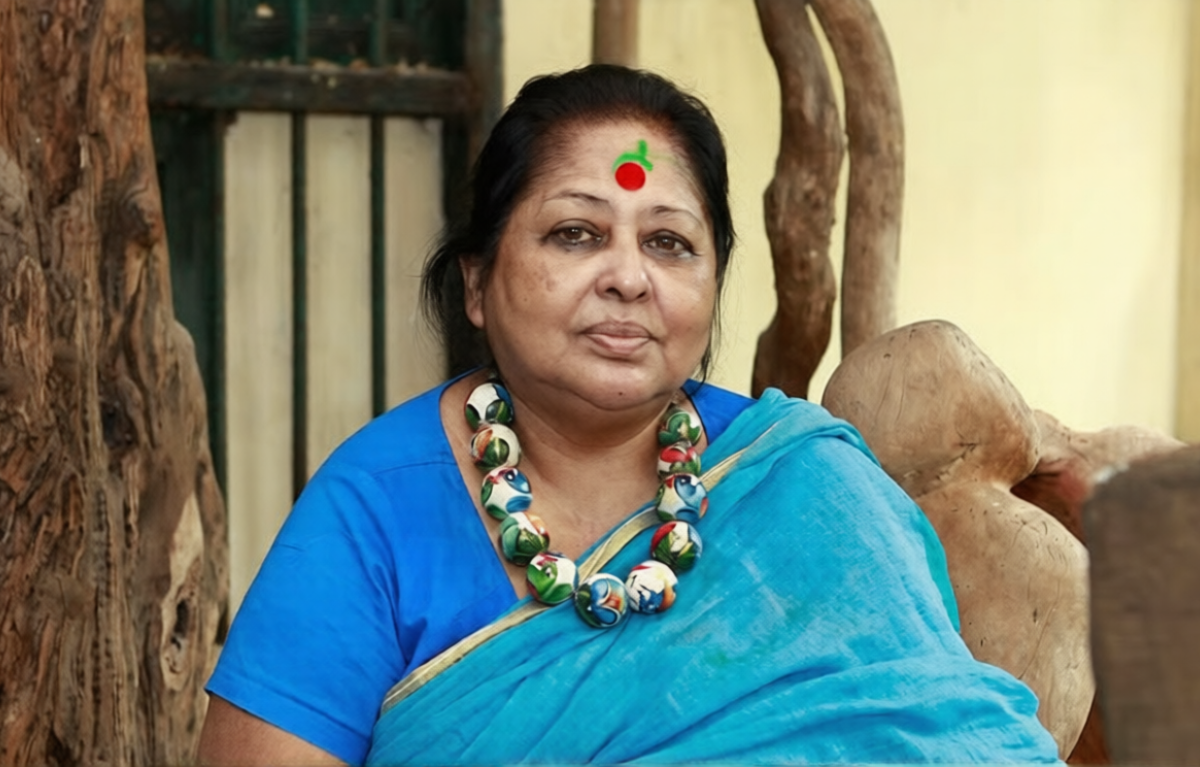
Feroza Priyabhashini (19 February 1947 – 6 March 2018) occupies a singular place in the artistic landscape of Bangladesh. Renowned for her ability to transform simple, everyday materials into aesthetically compelling works, she captured both public imagination and critical acclaim. Her sculptures and artistic creations are celebrated for their profound reflection on nature, human struggle, and emotional depth, demonstrating a rare fusion of accessibility and sophistication.
Born on 19 February 1947 in Matulalay, Khulna, Feroza was the eldest of eleven children of Syed Mahbubul Haque and Rowshan Hasina. Her formative education took place at Khulna Pioneer Girls’ School, where she completed her SSC, followed by studies at Khulna Girls’ School for her HSC and undergraduate degree.
Feroza married for the first time in 1963, and later entered her second marriage in 1972 with Ahsan Ullah Ahmed, a senior government officer. The couple had six children—three sons and three daughters.
Between 1977 and 1998, she held positions across a range of institutions, including a stint in teaching. She also worked with international organisations such as the United Nations Development Programme (UNDP), the Food and Agriculture Organization (FAO), UNICEF, and the Canadian Embassy. Later in life, she devoted herself fully to her art, engaging in continuous creative work that would leave a lasting imprint on Bangladesh’s artistic heritage.
Feroza Priyabhashini’s artistic journey began as an exploration of creative ways to decorate the home. Rejecting costly materials, she employed fallen leaves, twigs, bark, and wood fragments to craft exquisite sculptures and decorative items. Through this approach, she demonstrated that even low-income individuals could enhance their living spaces with minimal expense while engaging in creative expression.
Her works often intertwined themes of nature, human resilience, the Liberation War, and women’s dignity. Personal suffering and national history were delicately interwoven into her art, giving it both intimate and universal resonance.
| Year | Award | Significance |
|---|---|---|
| 2004 | Reader’s Digest Hero (Dec) | Recognised for social and artistic contribution |
| 2010 | Independence Award (Shadhinota Puroshkar) | Bangladesh’s highest civilian honour |
| — | Ananya Top Medal | National recognition for art and culture |
| — | Silver Jubilee Award (YWCA) | Celebrating outstanding artistic contribution |
| — | Multiple Human Rights Awards | Acknowledgement of advocacy through art |
Feroza Priyabhashini passed away on 6 March 2018, leaving behind a legacy of courage, creativity, and humanistic values. Her artistic philosophy—beauty in simplicity, creativity in nature—remains influential. More than a sculptor, she was a symbol of resilience, imagination, and dignity. Her memory and works continue to enrich the cultural fabric of Bangladesh, inspiring future generations of artists.
Feroza Priyabhashini’s contributions remind us that true artistry transcends material and remains eternally relevant—a celebration of life, struggle, and creation.
Comments