Sunday, 5th April 2026

Khabor Wala Desk
Published: 2nd January 2026, 2:45 PM
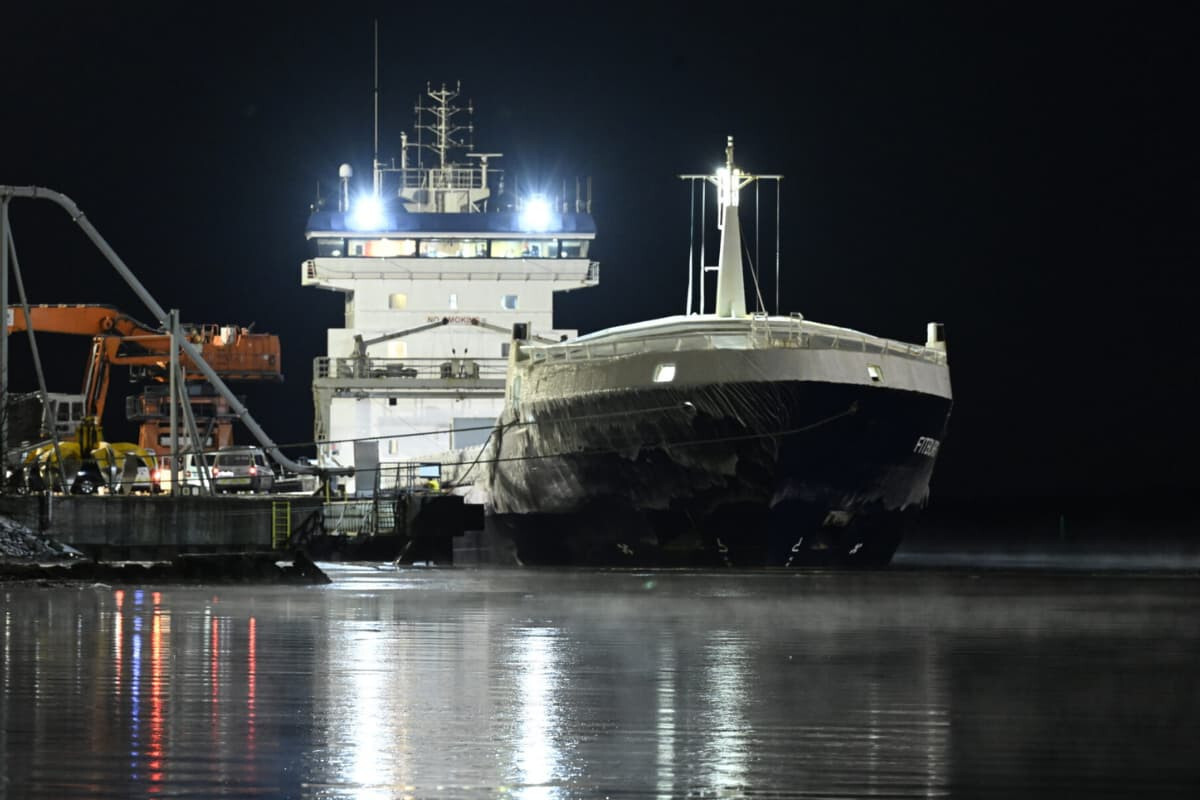
Authorities in Finland and Estonia have launched an intensive joint investigation following damage to a critical undersea telecommunications cable in the Gulf of Finland early on Wednesday. Connecting the capitals of Helsinki and Tallinn, this strategic maritime corridor has long been considered one of Europe’s most sensitive zones due to its dense network of undersea power lines, high-capacity data cables, and fuel pipelines, making it crucial from both economic and security perspectives. The recent incident has raised fresh concerns about the protection and monitoring of vital underwater infrastructure.
The fault was detected along the submarine cable route connecting Helsinki and Tallinn in the early hours, prompting immediate coordinated action by naval authorities, border guards, and specialised criminal investigation units from both nations. Finnish border authorities reported that a commercial vessel, suspected of causing the disruption, was intercepted and inspected while anchored within Finland’s Exclusive Economic Zone (EEZ).
Preliminary findings suggest that the ship had been dragging its anchor over a prolonged period, creating a significant risk to subsea cables and pipelines. Helsinki police have consequently opened a criminal investigation under charges including “major criminal damage,” “attempted damage,” and “severe interference with telecommunications infrastructure.” Investigators are examining anchor marks, vessel movements, and navigation data.
The damaged cable is owned by Finland’s leading telecom operator, Elisa, which has classified it as part of the nation’s critical underwater infrastructure. Although the affected section lies within Estonia’s EEZ, close technical and security coordination between both countries has ensured minimal disruption to service, thanks to backup connections and redundancy systems.
The vessel in question, Fitberg, flies the flag of Saint Vincent and the Grenadines and was reportedly en route from Russia to Israel. The crew of 14 includes citizens of Russia, Georgia, Azerbaijan, and Kazakhstan, all of whom have been detained for questioning. Finnish National Police Commissioner Ilkka Koskimäki stated that no definitive evidence of state involvement has been established at this stage.
President Alexander Stubb assured the public that Finland is fully prepared to address potential security threats and will take decisive action to protect critical infrastructure if required. The incident occurs against a backdrop of heightened geopolitical tension in the Baltic following Russia’s full-scale invasion of Ukraine in 2022, coupled with European efforts to reduce reliance on Russian energy, increasing the strategic importance of submarine cables and pipelines.
This event echoes previous undersea cable incidents in the region, illustrating the urgent need for enhanced monitoring, strict maritime regulation, and integrated security measures.
Recent Submarine Cable Incidents in the Baltic Region
| Date | Cable Owner | Location | Suspected Vessel | Service Impact |
|---|---|---|---|---|
| Wednesday | Elisa (Finland) | Gulf of Finland (Estonia EEZ) | Fitberg | Minimal |
| Tuesday–Wednesday | Arelion (Sweden) | Gulf of Finland / Baltic Sea | Under Investigation | Limited |
| 25 Dec 2024 | Multiple Operators | Finland–Estonia Route | Eagle S | Partial |
Collectively, these incidents underscore the increasing vulnerability of Europe’s undersea infrastructure and the pressing need for robust maritime oversight and coordinated regional security strategies.



Comments