Sunday, 5th April 2026

Khabor Wala Desk
Published: 11th January 2026, 4:45 AM
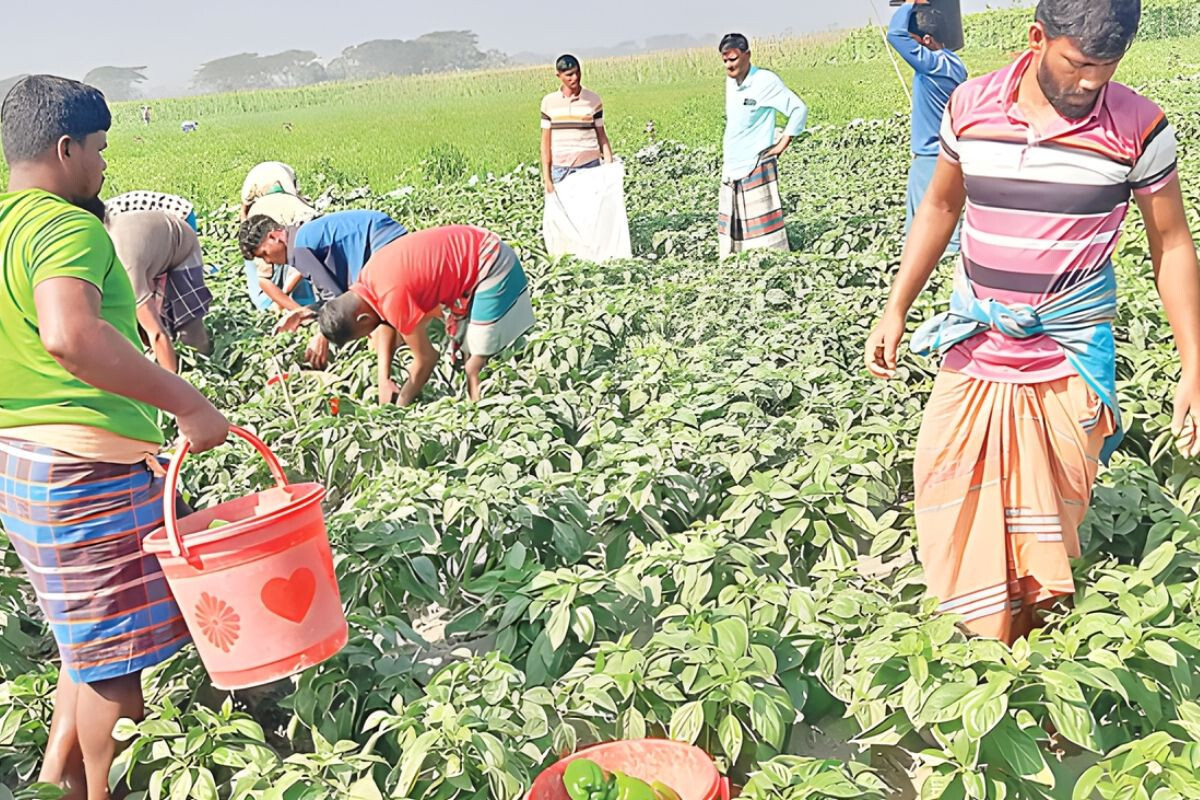
Capsicum, a versatile vegetable essential in salads, noodles, and Chinese cuisine, has rapidly become a staple in Bangladeshi diets. As demand for both local and imported varieties rises, the country has witnessed a remarkable surge in domestic production. Over the past four years, capsicum output has more than tripled, with Bhola emerging as the leading production hub. Analysts attribute this growth not only to rising consumer demand but also to the favourable climatic and soil conditions of the region.
According to the Deputy Director of the Bhola Department of Agricultural Extension, Md. Khairul Islam Mallik, the char lands of the district—where fertile silt deposits accumulate—are ideal for capsicum cultivation. Farmers in the region have increasingly adopted improved cultivation techniques and training programmes, motivated by strong market prices.
Production Trends
Data from the Bangladesh Bureau of Statistics (BBS) highlights the impressive growth in capsicum production over the past four years:
| Fiscal Year | Production (tons) | Cultivated Area (acres) | Yield per Acre (kg) |
|---|---|---|---|
| 2021–22 | 151 | — | — |
| 2023–24 | 324 | 111 | 2,922 |
| 2024–25 | 475 | 119 | 4,006 |
The table shows that not only has total production increased, but yield per acre has also improved significantly, reflecting advances in agricultural practices.
Market Prices and Farmer Incentives
Rising domestic production has slightly moderated market prices. According to Sudhir Chandra De, a local vendor in Khulna, green capsicum sells for BDT 220 per kilogram, while the more aromatic red and yellow varieties fetch around BDT 400 per kilogram. The higher price of coloured capsicum is attributed to its superior flavour and aroma.
Capsicum cultivation has proven lucrative for Bhola farmers. Md. Kamrul Hasan, Agricultural Officer at Bhola Sadar Upazila, notes that the crop is often sold at nearly three times the cost of production. Local produce is primarily sent to Dhaka’s Karwan Bazar, from where it is distributed nationwide. This direct market access reduces selling difficulties, further encouraging farmers to expand production.
Government Support and Training
In an effort to reduce reliance on imports, the government launched a BDT 120 crore project in 2022 to boost the production of 14 key spices, including capsicum, across 110 upazilas. Farmers receive training on soil moisture retention, fertiliser management, pest control, and post-harvest handling. Project Director Russel Ahmed notes that consistent demonstration plots and practical guidance have increased both yield and farmer interest.
Origin and Nutritional Value
Originating from the Mexico–Peru region, capsicum is now cultivated globally. It ranges from sweet bell peppers to extremely hot varieties. Rich in vitamin C, vitamin A, antioxidants, and minerals, capsicum is highly valued for its nutritional benefits. The Bangladesh Agricultural Research Institute has developed three local varieties suitable for domestic conditions, distributed to farmers through BADC.
With continued government support, rising farmer interest, and robust consumer demand, Bhola is poised to remain the epicentre of Bangladesh’s capsicum revolution, ensuring steady growth in production, availability, and export potential.




Comments