Sunday, 5th April 2026

Khabor Wala Desk
Published: 30th March 2026, 11:21 AM
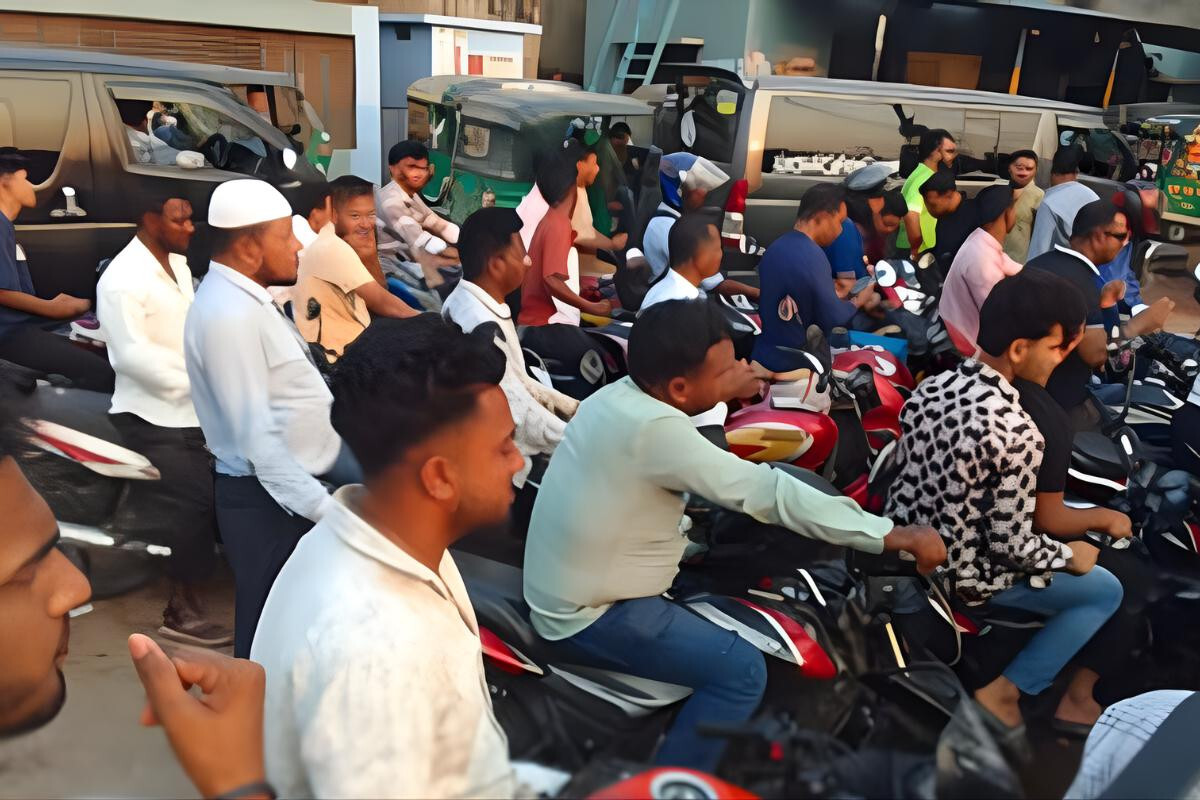
In the upazila of Dagonbhuiyan Upazila, a severe shortage of petrol and octane at filling stations has caused widespread disruption, particularly affecting motorcyclists and private vehicle users. The scarcity has gradually intensified over recent days, leaving many fuel outlets either completely dry or operating under strict rationing.
A field visit to several filling stations revealed a troubling picture: most outlets had no petrol or octane available, while a few were dispensing limited quantities under tight restrictions. In several cases, signage indicating “no fuel available” was prominently displayed, forcing stations to suspend operations entirely. Although diesel was intermittently available at select pumps, long queues of vehicles formed as supply remained insufficient to meet demand.
The situation has significantly hampered daily life and economic activity. Motorcycle riders—who rely heavily on their vehicles for marketing, commuting, and small business operations—have been among the hardest hit. Many report spending hours waiting in queues only to receive minimal fuel allocations.
One rider, Abu Naser, who works in field-based sales, explained that his daily requirement exceeds two litres of petrol, yet stations are limiting purchases to a very small amount per customer. “We are being given only 150 to 200 taka worth of fuel at a time, which is not enough to complete our work properly,” he said.
Another commuter, Sohel, highlighted the inefficiency caused by long waiting times. He noted that although a litre of petrol typically allows 30–35 kilometres of travel, the inability to refuel adequately has severely disrupted his schedule, resulting in wasted time and reduced productivity.
Fuel station owners have attributed the crisis to supply constraints from depots. According to them, allocations have remained unchanged compared to previous months, despite rising local demand. Sudden spikes in fuel consumption—particularly from motorcyclists and private car users—have further depleted stock levels faster than anticipated.
One station owner, Uttam Pal of Satata Filling Station, stated that fuel distribution continues based on last year’s allocation patterns, which no longer match current demand levels. Another operator, Azmal Haque Suman, suggested that repeated small-scale purchases by customers have accelerated shortages, creating an impression of artificial scarcity.
Experts and local observers believe multiple factors may be contributing to the crisis, including supply chain limitations, transport delays from depots, sudden demand surges, misinformation regarding possible price increases, and potential hoarding activities.
| Station Status | Petrol Availability | Octane Availability | Diesel Availability | Customer Impact |
|---|---|---|---|---|
| Majority of stations | Not available | Not available | Limited | Long queues, partial service |
| Few operational pumps | Strict rationing | Strict rationing | Moderate | Controlled sales per vehicle |
| Closed stations | No service | No service | No service | Complete disruption |
The ongoing shortage continues to place considerable strain on transport-dependent livelihoods, with no immediate resolution in sight.

Comments