Sunday, 5th April 2026

Khabor Wala Desk
Published: 2nd October 2025, 8:38 AM
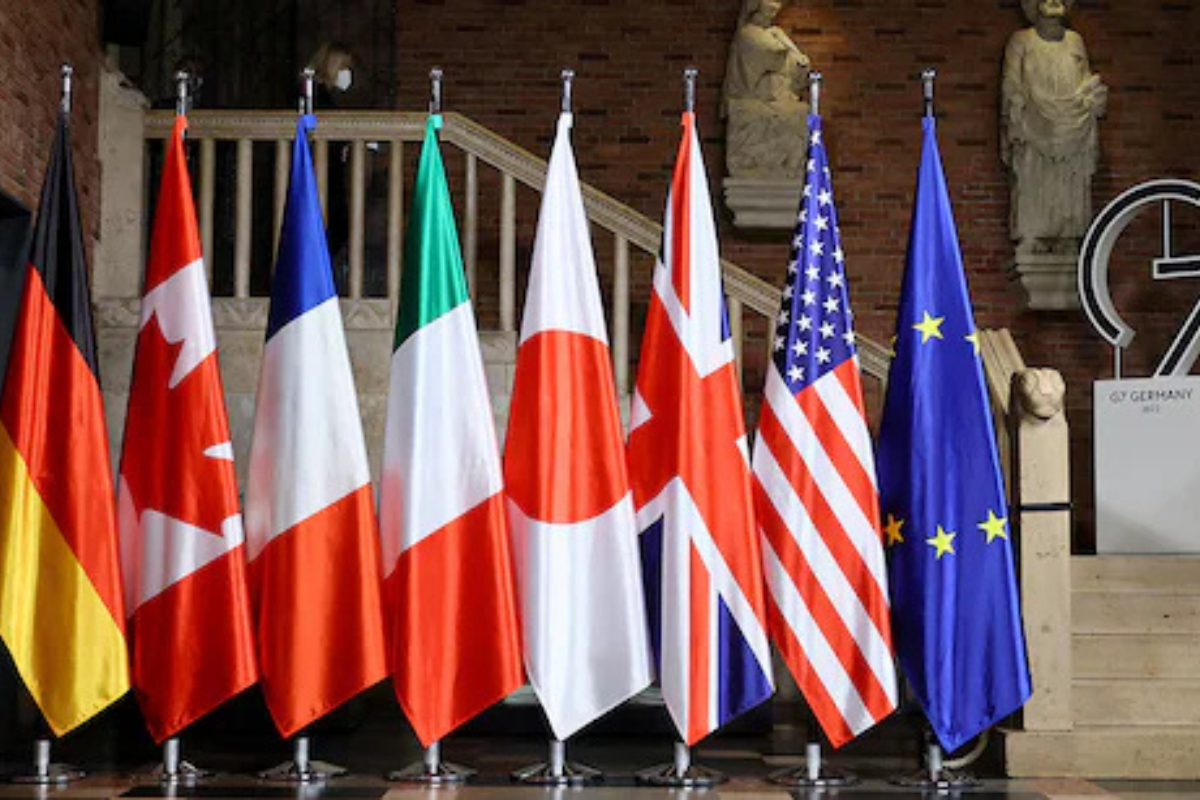
Finance ministers from the G7 nations have pledged to intensify pressure on countries that continue to purchase Russian oil, more than three years after Moscow’s invasion of Ukraine.
Following a virtual meeting, officials from the Group of Seven — comprising Britain, Canada, France, Germany, Italy, Japan, and the United States — issued a joint statement emphasising the need to maximise pressure on Russia’s oil exports.
“We will target those who are continuing to increase their purchase of Russian oil since the invasion of Ukraine and those that are facilitating circumvention,” the ministers said.
The statement outlined several measures aimed at cutting off revenue Moscow relies on to fund the war. These include:
The statement follows indications from the United States last month that it is prepared to broaden tariffs targeting buyers of Russian oil, particularly if the European Union implements similar measures.
The G7 ministers stressed that trade restrictions would focus on both direct and indirect support for Russia’s war efforts, with particular attention to refined petroleum products derived from Russian crude.
The G7 finance ministers are expected to reconvene on the sidelines of the annual International Monetary Fund (IMF) and World Bank meetings in Washington, D.C., later this month to discuss further coordination.
| Category | Details |
| Organisations Involved | G7 (UK, Canada, France, Germany, Italy, Japan, USA) |
| Objective | Reduce Russian oil revenue to weaken war financing |
| Target Countries | Those increasing purchases of Russian oil (e.g., China, India) |
| Proposed Measures | Tariffs, import/export bans, trade restrictions, sanctions on refined oil products |
| Recent Developments | US indicated readiness to broaden tariffs; EU considering similar measures |
| Upcoming Meeting | IMF and World Bank annual meetings, Washington D.C., October 2025 |
The G7’s unified stance signals a coordinated effort to penalise countries supporting Russia’s oil trade, seeking to constrain the financial resources sustaining Moscow’s ongoing military operations.


Comments