Sunday, 5th April 2026

Khabor Wala Desk
Published: 26th January 2026, 4:35 AM
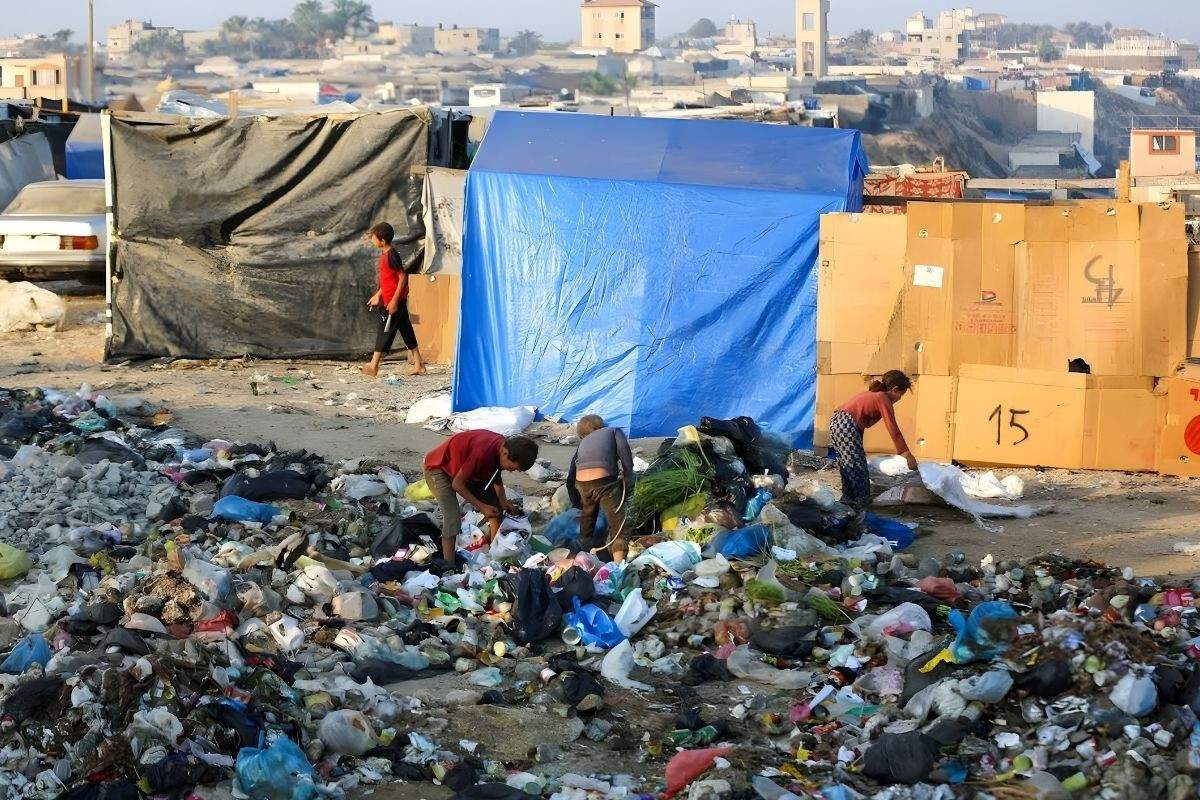
Despite a ceasefire in Gaza, the humanitarian crisis continues unabated. Two years of relentless Israeli military operations have left the majority of buildings in the enclave in ruins. Displaced from their homes, countless residents are now compelled to live in makeshift tents under appalling conditions, where even basic living standards are unattainable. The population suffers from respiratory ailments, gastrointestinal disorders, and a host of other illnesses caused by unsanitary conditions.
The Abu Amar family has been forcibly displaced more than 17 times since the conflict began. With each relocation, their lives have grown increasingly restricted. Today, with no viable alternatives, they have pitched a tent next to a garbage dump in the Rimal area of Gaza. Daily survival requires them to endure pollution, disease, and degrading living conditions.
Sixty-four-year-old Abu Amar explained, “We are living through two wars in Gaza—one of bombs, the other of waste. I have asthma, so I always keep my inhaler nearby, often under my pillow at night. The stench of the trash sometimes clogs my airways, forcing me to use it multiple times.”
His daughter-in-law, Suraiya Abu Amar, a mother of five, added, “Maintaining even minimal hygiene in this tent is almost impossible. There is a severe water shortage, and as a result, we suffer from stomach illnesses several times a month. Before the Israeli attacks, our life was orderly and clean. Being forced from Beit Lahia to Gaza City has plunged us into a nightmare we never imagined.”
Since the conflict began, more than 70,000 Palestinians have been killed in Gaza, and a significant proportion of buildings have been destroyed or damaged. Despite a ceasefire agreement last October, hostilities have not fully ceased. Over 400 children have died since the truce, and many residents believe these conditions are a deliberate attempt to render Gaza uninhabitable.
Forty-year-old Selim described the daily hardship: “Living next to waste has caused extreme despair. My children suffer in the heat and cold, and the stench makes it impossible to eat. During storms, sewer water floods our tent, sometimes even reaching our clothes. Often, we have no clean garments and must pray in filthy clothing.”
The youngest victims are the children. Thirteen-year-old Rahaf said, “Because of poor sanitation, my hair is falling out, and I have skin infections.”
Medical authorities warn that the combination of trash, contaminated water, and lack of clean drinking water is accelerating the spread of disease. Dr Ahmed Al-Rabee, head of the Pulmonology Department at Al-Shifa Medical Complex, stated, “The public health situation in Gaza is catastrophic. We are witnessing outbreaks of viral and bacterial infections never seen before the war.”
Municipal officials confirmed that Israeli airstrikes destroyed much of the water and sanitation infrastructure. Ahmed Diriemli, head of public relations for Gaza Municipality, reported that over 150 km of pipes and 85% of water wells have been destroyed, along with the city’s main water purification plant.
Access to waste disposal sites in eastern Gaza is also restricted by Israeli authorities, causing garbage to accumulate across the city. Husni Muhana, a municipal spokesperson, stated that more than 700,000 tons of waste have piled up in the Gaza Strip, with over 350,000 tons in Gaza City alone.
| Issue | Impact on Residents | Notes |
|---|---|---|
| Displacement | 17+ relocations for some families | Life increasingly restricted |
| Shelter | Living in tents next to garbage | Minimal hygiene and exposure to disease |
| Water & Sanitation | Severe shortage, contaminated water | 85% of wells destroyed, purification plant ruined |
| Health | Asthma, gastrointestinal issues, skin infections | Children most affected |
| Waste Accumulation | 700,000+ tons across Gaza | 350,000+ tons in Gaza City |
The dire conditions highlight the urgent need for humanitarian aid and reconstruction to prevent a deepening public health catastrophe in Gaza.




Comments