Sunday, 5th April 2026
Khabor Wala Desk
Published: 11th January 2026, 11:45 AM
Experts suggest that the outcomes of Generation Z (Gen-Z) movements bear a striking resemblance to the Arab Spring. Initially hailed as a revolutionary milestone, the Arab Spring eventually revealed the limits of rapid popular uprisings. Even Tunisia, often cited as the only apparent success of the Arab Spring, witnessed the gradual emergence of an authoritarian regime in the aftermath.
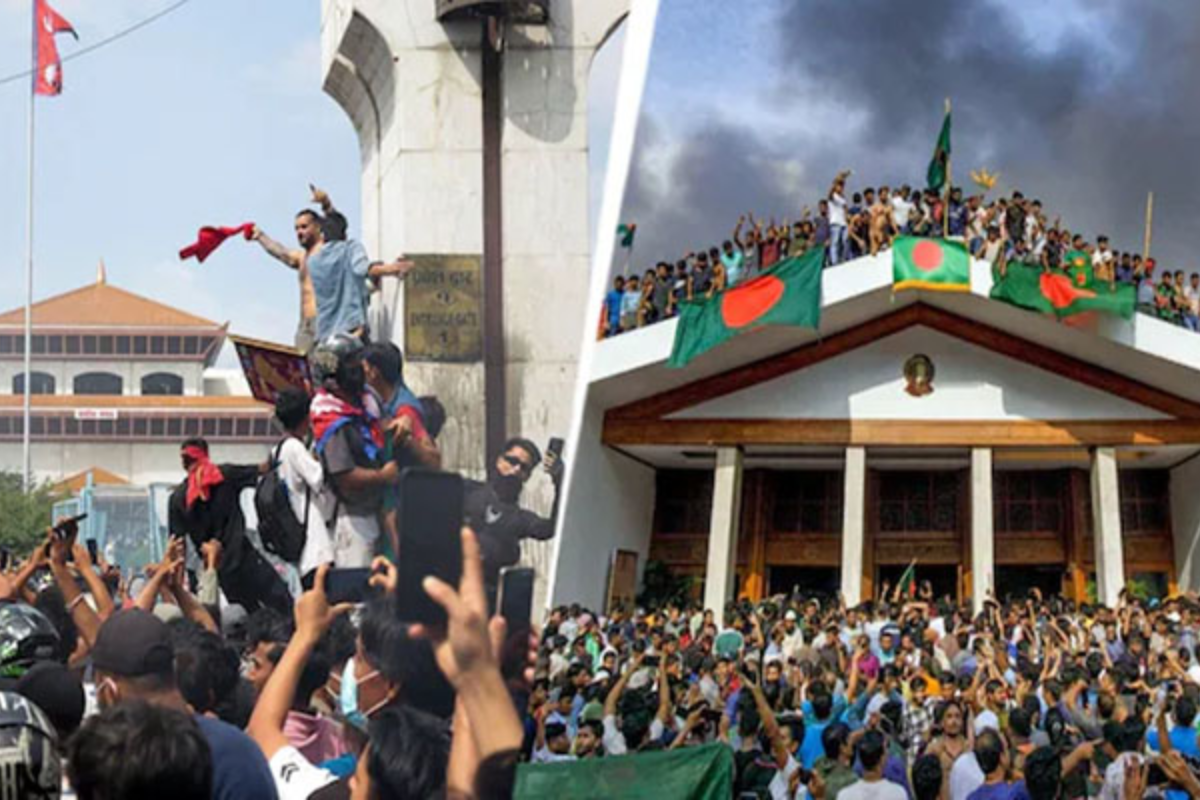
In recent years, Gen-Z-led movements have surged across the globe, particularly in South and Southeast Asia. In 2024, a student-led uprising in Bangladesh toppled the long-standing repressive government of Prime Minister Sheikh Hasina. Similarly, in 2022, young protesters in Sri Lanka mobilised against corruption and economic collapse, leading to the resignation of the Rajapaksa government, inspiring youth-led movements elsewhere. In September 2025, widespread protests in Nepal forced the government to relinquish power over allegations of corruption. Gen-Z movements have also led to governmental changes in Madagascar, while large-scale protests erupted in Indonesia. Other countries witnessing Gen-Z-led demonstrations include Timor-Leste, the Philippines, Kenya, Morocco, Cameroon, Togo, Mexico, Peru, Bulgaria, and Serbia.
These uprisings have been widely described as critical opportunities for redefining governance and policy priorities. However, analysts caution that, much like the mass uprisings of the late 1980s, these recent movements have largely failed to achieve lasting structural change. Despite visible protests and occasional government concessions, the key political and institutional objectives—such as addressing inflation, youth unemployment, corruption, and social inequality—remain largely unresolved. In many cases, there is little indication that meaningful, systemic reforms are forthcoming.
Harvard political scientist Erica Chenoweth notes that Gen-Z movements lack many essential characteristics required for sustainable, long-term change. Successful historic movements, such as Poland’s Solidarity in the 1980s or South Korea’s democratic struggle, relied on strong grassroots networks and organised platforms, which current online-driven movements often lack. Rapid mobilisations may spread quickly online, but they struggle to translate into enduring political or administrative reform. In the absence of sustained leadership, ideological cohesion, and organisational discipline, old power structures quickly fill any vacuum, leaving the underlying systemic crises largely unaddressed.
In most countries where Gen-Z movements have been strongest, youth comprise the largest demographic segment. Yet their representation and influence in formal political structures remain minimal. Many of these nations also rank high on corruption indices. According to a global survey conducted by consultancy firm GlobeScan, Gen-Z participants identified corruption, human rights violations, unemployment, and inequitable labour practices as the most critical issues:
| Issue | % Gen-Z Concerned |
| Corruption | 64% |
| Human Rights Violations | 62% |
| Unemployment | 60% |
| Inequitable Treatment of Workers | 58% |
These concerns are predominantly framed as a failure of governance, fueling political participation, protest, and demands for change. These factors have created a social backdrop conducive to uprisings and public mobilisations worldwide.
Country-Specific Outcomes
Bangladesh (2024): Student-led uprisings successfully toppled the entrenched government of Sheikh Hasina. An interim caretaker administration was formed, yet structural reforms remain limited. Core governance and institutional power continues to be concentrated within traditional political elites.
Sri Lanka (2022–2024): Gen-Z protests ended two decades of Rajapaksa family dominance. President Gotabaya Rajapaksa and his finance minister brother fled the country. In the 2024 elections, Anura Kumara Dissanayake, leader of the National People’s Power Party—which previously received just 3% of the vote—assumed the presidency. Constitutional reforms, power decentralisation, and increased political participation are underway, making Sri Lanka an exceptional success case among Gen-Z uprisings.
Nepal (2025): Protests over corruption forced the resignation of Prime Minister K.P. Sharma Oli. However, central political power remains with established elites. Economic uncertainty and infrastructure deficits have undermined confidence in investment and growth, and youth unemployment persists. Political consciousness has increased, but the lack of robust political parties or coalitions limits structural reform. Madagascar: Initially sparked by shortages of electricity, water, and fuel, Gen-Z protests escalated into nationwide movements resulting in government resignation. Despite regime change, major systemic reforms in utility management, energy provision, and institutional corruption remain minimal. Youth unemployment and economic uncertainty continue.
Morocco: The ‘Gen-Z 212’ movement focused on cuts to education and health budgets, taxation pressures, inflation, and government spending priorities. Some social support programs and scholarship funds were reinstated, but structural reforms remain partial.
Philippines: Youth protests addressed education cuts, student debt, rising food and fuel prices, and nepotism among political elites. The government responded by revising certain social assistance programs, auditing subsidy allocations, and initiating investigations into corruption. Nonetheless, structural reforms to curb corruption, control inflation, and increase employment remain limited.
Indonesia: Tens of thousands of students and civil society groups mobilised under the “17+” platform, demanding anti-corruption measures, parliamentary reform, policing improvements, minimum wage and cost-of-living adjustments, and political accountability. Partial policy concessions were made, including the reduction of parliamentary perks, yet long-term structural reforms have yet to be implemented.
Kenya: Gen-Z protests challenged new tax laws, fuel price hikes, and VAT on digital services. The government suspended certain financial measures, reconsidered fuel and tax policies, and launched corruption investigations. However, progress on core demands—reducing inflation, improving formal sector employment, and institutionalising anti-corruption measures—remains partial.
Timor-Leste (2025): Youth protests targeted government spending, parliamentary privileges, education budgets, and the rising cost of living. While some travel programs and disputed allowances were suspended, structural reforms and sustainable investment in social sectors remain in the early stages.
Latin America: Youth movements in Peru, Chile, and Colombia focused on corruption, inflation, social inequality, pensions, and government policy. While pressure has led to minor government concessions, systemic reforms are largely limited.
Analysis and International Perspective
Analyses by the Carnegie Endowment for International Peace and Council on Foreign Relations indicate that Gen-Z movements have highlighted longstanding social crises, including corruption, political restrictions, and economic hardships. These protests have exerted pressure on governments, sometimes forcing policy adjustments. However, long-term, structural, and economic reforms have not materialised at scale.
Experts warn that unless the root causes of these movements are addressed—such as systemic corruption, youth unemployment, and governance failures—social and political instability may recur. Joshua Karlantzic, senior researcher on South and Southeast Asia at the Council on Foreign Relations, predicts that Gen-Z protests will continue in 2026. He emphasises that without a clear roadmap, translating protest demands into policy or formal political power remains extremely challenging.
| Country | Key Issues | Immediate Outcome | Structural Reform? |
| Bangladesh | Repressive rule, governance | Government toppled | Limited |
| Sri Lanka | Corruption, economic crisis | Rajapaksas ousted | Power decentralisation, constitutional reform underway |
| Nepal | Corruption, ineffective governance | PM resignation | Partial |
| Indonesia | Corruption, cost of living, police reform | Policy concessions | Limited structural change |
| Morocco | Budget cuts, taxation, inflation | Scholarship funds reinstated | Partial |
| Philippines | Education cuts, student debt, nepotism | Program adjustments, audits | Limited |
| Kenya | Taxation, fuel, corruption | Policy suspensions, investigations | Partial |
| Timor-Leste | Government spending, parliamentary perks | Temporary suspensions | Early stages |
| Peru/Chile/Colombia | Corruption, inequality, inflation | Minor concessions | Limited |
Conclusion
Gen-Z movements reflect global youth discontent over governance, inequality, and economic instability. While they can topple governments and force short-term policy adjustments, long-term structural and institutional reforms remain limited in most countries. The Sri Lankan example shows that with electoral opportunity and systemic engagement, youth movements can translate protests into enduring political change. However, in many countries, entrenched elites and structural inertia limit the impact of youth-led uprisings.
As Gen-Z continues to shape global political discourse, the challenge remains: transforming rapid mobilisation into sustainable reform requires not only passion and protest, but strategic organisation, political acumen, and long-term leadership. Without these, the pattern observed may closely mirror the lessons of the Arab Spring: a powerful beginning, but limited long-term structural transformation.



Comments