Sunday, 5th April 2026

Khabor Wala Desk
Published: 4th December 2025, 1:27 AM
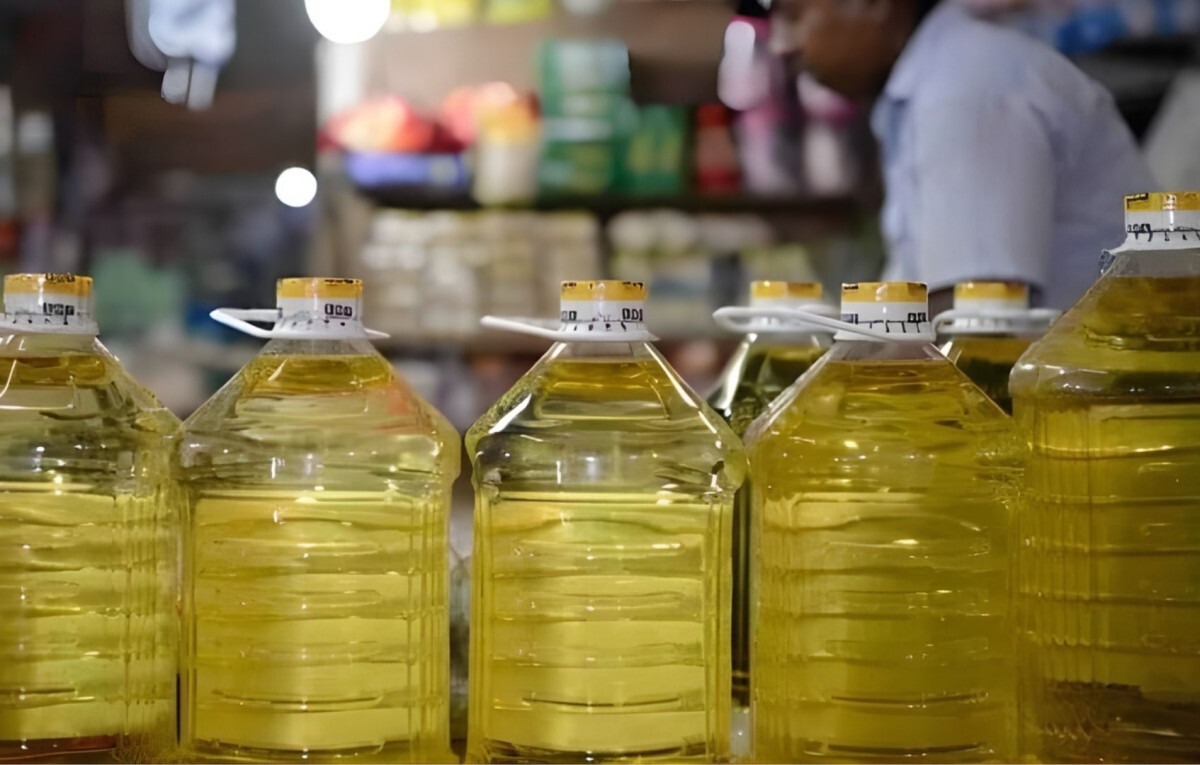
The government has announced that it will take legal action against edible oil importers and distributors after they unilaterally increased the retail price of soybean oil by 9 taka per litre without prior approval. The decision by the companies has drawn strong criticism from the Ministry of Commerce, which stated that it had not been informed of any such price revision.
Speaking at a press briefing held at the Ministry of Commerce on Wednesday (2 December), Trade Adviser Sheikh Bashiruddin confirmed that the government learned of the price hike only moments before the information became public. He described the coordinated action taken by edible oil companies as wholly unacceptable and in clear violation of established procedures.
According to the adviser, the sudden hike in soybean oil prices has no economic justification. He pointed out that the government had, only the previous day, approved the purchase of edible oil for the Trading Corporation of Bangladesh (TCB) at a price nearly 20 taka lower per litre than the rate currently being charged by private companies on the open market. This, he argued, clearly demonstrates that raising consumer prices at this stage is unwarranted.
Bashiruddin added that the companies had sold oil to the government at significantly discounted rates, yet chose to raise retail prices for ordinary consumers on the same day. Such a discrepancy, he said, cannot be defended under any rational explanation and suggests an intentional attempt to manipulate the market.
When questioned by reporters about alleged government inaction and the apparent dominance of business groups over the market, the adviser dismissed the queries as “provocative.” However, he firmly stated that the government would indeed take punitive action. “Why would we not take action?” he remarked. “Any and all legal measures available to us will be applied.”
In contrast, representatives of edible oil business associations have claimed that companies do not require prior approval from the Ministry of Commerce or the Tariff Commission to raise prices. They argue that the sector operates within a framework where prices can be adjusted independently based on import costs, international market fluctuations, and operational expenses.
Responding to this claim, the Commerce Secretary stated unequivocally that the government does not accept the business community’s position. He reaffirmed that price adjustments without formal consultation and approval are not consistent with the regulatory framework under which essential commodities are managed in Bangladesh.
The issue arises at a time when consumers are already grappling with rising costs of essential goods. Price sensitivity is expected to be particularly high ahead of Ramadan when demand for edible oil, sugar, pulses and other staple items typically increases.
Discussing the broader market outlook for Ramadan, the Trade Adviser expressed optimism that the supply of essential goods would remain stable. He noted ongoing reductions in the prices of sugar, lentils, eggs and several other commodities. “You can see that sugar prices are already falling,” he said. “The price of chickpeas will come down as well. We want to understand the full picture and adopt solutions that are logical. We will not accept any solution that is irrational or unjustified.”
The government’s forthcoming actions against the edible oil companies are expected to set a precedent for how essential commodity markets will be regulated in the coming months. Officials indicated that the Ministry will take a firm stance to ensure that consumers are protected from arbitrary price increases and that businesses comply with legal obligations.



Comments