Sunday, 5th April 2026

Khabor Wala Desk
Published: 10th August 2025, 5:27 PM
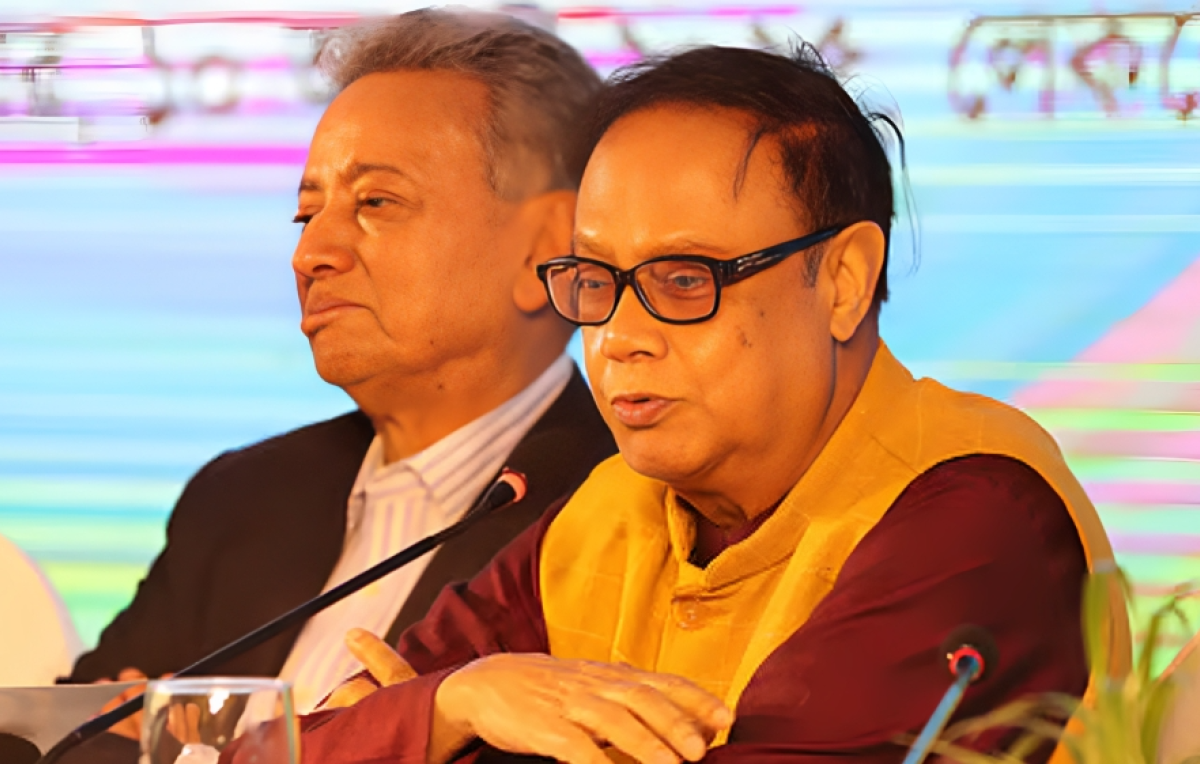
Bangladesh Bank Governor Ahsan H. Mansur has stated that expecting significant investment under the current circumstances is “unrealistic.”
Speaking on Sunday, 10 August, at a seminar titled “365 Days of the Interim Government” organised by the Centre for Policy Dialogue (CPD) in Dhaka, he noted that while stability has been restored in the financial sector, political stability remains elusive and the security situation is still unstable.
“If anyone expects investors to rush in right now, I would call that imaginary. We must be realistic,” the Governor said.
Investment Climate and Political Uncertainty
Governor Mansur elaborated that some investment projects are visible in the pipeline, with positive signs, but the process will take time.
With an election approaching, large-scale investment — especially from foreign investors — is unlikely, as they may prefer to wait to see whether the next government changes policy.
He posed a rhetorical question about the import of capital machinery:
“Who is going to invest in this environment?”
Although Bangladesh is importing goods worth USD 5 billion per month, there are no shortages in the market. However, without quick recovery from its precarious position, the economy risks sliding into crisis.
The Governor outlined two major challenges:
CPD Review: One Year of the Interim Government
CPD Distinguished Fellow Mustafizur Rahman recalled that when the interim government took office on 8 August last year, the economy faced severe challenges: falling reserves, rapid currency depreciation, high inflation, rising unemployment, and slowing export growth.
He said there has been an attempt to stabilise the banking sector from its fragile state. The election date is now broadly set, and despite criticisms, political leaders across factions embody the nation’s aspirations.
Money Laundering Halt Boosts Remittances
Former Commerce Minister and BNP Standing Committee Member Amir Khosru Mahmud Chowdhury remarked that the interim government’s main duty is to restore people’s ownership of the state.
He credited the period with halting money laundering, which drove remittances and exports up.
“Those involved in laundering have either fled or run out of cash at home,” he added.
However, he criticised continuing with the former government’s budget instead of adopting a socially focused alternative, calling it a mistake.
Textile Sector Concerns
Shawkat Aziz Russell, President of the Bangladesh Textile Mills Association (BTMA), questioned what tangible benefits the sector had seen in the past 365 days.
| Issue Raised | Policy/Condition | Impact on Sector |
| Corporate tax increase | From 15% to 37% | Higher cost burden |
| Raw cotton duty | 2% | Increased raw material costs |
| Utilities | Shortage of gas and electricity | Production disruption |
| Skills training | None provided for manpower export | Low-skilled workers earn less abroad |
He argued that finished products are being imported duty-free while raw materials are taxed, and criticised the lack of policy reform.
On banking irregularities, he suggested closing down banks ruined by looting rather than recapitalising them, and reallocating resources to expand branches of sound banks to preserve jobs.
Extortion: A Structural Problem
Bazlur Rashid Rajekuzzaman Ratan, Assistant General Secretary of the Socialist Party of Bangladesh (BASAD), criticised the continuation of past governance patterns, questioning how different results could be expected from the same methods.
He highlighted the massive scale of extortion, estimating Tk 1.8 trillion annually, and called for serious discussion on its impact on politics and society.


Comments