Sunday, 5th April 2026

Khabor Wala Desk
Published: 9th March 2025, 7:50 AM
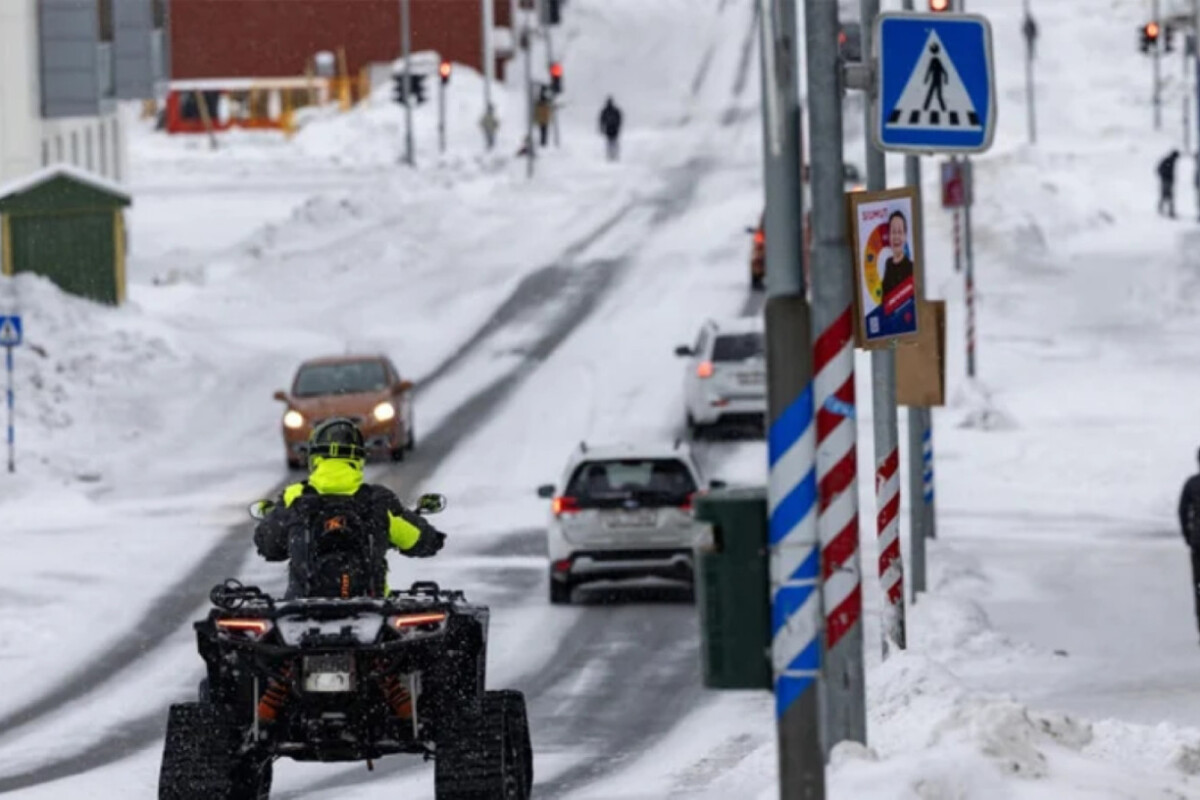
NUUK, 9 March 2025 (BSS/AFP) – With her vibrant Inuit earrings and traditional tattoos proudly displayed, Ujammiugaq Engell is among many Greenlanders who are embracing their cultural identity with renewed pride—an awakening that has only been reinforced by American expansionist ambitions.
“I am a whole person. I embrace both my Greenlandic and Danish heritage with pride,” said the 30-something-year-old, whose parents are of mixed Greenlandic and Danish descent.
After studying in Copenhagen, Engell returned to Nuuk, the capital of the vast Arctic island, where she now works as a museum curator. Like many of her compatriots, she is reconnecting with the traditions that were long suppressed under colonial rule.
For decades, Denmark, Greenland’s former colonial power, implemented policies of forced assimilation. These included a de facto ban on the Inuit language, prohibitions on traditional tattoos, forced sterilisations, and the removal of Inuit children from their families to be placed in Danish homes. Such policies left deep scars on Greenlandic society and cast a long shadow over Denmark’s national conscience.
As Greenland gradually gained greater autonomy in the latter half of the 20th century, its population—still nearly 90% Inuit—began to reclaim its cultural heritage.
Engell wears her dark hair in a bun, showcasing long, beaded earrings that reach below her collarbone. Two parallel lines of dots encircle her forearm, a traditional Inuit tattoo design symbolising holes that allow spirits to move freely.
“All women used to wear tattoos, but they disappeared with colonial history and the spread of Christianity,” explained Engell, a trained historian.
“For a long time, they were gone. But about 10 years ago, they started making their way back into our culture.”
A Nation Finding Its Own Path
Greenland’s independence is supported by all major political parties, with the question of when—not if—dominating the lead-up to the island’s legislative elections on Tuesday.
Former US President Donald Trump’s repeated claims of wanting to purchase Greenland—first made during his earlier term in office—have only strengthened Greenlanders’ sense of national identity.
“I think it plays a huge role in how we are beginning to understand our own importance and national identity,” Engell observed.
Professor Ebbe Volquardsen, a cultural historian at the University of Greenland, has noted an ongoing “mental decolonisation” among Greenlanders.
He describes this as “a process of recognising and unlearning colonial patterns of thought that have been internalised over generations.”
Once these patterns are identified, they can be consciously rejected. As a result, Greenlanders have begun to revive cultural practices that were once dismissed by colonial authorities and the Church, such as traditional handicrafts, drum dancing, and kayaking.
In Nuuk, many locals see their future as neither Danish nor American—but distinctly Greenlandic.
“We have to fight for our culture because Denmark took it away from us,” said Liv Aurora Jensen, a candidate for the left-wing Inuit Ataqatigiit (IA), one of the two parties in the outgoing government coalition.
“Today, we have to think like Danes, dress like Danes, and eat like Danes. I want our culture back.”
Challenges of Emigration
Greenland has faced a steady population decline, with 300 to 400 more people leaving each year than arriving. This trend is projected to reduce the population from its current 57,000 to below 50,000 by 2040, according to Greenland’s statistics agency.
Whether the recent resurgence in cultural pride and discussions on independence will reverse this trend remains uncertain. However, the ongoing exodus represents a significant loss of skilled professionals who could contribute to building an independent Greenlandic state.
Many of those leaving are students pursuing higher education abroad, primarily in Denmark—many of whom do not return.
Sika Filemonsen, who recently completed her architecture degree at Denmark’s Aarhus University, intends to return to Nuuk this summer.
“Growing up in Greenland, we were always told to get an education so we could contribute to society—that people with an education are exactly what the country needs, especially Greenlanders,” she said.
“That motivation has been a big part of why I wanted to pursue an education—to help shape the country and play a role in its future.”
Context and Historical Parallels
Greenland’s movement for cultural and political autonomy mirrors similar struggles faced by Indigenous populations across the Arctic and beyond. From Canada’s Inuit reclaiming their language and governance to the Sami people in Scandinavia fighting for land rights, Greenland’s resurgence is part of a broader global movement of Indigenous self-determination.
While Greenland remains an autonomous territory within the Kingdom of Denmark, calls for full independence continue to gain momentum. However, economic reliance on Denmark—particularly through subsidies—remains a key challenge. Greenland’s vast natural resources, including fisheries and potential oil reserves, are often cited as possible pathways to self-sufficiency.
As Greenlanders reconnect with their heritage and assert their national identity, the road to independence may still be long. Yet, for many, reclaiming their culture is an essential step in shaping their nation’s future.


Comments