Monday, 6th April 2026

Khabor Wala Desk
Published: 5th March 2026, 11:46 AM
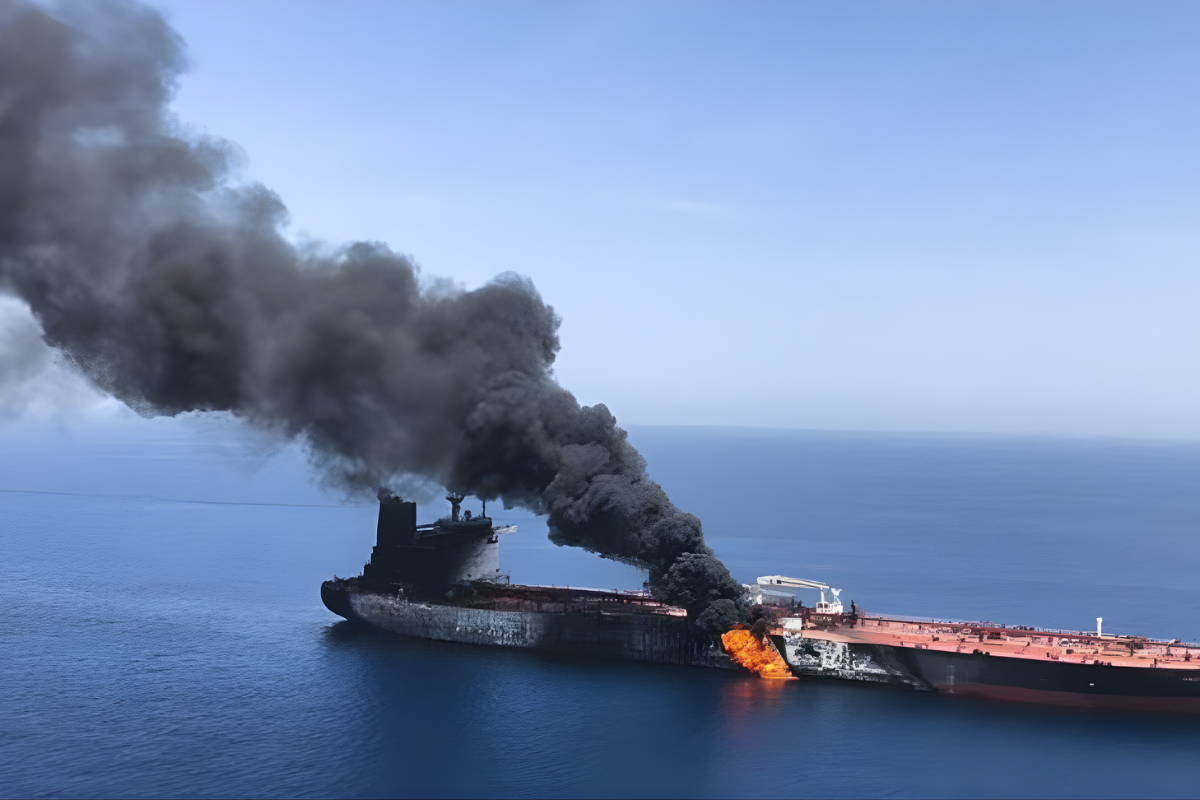
Tensions in the Middle East escalated sharply on Thursday, 5 March, following attacks on oil tankers in both the Persian Gulf and southern Iraq. A US-flagged vessel was reportedly struck by a missile in the northern Gulf, while a second tanker was attacked at Khor Al-Zubair port in Iraq, resulting in crude oil spillage. The Kurdistan Regional Government (KRG) has denied any involvement in the incidents and stressed its commitment to regional stability.
The Islamic Revolutionary Guard Corps (IRGC) of Iran claimed responsibility for a missile attack on a US oil tanker in the northern Persian Gulf. According to a statement released by the Iranian state news agency IRNA, the tanker caught fire following the strike.
An IRGC spokesperson stated:
“We maintain full control over the Strait of Hormuz, spanning from the Gulf to the Indian Ocean. Our forces have successfully targeted a US tanker with a missile, causing it to ignite.”
Independent verification of the claim is limited. The UK Maritime Trade Organisation (UKMTO) reported that early on 5 March, a tanker off the Kuwaiti coast experienced a large explosion. Witnesses observed a smaller vessel leaving the scene, and authorities confirmed crude oil leakage into nearby waters. No crew members were harmed.
At the same time, a Bahamas-flagged oil tanker was reportedly attacked at Khor Al-Zubair port in southern Iraq. Iraqi security sources informed Al Jazeera that the vessel sustained structural damage, causing crude oil spillage. Local authorities are investigating the environmental and economic impact of the incident.
| Location | Tanker Flag | Type of Incident | Outcome | Casualties |
|---|---|---|---|---|
| Northern Persian Gulf (off Kuwait) | US | Missile strike / explosion | Fire on tanker; oil leakage | Crew safe |
| Khor Al-Zubair, Iraq | Bahamas | Port attack | Structural damage; oil spillage | No casualties reported |
The KRG has categorically denied any participation in military operations or escalation of hostilities. A KRG spokesperson, cited by Reuters, stated that Kurdish forces have been consulting with the US regarding potential threats in western Iran but are not engaged in conflict escalation.
Earlier, KRG President Nechirvan Barzani emphasised that the semi-autonomous region should remain neutral to protect civilian lives and maintain public safety. The KRG reaffirmed its stance against actions that could intensify regional tensions.
The Gulf and Iraq’s ports are critical nodes for global oil trade, handling a substantial proportion of the world’s crude exports. Analysts warn that repeated attacks could disrupt energy supply chains, heighten geopolitical tensions, and trigger international naval interventions to safeguard shipping lanes.
Environmental concerns are significant. Spilled crude oil poses a serious threat to marine ecosystems, fisheries, and coastal communities. Clean-up operations have been deployed at both locations, but ongoing monitoring and mitigation efforts will be required to address potential long-term ecological damage.
| Focus Area | Implications |
|---|---|
| Maritime Security | Increased vulnerability of commercial shipping in strategic corridors |
| Global Oil Supply | Potential disruptions in international energy markets |
| Environmental Risk | Oil spills threaten marine ecosystems and local fisheries |
| Geopolitical Tensions | Escalation may provoke regional or international responses |
The dual incidents on 5 March highlight the vulnerability of commercial shipping in the Middle East, where energy infrastructure remains exposed to geopolitical tensions. Investigations are ongoing, with authorities reviewing satellite imagery, surveillance footage, and eyewitness accounts to identify perpetrators and prevent further attacks.
These events serve as a stark reminder of the fragility of regional stability and the risks faced by the global energy sector, emphasising the need for coordinated international security measures to protect vital maritime routes.




Comments