Sunday, 5th April 2026

Khabor Wala Desk
Published: 19th December 2025, 3:57 AM
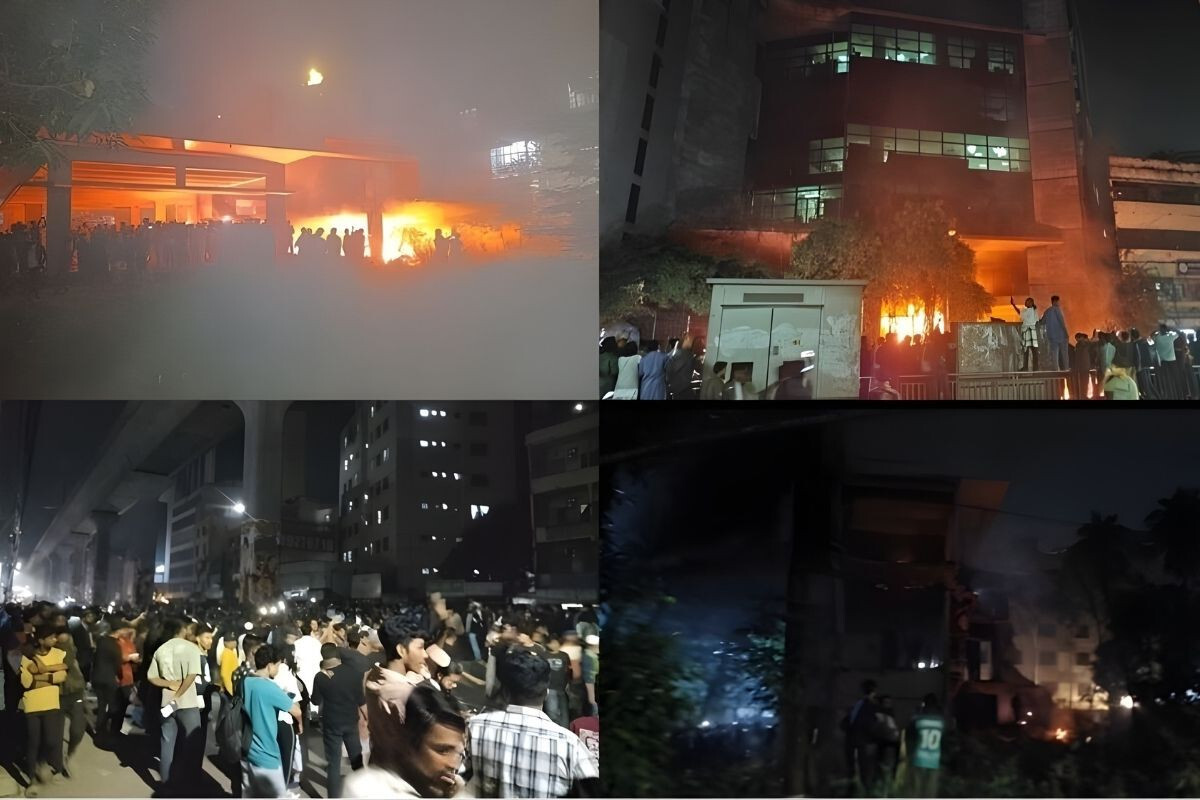
Bangladesh has been plunged into one of its most intense waves of public unrest in recent years following the shocking death of Sharif Osman Hadi, widely regarded as a symbolic hero of the July Uprising and the prominent spokesperson of the Inqilab Mancha movement. As news of his death spread rapidly on Thursday night, outrage erupted across the country, transforming grief into mass resistance.
From hill districts to lowland towns, citizens poured onto the streets demanding justice for Hadi’s killing. The protests began almost immediately in the capital, where students and activists gathered at Shahbagh and Dhaka University late on Thursday evening. Chanting slogans against what they described as authoritarian conspiracies and foreign dominance, protesters accused the authorities of gross failure and demanded immediate accountability.
Anger intensified as demonstrators called for the resignation of the Home Affairs Adviser, blaming security lapses for Hadi’s death. Prominent figures of the July Uprising, including Nahid Islam, Asif Mahmud Sajib Bhuiyan, and Mahfuz Alam, stood shoulder to shoulder with student groups, signalling unity across factions. They announced a nationwide protest programme following Friday prayers, vowing that the movement would not retreat until justice was served.
As the night wore on, demonstrations escalated into large-scale blockades. From 10 pm until the early hours of the morning, protesters shut down critical highways, including the Dhaka–Chattogram route at Jatrabari and Shanir Akhra. The disruption triggered severe traffic congestion on major arteries such as the Dhaka–Mawa and Dhaka–Demra roads, leaving hundreds of travellers, patients, and emergency vehicles stranded.
The unrest soon turned destructive. In several parts of Dhaka, including Uttara and Mirpur, roads were set ablaze. In a dramatic turn of events, fires were reported at the offices of two leading national newspapers. Journalists were temporarily trapped inside the buildings as flames spread, prompting emergency rescue operations by the fire service. The incidents sent shockwaves through the media community, raising concerns about press safety amid escalating anger.
Beyond the capital, the protests spread with alarming speed. In Chattogram, demonstrators surrounded the Indian Assistant High Commission, while the residence of a former education minister was set on fire. Rajshahi witnessed the demolition of the city Awami League office, and protest marches were reported in Sylhet and Barishal. In Netrokona and Jhalakathi, roads were blocked with burning debris as locals demanded the immediate arrest of Hadi’s killers.
Hadi’s death has become more than a single tragedy; it has evolved into a national reckoning. For many, he symbolised resistance, courage, and the unfulfilled promise of reform. His killing has reopened old wounds and ignited fears of political suppression, with protesters warning that violence would not silence the struggle against dominance and injustice.
As Bangladesh braces for further demonstrations, the question remains whether the authorities can restore calm through transparency and justice, or whether the streets will continue to dictate the nation’s future.




Comments