Sunday, 5th April 2026

Khabor Wala Desk
Published: 25th November 2025, 8:02 AM
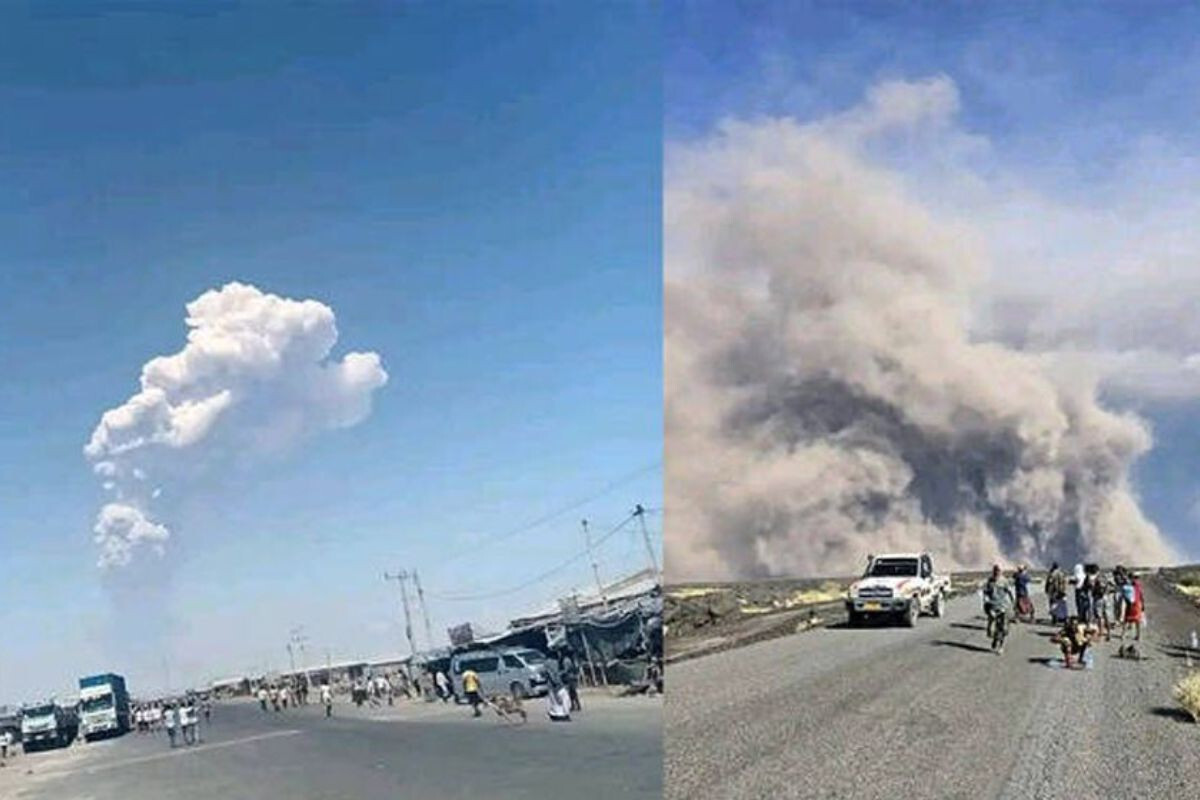
The Halei Gubbi volcano, located in north-eastern Ethiopia in East Africa, has violently erupted after remaining dormant for nearly 12,000 years. The Toulouse Volcanic Ash Advisory Centre (VAAC) reported that the eruption sent dense ash clouds up to around 14 kilometres into the sky, which gradually drifted over Yemen, Oman, and the northern regions of India and Pakistan.
The information was reported on Tuesday (25 November) in a publication by TRT World.
The several-hour-long eruption occurred on Sunday (23 November) local time in the Afar region, situated about 800 kilometres north-east of the capital, Addis Ababa, and close to the Eritrean border. The Halei Gubbi volcano, standing at roughly 500 metres in height, lies within the Rift Valley—an area where two tectonic plates meet, causing intense geological activity.
Viral footage shared on social media shows a massive column of thick white smoke rising from the volcano and drifting slowly towards the Red Sea.
According to the Smithsonian Institution’s Global Volcanism Programme, there is no record of any eruption at Halei Gubbi during the Holocene period—meaning the past 12,000 years. Simon Carn, a volcanologist at Michigan Technological University, confirmed to BlueSky that “there is no documented eruption of Halei Gubbi in the Holocene era.”
As volcanic ash continues to hover over parts of India and Pakistan, local meteorological offices have issued warnings. However, no major damage has been reported from populated areas.
Khaborwala/TSN




Comments