Sunday, 5th April 2026

Khabor Wala Desk
Published: 10th December 2025, 9:13 AM
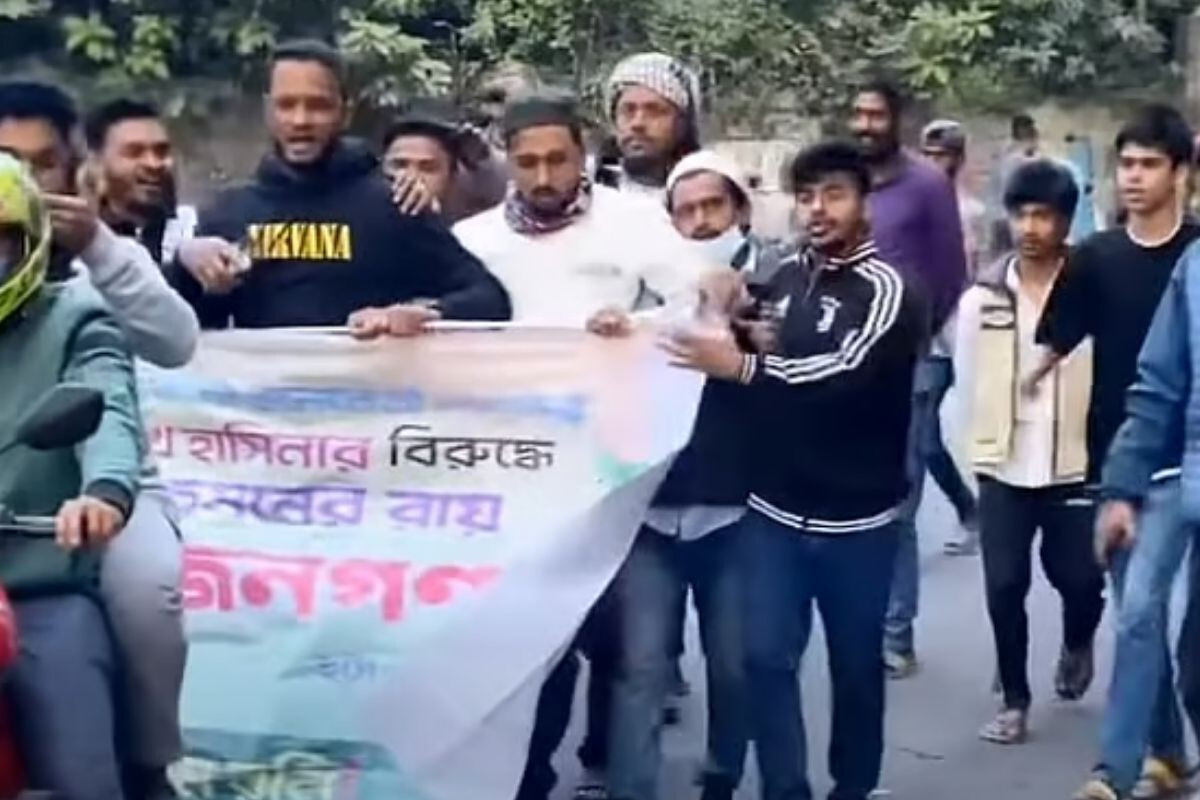
A forbidden student organisation resurfaced publicly in Chattogram on Wednesday, again raising questions about policing, political tolerance and covert influence. A short but vocal flash rally in the CRB area was carried out by individuals identifying with the prohibited Bangladesh Chhatra League. Despite the group’s banned status, they demonstrated openly, carrying a banner and chanting political slogans supporting Prime Minister Sheikh Hasina and the Awami League.
The rally was brief but loud, lasting only a few minutes, yet long enough for bystanders to record multiple clips that quickly circulated across social media. In the footage, 15–20 young activists are seen marching shoulder-to-shoulder, some appearing visibly confident, as if unconcerned about law enforcement intervention. Their chants echoed classic party slogans linked to the ruling political ideology.
Kotwali Police Station’s Officer-in-Charge, Abdul Karim, responded only after journalists contacted him. He offered minimal explanation, saying the police were “verifying the matter.” When asked if officers were present or whether there had been surveillance of political activities by banned groups, he declined to comment further. The absence of arrests has triggered suspicion among observers who believe the group might be receiving tacit support or at least implicit leniency.
The incident draws sharp parallels to a similar event on 29 November at Chateshwari. That rally led to disciplinary action against four police officers who failed to report what they had witnessed. They were withdrawn from duty on 1 December following internal investigation. Yet, less than two weeks later, another rally has occurred, raising the question: is policing truly being enforced, or are these flash marches being quietly tolerated?
Security analysts argue that these marches show a pattern. Small groups, limited duration, pre-selected locations and instant dispersal all suggest coordinated tactics intended to display presence without risking arrest. “This is a form of political signalling,” explained a former law enforcement officer, noting that such rallies test police reaction time and create pressure to acknowledge the organisation’s visibility.
Critics question whether banning the student wing is effective at all if it remains active on the streets. The symbolic value of a ban means little, they argue, if a group can gather publicly without consequence. Meanwhile, supporters of the ruling political faction admire the boldness, calling it a sign of unwavering loyalty.
One student at Chattogram University commented anonymously: “If it’s banned, then why are they walking with banners? Either remove the ban or enforce it properly. What is happening now just creates confusion.”
As the footage continues to circulate, the unanswered question lingers: who is enabling these rallies? Whether it is weak enforcement or silent approval, the public display of a banned group’s presence has now become a recurring story — and it may not be the last.


Comments