Sunday, 5th April 2026
Khabor Wala Desk
Published: 8th November 2025, 3:11 PM
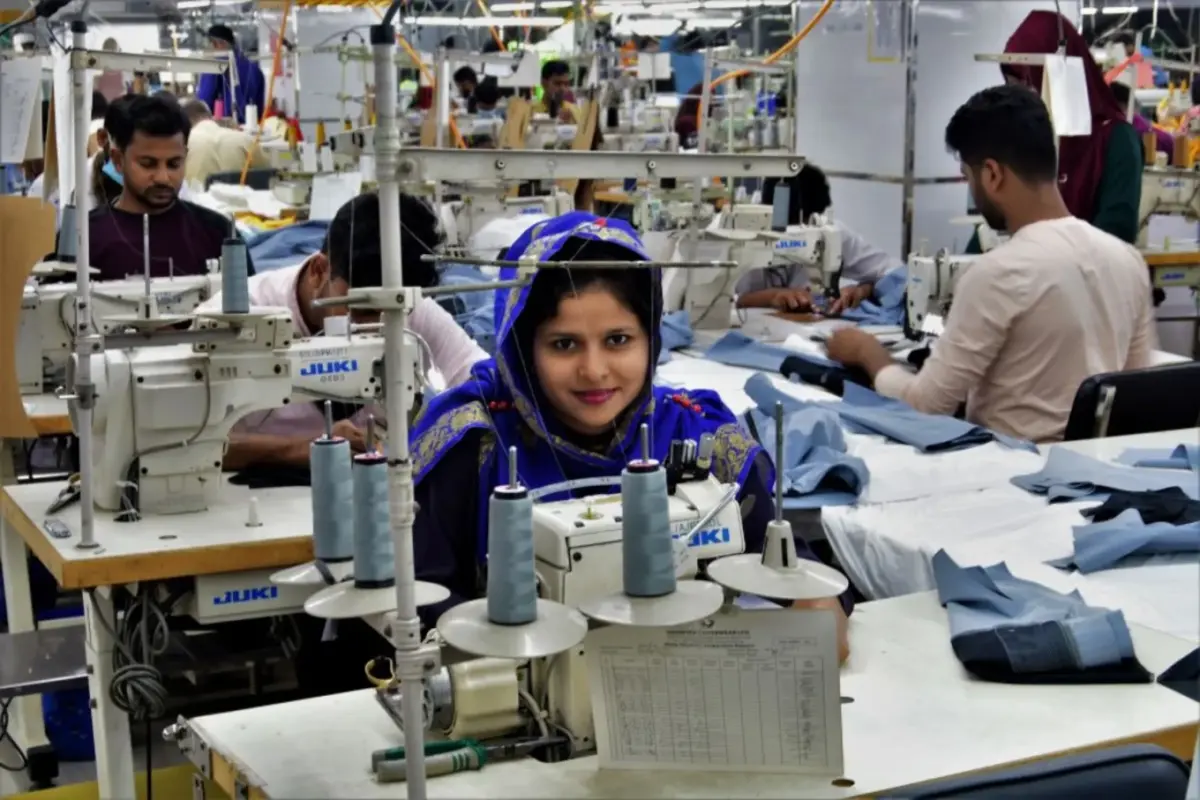
Hundreds of factories have closed, and millions of workers are unemployed – this is the state of uncertainty that Bangladesh’s garment industry is currently facing, according to entrepreneurs. However, economists are not observing as dire a situation in export statistics.
Entrepreneurs claim the industry is navigating through uncertain times, reporting that several hundred factories have shut down, leaving millions of workers without jobs. Despite these claims, economists suggest that export figures do not indicate a crisis of the same scale.
Recently, multiple factories have reportedly ceased operations, causing workers to lose their livelihoods. Although previous months had shown growth, export performance has exhibited a negative trend for three consecutive months. Adding to the turmoil, the cargo warehouse fire at Hazrat Shahjalal International Airport destroyed goods worth over BDT 10 billion from 516 factories, according to garment industry owners.
Mahmud Hasan Babu, president of the Bangladesh Garment Manufacturers and Exporters Association (BGMEA), told Deutsche Welle, “We are indeed going through a period of uncertainty. It is not as though the situation has deteriorated completely, but over the past 14 months, there was scope for better performance. Particularly with the additional tariffs imposed on China and India by the United States, we could have enjoyed certain advantages, but those opportunities were missed. Moreover, we are in a kind of guardian-less situation. We have repeatedly sent letters requesting meetings with the Chief Adviser, but we have received no response or opportunity for a meeting.”
Responding to these claims, the press secretary to the Chief Adviser, Shafiqul Alam, said that he had recently been given an opportunity to speak before the Chief Adviser. Mahmud Hasan Babu clarified, “The press secretary holds a responsible position. What he said does not reflect my actual concern. I had requested a meeting with the newly elected BGMEA committee, but he misunderstood.”
Alam further stated that the closure of some factories should not necessarily be viewed as negative. A few days ago, he said, “The shutdown of non-compliant factories is not undesirable. It is a necessary step for proper and sustainable development of the industry.”

The ready-made garment (RMG) and textile sectors have long been a major pillar of Bangladesh’s export revenue and a significant source of employment. According to industry stakeholders, approximately 4 million people rely on this sector directly, while nearly 20 million are indirectly dependent.
BGMEA data indicate that over the past 14 months, a total of 353 factories in Savar, Gazipur, Chittagong, Narayanganj, and Narsingdi have closed, leaving 119,842 workers jobless.
Savar has suffered the most, with 214 factories closing – 122 permanently and 92 temporarily – affecting nearly 31,000 workers. Notable factories among these include Chain Apparels, Generation Next Fashion, and Safwan Outerwear. In Gazipur, 72 factories have shut down, leaving over 73,000 workers unemployed, with 13 Beximco Group garment factories closing permanently representing a significant blow.
ABM Shamsuddin, former vice-president of BGMEA, told Deutsche Welle, “Frankly, Bangladesh’s garment owners are not doing well. Buyers are waiting for the elected government. Small factories cannot survive; they are closing down. Meanwhile, the government’s amendments to the labour law have created further risk. Essentially, this sector is operating like an orphan without a guardian.”
Kalpana Akhtar, founder and executive director of the Bangladesh Centre for Worker Solidarity, told Deutsche Welle, “Workers also participated in the July–August uprising. The demands for eliminating inequality were not addressed. Instead, workers are losing their jobs and becoming unemployed. The situation for workers is not improving; those who have lost jobs cannot sustain their households. Even new garments factories cannot provide employment for all.”
The recent fire at the cargo village of Hazrat Shahjalal International Airport destroyed samples worth nearly BDT 10 billion from 516 garment factories, according to BGMEA. The disruption to supply chains could delay export operations by at least a month.
Reports indicate that actual losses could exceed BDT 100 billion. Following the incident on 18 October, BGMEA requested damage assessments from member factories. The final reports from 516 factories revealed total damages of USD 8 million, approximately BDT 960 million.

The RMG sector remains the country’s largest source of export revenue. Former BGMEA president Fazlul Haque believes that the recent crisis affects not only factory owners but also the broader economy. He stated, “Exports are declining due to the slump in the US market, reduced demand, and political uncertainty. In such conditions, major buyers will not place orders. The situation may improve once the elected government takes office.”
According to the latest Export Promotion Bureau (EPB) data, overall exports increased by 25% in July compared to the previous year, but negative trends persisted for three consecutive months. In October, export growth fell by over 7%, translating to a decrease of USD 51 million, roughly BDT 6,120 crore. Last October, exports amounted to USD 413 million, which dropped to USD 362 million this year. Despite this, the cumulative growth for the first four months of the current fiscal year stands at 2%, with prospects for further improvement.
Dr. Golam Moazzem, a distinguished fellow at the Centre for Policy Dialogue (CPD), asserts that the situation is not as severe as owners claim. He told Deutsche Welle, “The export data do not align with the owners’ statements. Owners are saying factories are closing, orders are missing, and workers are losing jobs. Yet our export figures remain in double digits; only last month dropped to single digits. Large factories may be exporting more, while smaller ones are affected. Proper investment does not occur without an elected government.”

The government has recently finalised the Bangladesh Labour Law (Amendment) Ordinance, 2025, but factory owners remain dissatisfied with certain changes. BGMEA president Mahmud Hasan Khan stated, “The unilateral amendments will increase instability in the industry, reduce foreign investment, harm the export sector, and weaken the economy. The new law does not protect the interests of either owners or workers.”
Describing the ordinance as “unbalanced” and “unreasonable,” Khan said, “The Advisory Council unilaterally amended labour laws, allowing trade unions to form with the consent of just 20 workers. This is unrealistic. Such provisions will allow individuals unrelated to the industry to form unions, creating internal conflicts and instability. Investor confidence will decline, and entrepreneurs will hesitate to establish or manage new enterprises.”
Khan appealed for a reconsideration of the labour ordinance, urging the government to draft legislation that reflects the real needs of the industry, workers, and economy. He emphasised that the law should support sustainable development without compromising industrial competitiveness.
Neighbouring countries set thresholds for union formation: India requires consent from 10% of workers or at least 10 individuals, while Pakistan requires 20%. Currently, Bangladesh’s RMG sector has over 1,400 trade unions and 81 federations.
Jolly Talukdar, vice-president of the Bangladesh Garment Workers Trade Union Centre, told Deutsche Welle, “During the current government’s tenure, 200,000–300,000 workers have lost their jobs. Four workers were shot dead during this period. Now they are attempting to restrict trade unions. This is unacceptable. We have witnessed workers being shot for demanding wages. No improvements in facilities have been made; conditions are deteriorating.”

Approximately 32% of RMG workers earn below the minimum wage, and 78% cannot provide adequate food for their families. One in eight workers is trapped in debt. Twelve-hour shifts and excessive work are common in sub-contracted and mixed-type factories.
A report by the Bangladesh Labour Foundation (BLF), titled “Forced Labour and Child Labour in Bangladesh’s Garment Industry: Risk Identification and Guidelines for Remediation”, released on 28 October, highlights these issues. The report states that forced and child labour persists at lower tiers of the garment supply chain. About 80% of child labourers work in sub-contracted or mixed-type factories, 99% work over 36 hours per week, and falsifying age documentation to gain employment is commonplace.

Comments