Sunday, 5th April 2026

Khabor Wala Desk
Published: 18th October 2025, 7:23 AM
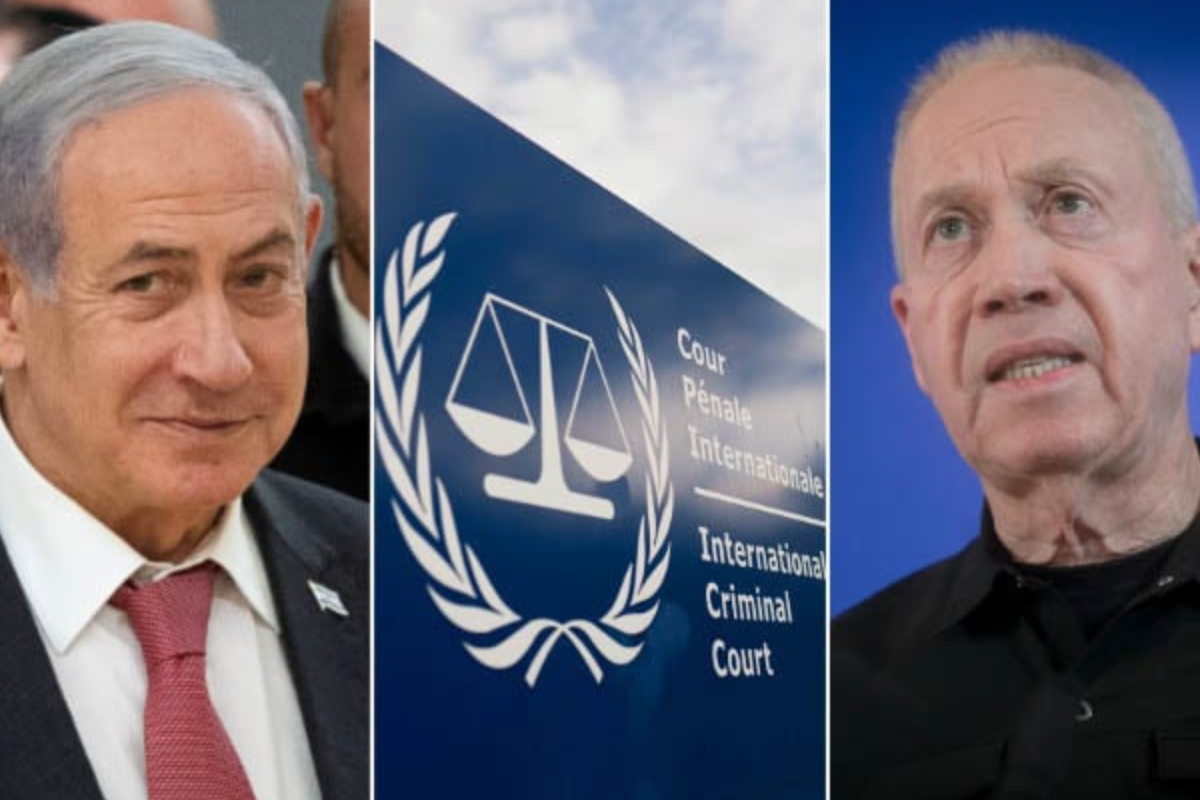
The International Criminal Court (ICC) on Friday dismissed Israel’s request to appeal against arrest warrants issued for Prime Minister Benjamin Netanyahu and former Defence Minister Yoav Gallant in connection with alleged war crimes and crimes against humanity committed during the Gaza war.
The ruling — which has generated global attention — upholds the ICC’s November decision that found “reasonable grounds” to believe both Israeli leaders bear criminal responsibility for actions taken during the conflict.
In November, the ICC issued warrants not only for Netanyahu and Gallant, but also for three senior leaders of Hamas. However, those Hamas warrants were subsequently withdrawn following their deaths.
| Individuals Named in ICC Warrants | Affiliation | Current Status |
| Benjamin Netanyahu | Israeli Prime Minister | Active |
| Yoav Gallant | Former Israeli Defence Minister | Active |
| Three Hamas leaders (unnamed) | Hamas Movement | Deceased |
The decision triggered fury in Israel and sharp criticism from the United States, both longstanding critics of the ICC’s jurisdiction in the matter.
Netanyahu condemned the decision as “anti-Semitic”, while then US President Joe Biden described it as “outrageous”, echoing Washington’s view that the court had overstepped its mandate.
Following the ruling, the United States imposed sanctions on several top ICC officials involved in the case.
In May, Israel formally petitioned the court to dismiss the arrest warrants, arguing that the ICC lacked jurisdiction over the matter because Israel is not a signatory to the Rome Statute, the treaty underpinning the court’s authority.
However, on 16 July, ICC judges rejected Israel’s request, concluding that there was “no legal basis” to overturn the warrants while the question of jurisdiction remained unresolved.
A week later, Israel sought leave to appeal the July decision — but the court again ruled against it on Friday, stating that “The issue, as framed by Israel, is not an appealable issue.”
The 13-page ruling concluded succinctly: “The Chamber therefore rejects the request.”
The ICC continues to examine Israel’s broader jurisdictional challenge, which lies at the heart of the case.
When the arrest warrants were first issued in November, the court simultaneously rejected an Israeli motion questioning its authority over the matter. However, in April, the ICC’s Appeals Chamber determined that the Pre-Trial Chamber had erred in dismissing that motion prematurely and directed it to reconsider Israel’s arguments in full detail.
| Timeline of Key Legal Proceedings | Event Description |
| November 2024 | ICC issues arrest warrants for Netanyahu, Gallant, and three Hamas leaders |
| April 2025 | Appeals Chamber orders reconsideration of Israel’s jurisdictional challenge |
| 16 July 2025 | ICC rejects Israel’s motion to dismiss warrants |
| 23 July 2025 | Israel seeks leave to appeal — request later denied |
| 17 October 2025 | ICC formally rejects Israel’s appeal bid |
The ICC has not yet announced when it will deliver a final ruling on the jurisdictional question.
The case marks one of the most contentious confrontations between Israel and the ICC since the court’s founding in 2002. It also underscores ongoing international divisions over accountability in the Gaza war — a conflict that has left tens of thousands dead and strained relations between Western allies and global institutions.
Legal observers note that even if the ICC’s warrants remain valid, enforcement remains uncertain, as Israel is not obliged to comply, and the court lacks its own police force.
Nevertheless, the ruling places both Netanyahu and Gallant at risk of arrest should they travel to any ICC member state — a symbolic yet politically consequential outcome amid mounting international scrutiny.




Comments