Sunday, 5th April 2026

Khabor Wala Desk
Published: 28th March 2026, 11:29 AM
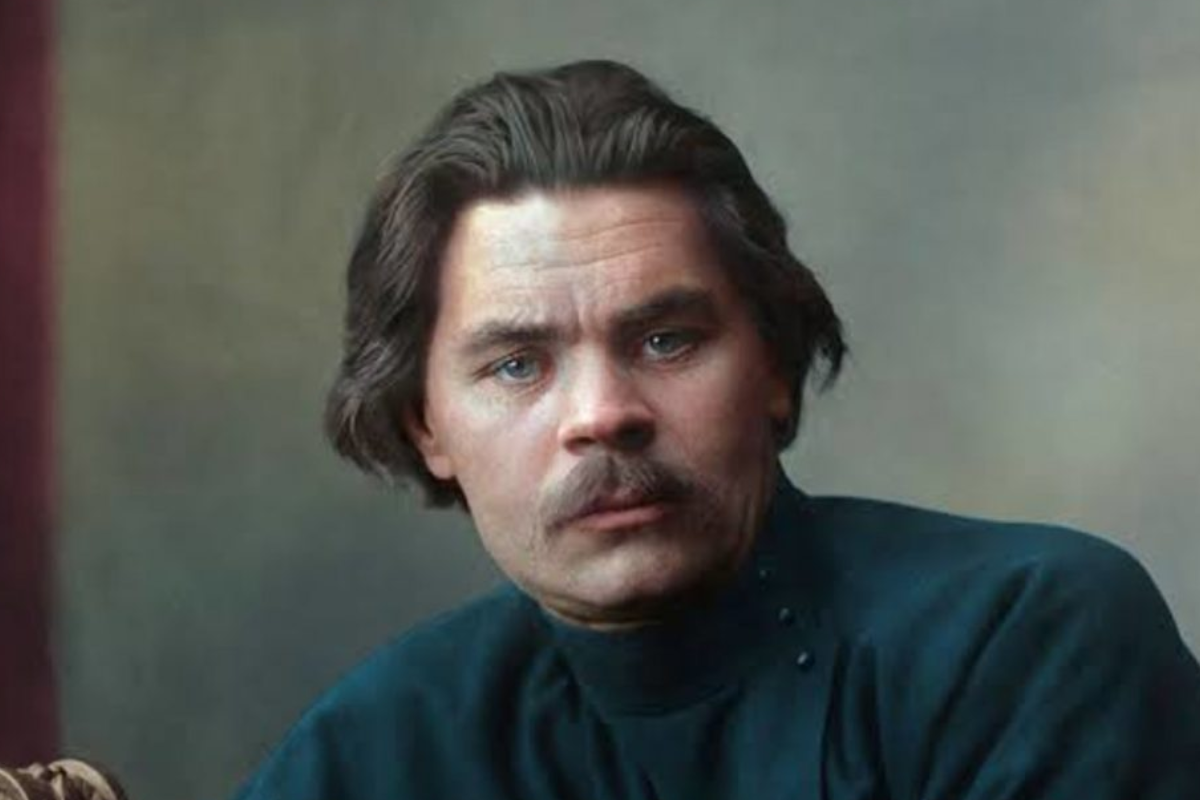
Maxim Gorky—one of the most unforgettable names in Russian literature—was not only a writer but also a powerful voice of social struggle. His real name was Alexei Maximovich Peshkov, yet in the literary world he became universally known as “Gorky,” meaning “bitter.” This name itself reflects the harsh realities and struggles that shaped his life.
He was born on 28 March 1868 in Nizhny Novgorod, Russia. He lost his parents at an early age and spent his childhood in uncertainty, poverty, and neglect. Although he had no formal higher education, life itself became his greatest teacher.
From his teenage years, he worked in various occupations to survive—cook, ship worker, labourer, and even wandered across regions as a drifter. These long journeys and harsh experiences deeply influenced his literary outlook.
As a self-educated writer, he began his literary career in 1882, gradually developing a strong and distinctive voice.
Gorky’s writings primarily focused on the lives of the lower strata of society—workers, vagabonds, and the oppressed. He used literature as a tool for social change.
Some of his notable works include:
He is widely regarded as a founding figure of Socialist Realism, a literary movement that later became the foundation of Soviet literature.
Gorky was an active supporter of progressive political ideas of his time. He played an important role during the Russian Revolution, although he was also critical of certain aspects of it.
Due to political disagreements, he spent a significant part of his life outside Russia and later outside the Soviet Union in exile.
During the famine of 1921, he appealed to the international community for humanitarian assistance. The Russian famine of 1921–1922 caused massive suffering and the loss of countless lives. His efforts helped draw global attention and support.
In 1934, the sudden death of his only son, Maxim Peshkov, deeply affected him.
He died on 18 June 1936 from pneumonia. However, his death remains surrounded by historical controversy and continues to be a subject of research.
Gorky was nominated for the Nobel Prize in Literature five times but never received it. Nevertheless, his literary legacy remains immortal in world literature.
He was not merely a writer—he was the voice of an era, a representative of the oppressed, and a pioneer who used literature as a means of social transformation.
Maxim Gorky reminds us that literature is not only entertainment; it is also struggle, protest, and a powerful instrument of human liberation.
On his birth anniversary, we pay him humble tribute.




Comments