Sunday, 5th April 2026

Khabor Wala Desk
Published: 19th January 2026, 11:02 PM
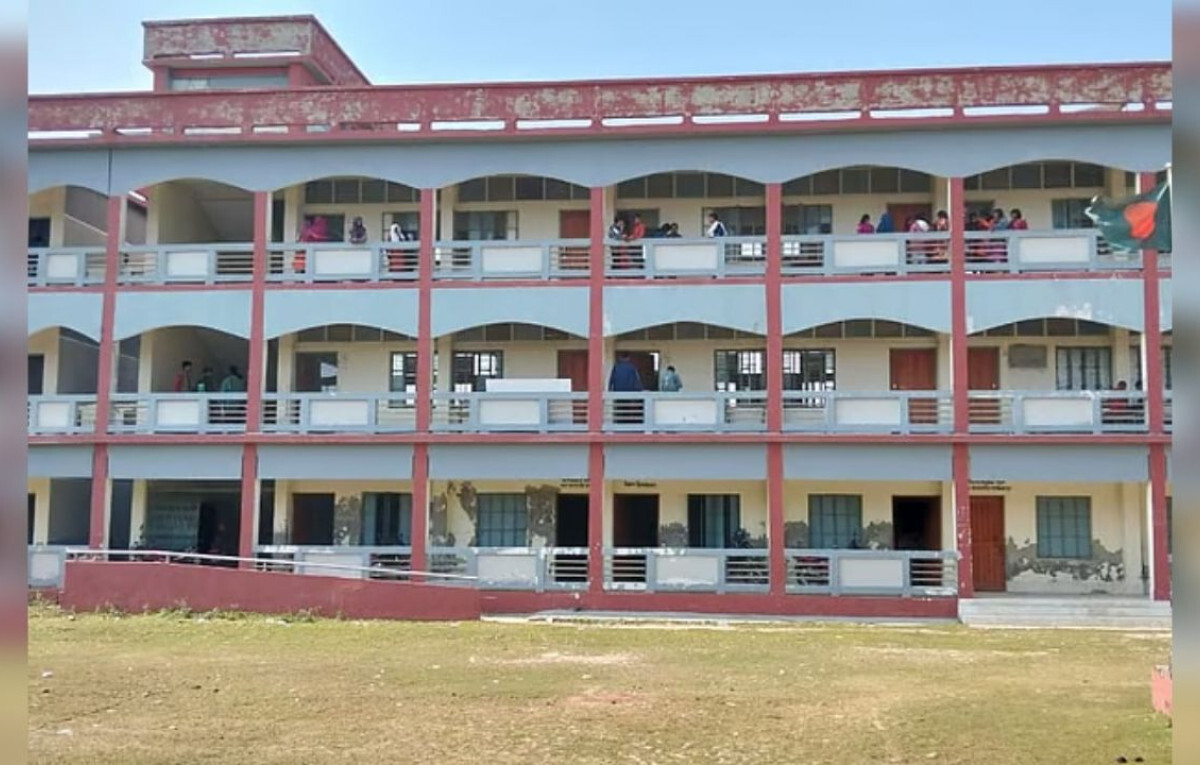
Bangladesh has embarked on a pioneering environmental initiative with the commencement of the country’s first ‘Adaptation Fortress’. This innovative structure, designed to provide sanctuary not only from devastating cyclones and storm surges but also from the escalating threat of extreme heatwaves, is currently under construction at the Bardal Aftab Uddin Collegiate School in Ashashuni Upazila, Satkhira.
The project is the result of a high-profile international partnership. It is being developed by the Jameel Observatory Climate Resilience Early Warning System Network (Jameel Observatory CreWNSet)—a joint venture between the Massachusetts Institute of Technology (MIT) and Community Jameel—in close collaboration with BRAC.
Unlike traditional shelters, the Adaptation Fortress focuses on retrofitting existing school buildings and cyclone centres into multi-purpose, climate-resilient hubs. These facilities are specifically engineered to maintain cool temperatures during lethal heatwaves, serving as a vital refuge for vulnerable coastal communities.
| Feature | Description |
|---|---|
| Dual Protection | Protects against both tropical cyclones and extreme heatwaves. |
| Passive Cooling | Engineered to remain habitable and cool during peak thermal events. |
| Solar Energy | Equipped with solar panels and battery storage to power cooling systems during blackouts. |
| Water Security | Integrated rainwater harvesting systems for community use. |
| Community Grid | Excess solar power is shared with the local population. |
| Scalability | Designed as a pilot for 1,250 potential sites across the region. |
The technical sophistication of the fortress ensures that even during total grid failure—a common occurrence during climate disasters—the cooling mechanisms remain operational via renewable energy. Professor Elfatih Eltahir, Lead Investigator at the Jameel Observatory CreWNSet, noted that this is the first time the concept of heatwave protection has been integrated into the traditional cyclone shelter infrastructure of Southwestern Bangladesh.
The project in Satkhira serves as the inaugural pilot. A second site has already been identified at Satbaria High School in Jessore. If these initial phases prove successful, the consortium plans to roll out 1,250 Adaptation Fortresses, potentially providing life-saving thermal shelter to approximately 500,000 people.
Mohammed Abdul Latif Jameel KBE, Founder and Chairman of Community Jameel, emphasised that as thermal disasters become more frequent and intense, such early-warning and proactive response systems are essential milestones for South Asia. Deborah Campbell, Executive Director of Jameel Observatory CreWNSet, added that this model could serve as a blueprint for climate-resilient infrastructure globally.
As Bangladesh continues to face the brunt of global temperature rises, the Adaptation Fortress represents a shift from reactive disaster management to proactive, technologically driven climate adaptation.



Comments