Sunday, 5th April 2026

Khabor Wala Desk
Published: 21st November 2025, 3:41 AM
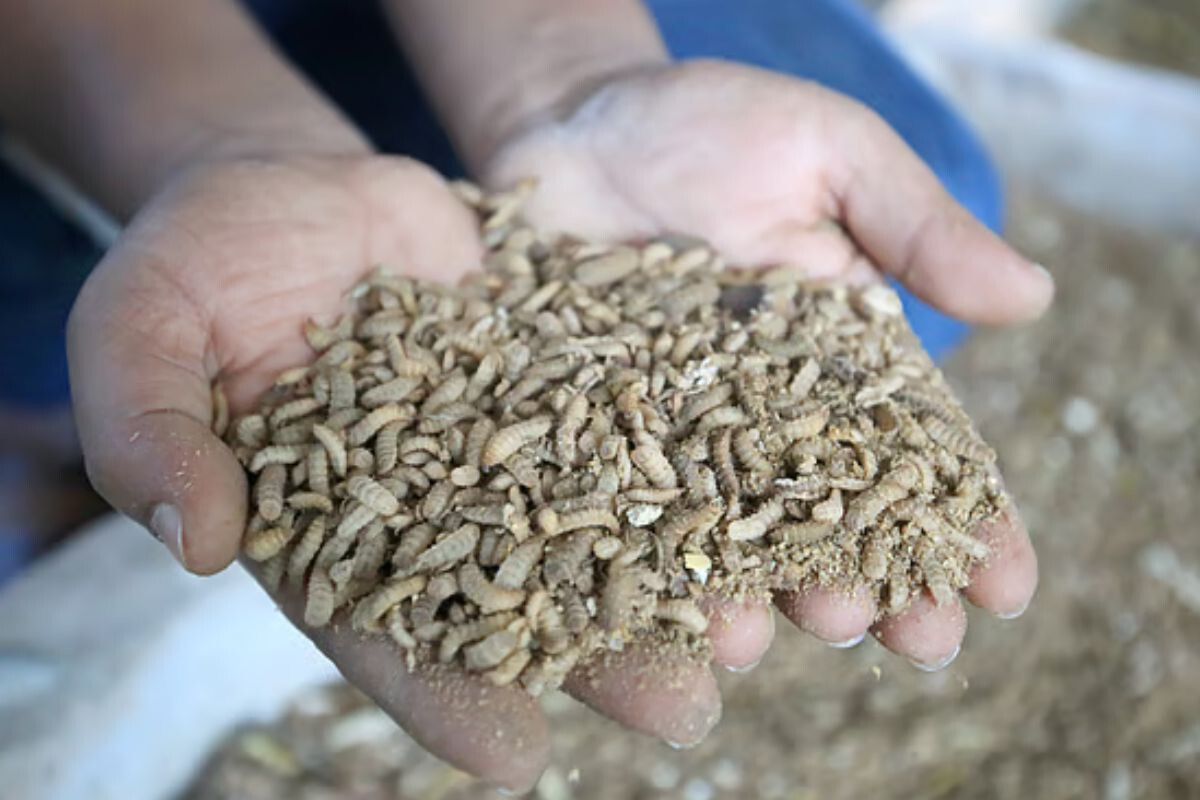
After completing a diploma in Fashion Designing, Md. Shimul (29) visited various offices looking for a job, but failed to secure one. He was compelled to return home and start a duck farm, where he also incurred losses. However, Shimul did not give up. He started farming Black Soldier Fly (BSF) with a capital of just 14 thousand Taka, which turned his fortune around. In just five years, he has established himself as a self-reliant entrepreneur.
This young entrepreneur hails from Parsidhai village in Atgharia Upazila, Pabna. He has currently set up five BSF farms. These insects are primarily used as feed for ducks, chickens, and fish. Additionally, he has also established duck, chicken, and fish farms. His total monthly income currently stands at around three lakh Taka.
Entrepreneur Md. Shimul stated, “Initially, locals thought I was mad for cultivating insects. But this very insect has changed my destiny. I am currently exporting the insect to India, Nepal, Bhutan, and Pakistan.”
His initiative began in 2018. Shimul returned to his village after searching for a job in Dhaka. He was unsure about his next steps. Driven by an urge to become an entrepreneur, he first set up a duck farm. He incurred a loss of 27 lakh Taka in two years from the farm, which had about three and a half thousand ducks. Even though he was trapped in debt, Shimul did not lose heart. He became interested in BSF farming after watching videos on YouTube. Following this, he received training on the subject from Bangladesh Agricultural University. After researching the market system, he started BSF farming in 2020 with a minimal capital of only 14 thousand Taka.
Md. Shimul further mentioned that Black Soldier Fly is primarily used as feed for ducks, chickens, and fish. Its nutritional value is higher than conventional feed, and the production cost is lower. Furthermore, BSF larvae and breeder flies are exported to various countries, including China and India. He is currently exporting BSF larvae and breeder flies. In addition to his own village, he has a total of five BSF farms in Rajapur and Dashuria of Ishwardi Upazila. He also runs duck, chicken, and fish farms. The feed demand of these farms is being met entirely by the BSF produced in his own farms.
On Tuesday last, a visit to Shimul’s BSF farm in Parsidhai village of Atgharia revealed a single-roof tin shed house. The four sides are open and enclosed with nets. Small tanks have been constructed with brickwork on the floor of the house, where the insects are cultivated. The insects look like flies but are slightly longer in size. They are fed waste, duck and chicken excrement, and food residue from hotels.
Workers at the farm stated that the Black Soldier Fly larvae have a slightly hard shell. For the production of these insects, the breeder flies are first kept in a net under light and air. The flies lay eggs in sawdust. The eggs hatch into larvae after 14 to 15 days. These are then collected and sold.
According to Shimul, by running the BSF farm, he has repaid his old debt of 27 lakh Taka over the last five years and invested another 30 lakh Taka to establish new farms. Currently, the farms are producing about 300 kg of BSF daily. He sells each kg of larvae for 80 Taka, while the production cost per kg is only 10 Taka. After deducting all expenses, his farms yield a monthly income of around two and a half to three lakh Taka.
Md. Shimul told the media, “Locals used to think I was mad for insect farming. But this very insect has changed my destiny. I am currently exporting breeder flies to India, Nepal, Bhutan, and Pakistan. The demand for BSF is growing daily due to its high nutritional value.”
According to the District Livestock Department, there are about 60,000 duck and chicken farms in the country, and the number is constantly increasing due to demand. Consequently, the demand for BSF is also rising daily. Currently, more than 280 entrepreneurs in 25 districts of the country are commercially cultivating BSF. Around 70 tonnes of BSF are produced monthly.
District Fisheries Officer Deepak Kumar Pal said that packaged fish and poultry feed available in the conventional market contain a maximum of 33 per cent protein. However, BSF contains protein ranging from 43 to 55 per cent. For this reason, BSF is becoming increasingly popular as fish and poultry feed in the country. They are encouraging new entrepreneurs to take up BSF farming.
Khaborwala/TSN



Comments