Tuesday, 7th April 2026

Khabor Wala Desk
Published: 7th April 2026, 7:41 PM
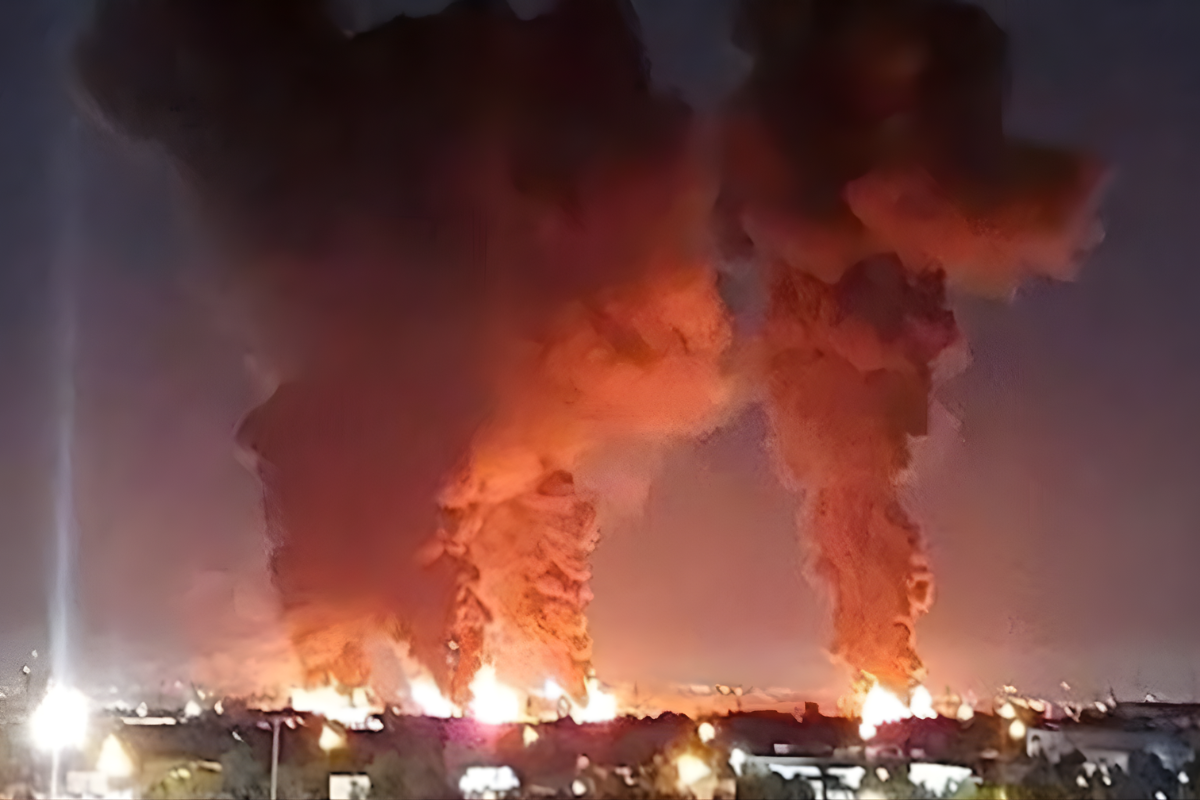
Iran has claimed responsibility for a drone and missile strike targeting a petrochemical installation in Saudi Arabia, a development that has further heightened already volatile geopolitical tensions across the Middle East.
The announcement was issued on Tuesday, 7 April, in a statement attributed to the Islamic Revolutionary Guard Corps (IRGC) and carried by the state-run Islamic Republic News Agency (IRNA). The claim has not been independently verified by international observers.
According to the statement, the alleged operation targeted a petrochemical complex in Jubail, one of Saudi Arabia’s key industrial hubs on the Gulf coast. The IRGC said the strike involved a combination of unmanned aerial vehicles and missile systems, although it did not provide technical details regarding the weapons used or the scale of the operation.
Iranian officials described the attack as a retaliatory response to what they allege were recent strikes on three Iranian petrochemical facilities. Tehran did not present independent evidence of those incidents, but framed its action as a proportional response to external aggression.
The broader regional backdrop includes a series of escalating exchanges involving multiple state actors. Notably, the Israel Defense Forces (IDF) had earlier claimed responsibility for a strike on a site near Shiraz in south-west Iran on 6 April, alleging the facility was linked to the production of materials used in ballistic missile development. That claim has also not been independently verified.
Citing local sources, several international media outlets reported that the alleged strike in Jubail triggered fires and multiple explosions within the industrial complex. Iranian media outlets, including Fars News Agency, Noor News, and Tasnim News Agency, circulated footage said to show flames and heavy smoke rising from the site.
However, these reports remain unconfirmed. The BBC and other international broadcasters stated they were unable to independently verify the authenticity of the footage or assess the extent of any damage. Saudi authorities have so far not issued any official confirmation or denial regarding the incident.
Jubail is regarded as one of Saudi Arabia’s most important industrial and petrochemical centres. Located along the eastern Gulf coast, the city hosts major energy infrastructure, including facilities linked to Saudi Aramco and the Saudi Basic Industries Corporation (SABIC).
The area also includes multiple joint ventures involving international energy firms, making it a critical node in global petrochemical supply chains. Any disruption to operations in Jubail, if confirmed, could have wider implications for regional energy stability and global market confidence.
The latest claims add to growing concerns about a cycle of retaliatory strikes between regional powers and allied groups. Analysts warn that continued attacks on strategic infrastructure could increase the risk of broader confrontation, particularly if verification gaps persist and competing narratives escalate.
Diplomatic observers have called for restraint, noting that the absence of independently confirmed information makes the situation particularly sensitive. The risk of miscalculation, they argue, is heightened when incidents involve critical economic and energy assets.
| Date | Event | Claimed by | Verification status |
|---|---|---|---|
| 6 April | Strike on facility near Shiraz | Israel Defense Forces | Not independently verified |
| 7 April | Alleged strike on Jubail petrochemical complex | Islamic Revolutionary Guard Corps | Not independently verified |
As of now, there is no official confirmation from Saudi authorities regarding any damage or disruption at the Jubail complex. Independent verification of both incidents remains pending, and competing claims from regional actors have yet to be substantiated.
Nevertheless, the developments underscore the fragility of the current security environment in the Middle East. Analysts caution that further escalation—particularly involving energy infrastructure—could have significant geopolitical and economic consequences, depending on how events unfold in the coming days.



Comments