Sunday, 5th April 2026

Khabor Wala Desk
Published: 29th December 2025, 5:45 AM
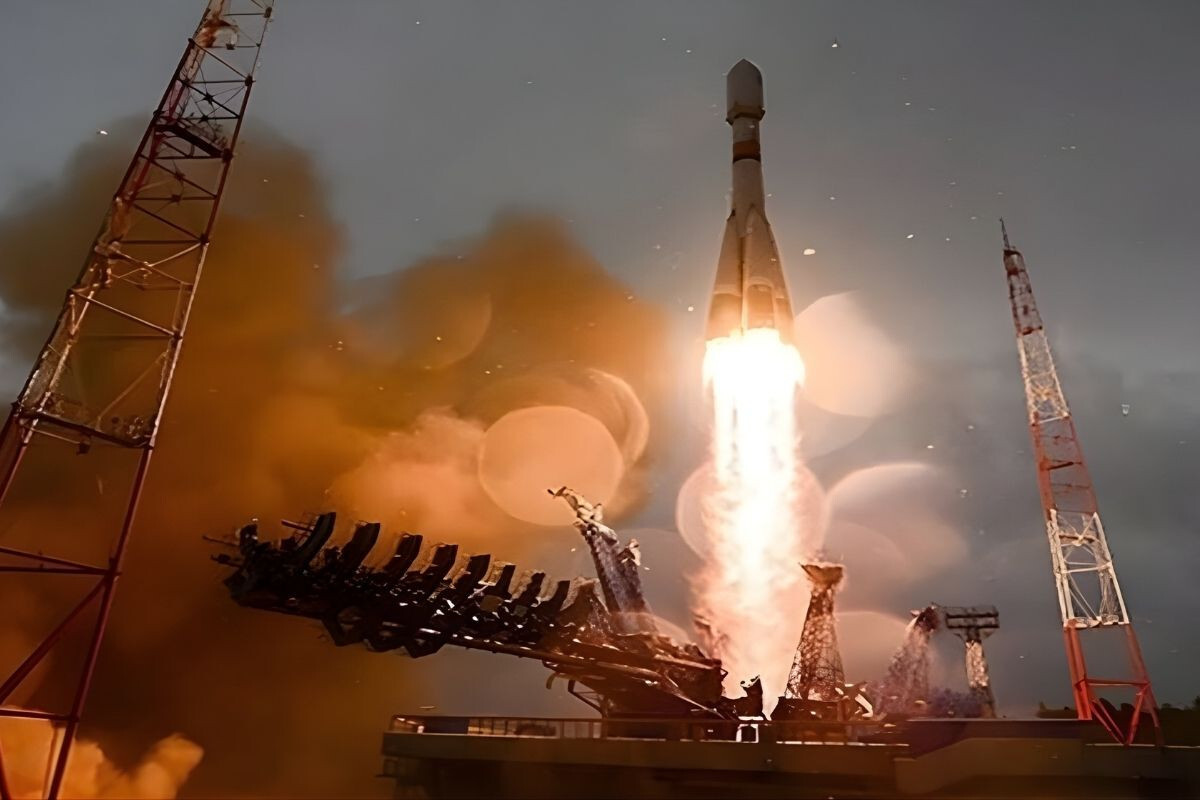
In a significant advancement for its domestic space programme, Iran has successfully placed three homegrown remote-sensing satellites into orbit using a Russian launch vehicle. The Soyuz satellite-carrying rocket was launched from the Vostochny Cosmodrome on Sunday, 28 December, at 4:48 PM local time in Tehran.
The mission, part of a multi-payload operation, included Iran’s Zafar-2, Paya, and Kowsar satellites. According to Iranian officials, this marks the seventh occasion on which the country has relied on Russian rockets for satellite deployment.
Addressing the media prior to the launch, Iran’s ambassador to Moscow, Kazem Jalali, described the mission as a major milestone for the nation’s burgeoning space programme. In multiple posts on X (formerly Twitter), Jalali emphasised that all three satellites were entirely designed and built using domestic technology, highlighting the collaborative efforts of government agencies, universities, and knowledge-based private companies.
He clarified that while the design and manufacturing of the satellites were conducted entirely within Iran, the launch procedure was executed in cooperation with Russian authorities. Jalali noted: “Two of these satellites are government-operated, while one belongs to the private sector. Our knowledge-based companies and academic institutions played an active role in their development.”
Technical Overview of the Satellites:
| Satellite | Manufacturer | Purpose | Notable Features | Weight |
|---|---|---|---|---|
| Zafar-2 | Iran University of Science & Technology | Natural resource monitoring, environmental assessment, disaster management, mapping | Remote-sensing capabilities | N/A |
| Paya (Tolu-3) | Iranian Space Agency | Earth observation | Heaviest Iranian satellite to date, approx. 150 kg | 150 kg |
| Kowsar | Iranian Space Agency | IoT-enabled smart monitoring | Improved version of Kowsar and Hudhud, real-time data exchange | N/A |
Zafar-2 was developed by the Iran University of Science and Technology and is intended to provide vital data for monitoring natural resources, assessing environmental conditions, responding to disasters, and generating accurate maps.
The Kowsar satellite, an upgraded version of earlier Kowsar and Hudhud satellites, is equipped with Internet of Things (IoT) capabilities, enabling instantaneous data transfer for smart monitoring systems. Meanwhile, Paya—also known as Tolu-3—is Iran’s heaviest Earth observation satellite to date, weighing approximately 150 kilograms.
Iran first entered the space arena in 2009 with the launch of the Omid (Hope) satellite. Despite facing Western sanctions, Tehran has persistently expanded its civilian space programme, underscoring its long-term ambitions in space technology.




Comments