Sunday, 5th April 2026

Khabor Wala Desk
Published: 5th March 2026, 3:50 AM
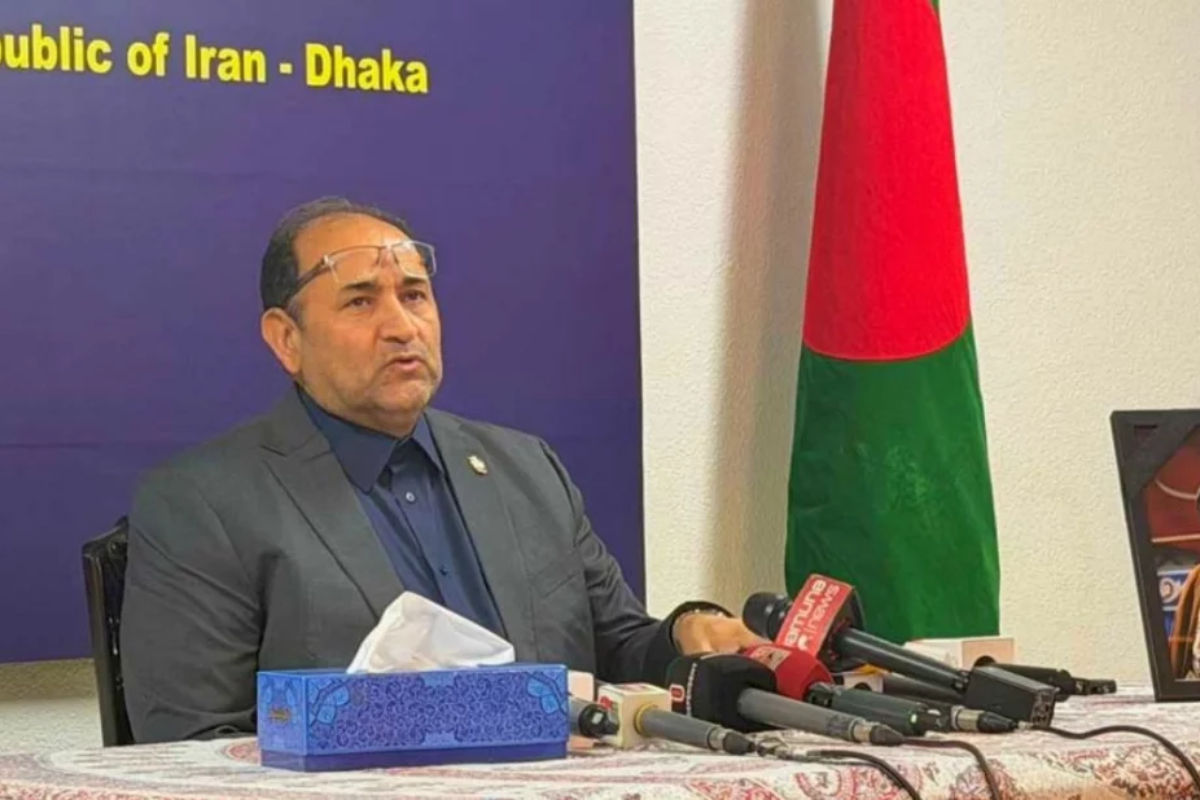
In the wake of the recent attacks by the United States and Israel, Iran has appealed to Muslim nations for solidarity and support, rather than military or logistical aid. Speaking at a press conference in Dhaka on Wednesday, Iranian Ambassador Jalil Rahimi Jahanabadi emphasised that Tehran expects Bangladesh, as a fellow Muslim country, to issue a clear condemnation of the aggressors rather than provide material assistance.
The attacks, which began on Saturday across Iran, reportedly claimed the lives of Supreme Leader Ayatollah Ali Khamenei and several members of his family. According to the Iranian Red Crescent, the death toll has surpassed 1,000. In retaliation, Iran has launched missile and drone strikes against strategic targets. While Bangladesh issued two statements addressing the crisis, the first statement did not specifically mention Israel or the United States, nor did it acknowledge the death of Khamenei, prompting discussions among international observers.
At the press conference, Ambassador Jahanabadi noted that the United Nations has already condemned the attacks, and he expressed Iran’s expectation that Bangladesh, as a member of both the Organisation of Islamic Cooperation (OIC) and the Neutral Alliance Movement (NAM), issue a forceful protest against the aggressors.
He further stated that apart from Jamaat-e-Islami leader Shafiqul Rahman, no political party in Bangladesh has yet contacted the Iranian embassy to express solidarity. However, the ambassador praised the support shown by students through rallies and demonstrations.
When asked whether Khamenei’s death involved any intelligence failure, Jahanabadi described the attack as “cowardly” and not due to negligence. He explained that the Supreme Leader was conducting normal office duties rather than taking shelter in a secure location, which created the opportunity for the strike. Responding to U.S. threats of nuclear action, he declared that Iran will not bow down, asserting, “We take pride in fighting and embracing martyrdom rather than submitting.”
The ambassador also appealed to neighbouring countries not to allow their territory to be used against Iran, warning that continued support to the aggressors would compel Iran to pursue defensive warfare. While Iran maintains military agreements with China and Russia, Jahanabadi clarified that these do not constitute direct wartime defence obligations. He concluded by asserting that the Iranian populace has united behind the government in the face of foreign aggression, overcoming internal differences.
| Aspect | Details |
|---|---|
| Date of Attack | 28 February |
| Death Toll | 1,000+ (Red Crescent) |
| Nature of Request | Moral support, not military aid |
| Expected Response from Bangladesh | Strong condemnation of aggressors |
| Political Engagement | Only Jamaat-e-Islami contacted embassy |
| Iran’s Defence Policy | Defensive warfare if aggression continues |
| International Relations | Military agreements with China & Russia, non-binding in war |
| Public Unity | Domestic consensus behind government |
Ambassador Jahanabadi’s statements underscore Iran’s insistence on moral and political solidarity from Muslim nations, rather than logistical or military intervention, in response to the ongoing crisis.



Comments