Monday, 6th April 2026

Khabor Wala Desk
Published: 17th March 2026, 1:34 PM
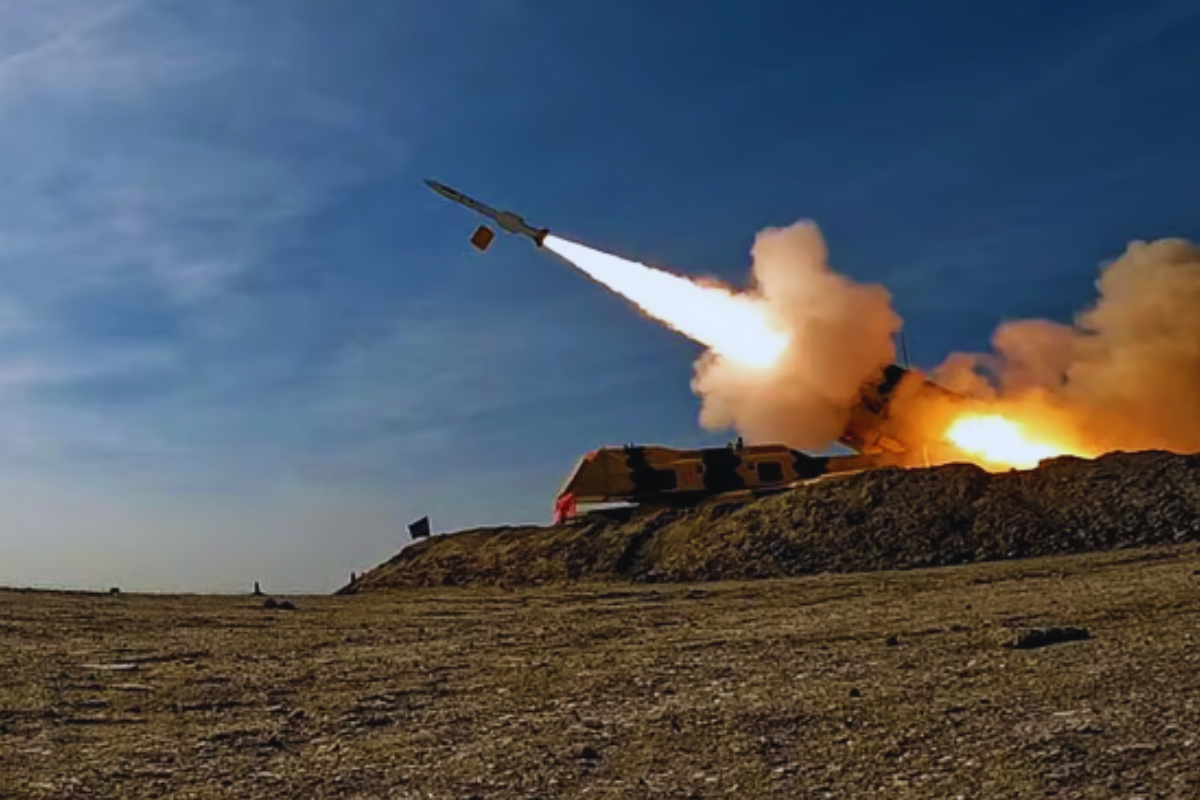
Despite strong assertions from Washington that Iran’s missile capabilities have been “effectively destroyed”, developments across the Middle East indicate a far more nuanced reality. While sustained joint operations by the United States and Israel have significantly degraded Tehran’s offensive capacity, Iran continues to retain the ability to launch attacks—albeit in a reduced and more strategic manner.
The campaign, launched on 28 February under the codename Operation Epic Fury, has focused on dismantling Iran’s missile infrastructure, including launchers, storage facilities, and drone production sites. The White House has claimed near-total air superiority and stated that Iran’s naval and ballistic missile capabilities are no longer operational at scale. Former US President Donald Trump also remarked that Iran’s drone production capacity has been “almost completely eliminated”.
However, events on the ground suggest otherwise. On Monday, Qatar confirmed it had intercepted another missile launched from Iran. Countries across the Gulf, including Saudi Arabia, United Arab Emirates, and Bahrain, have issued repeated alerts amid ongoing threats. In Abu Dhabi, a missile reportedly struck a vehicle, resulting in one fatality.
There has been a marked decrease in the scale of Iranian strikes since the conflict began:
| Period | Missiles Launched | Drones Deployed |
|---|---|---|
| First 24 hours | 167 | 541 |
| Day 15 | 4 | 6 |
According to the Pentagon, missile attacks have fallen by approximately 90%, while drone operations have dropped by 86% compared to the opening day. Similarly, strikes targeting Israel have declined from nearly 100 missiles in the first two days to single-digit figures in recent days.
Despite these reductions, analysts stress that Iran’s capabilities have not been entirely eliminated. The country possesses a large and dispersed missile arsenal, once estimated by Israeli intelligence to include up to 3,000 missiles, later reduced to around 2,500 after previous conflicts.
A key factor is Iran’s adaptation. While many fixed launch sites have been destroyed—reports suggest around 290 out of 410–440 launchers have been disabled—Iran has shifted towards mobile launch systems. These platforms are far more difficult to detect and target using satellite and radar technologies.
David Des Roches of the National Defense University notes that without deploying ground forces, it is nearly impossible to completely eliminate Iran’s missile capabilities. Even with overwhelming air superiority, residual systems can continue operating.
Rather than large-scale barrages, Iran now appears to favour smaller, sustained strikes. These are often described as “harassment attacks”, designed to exhaust enemy defences, trigger repeated alerts, and create psychological pressure rather than cause large-scale destruction.
According to Hamidreza Azizi, Iran may be pursuing a war of attrition—aiming to outlast the defensive capabilities of its adversaries. This involves launching fewer attacks, but doing so consistently over time.
Low-cost drones, particularly the Shahed-136, have become central to this approach. These drones are inexpensive, easy to produce in large numbers, and capable of overwhelming air defence systems. Despite their relatively slow speed, many have successfully penetrated defences and struck infrastructure targets.
Recent incidents in Dubai, including a fire near an international airport and another in the Fujairah industrial zone, highlight the ongoing risks.
The implications extend well beyond military considerations. The Strait of Hormuz—a critical route for nearly 20% of global energy supplies—has become increasingly tense, with hundreds of vessels operating under threat. Although direct attacks on shipping remain limited, around 20 maritime incidents have been recorded since the conflict began.
Global energy markets have reacted sharply. Oil prices have surged past $100 per barrel. Qatar has halted gas production, Bahrain has suspended shipments, and southern Iraq has reduced oil output by roughly 70%.
Vali Nasr argues that if Iran succeeds in driving oil prices even higher, the economic damage to the United States could rival—or exceed—the physical damage inflicted on Iran itself.
In conclusion, while Iran’s conventional military strength has been significantly weakened, its ability to adapt through asymmetric warfare ensures that it remains a persistent and evolving threat in the region.



Comments