Monday, 6th April 2026

Khabor Wala Desk
Published: 4th March 2026, 8:45 AM
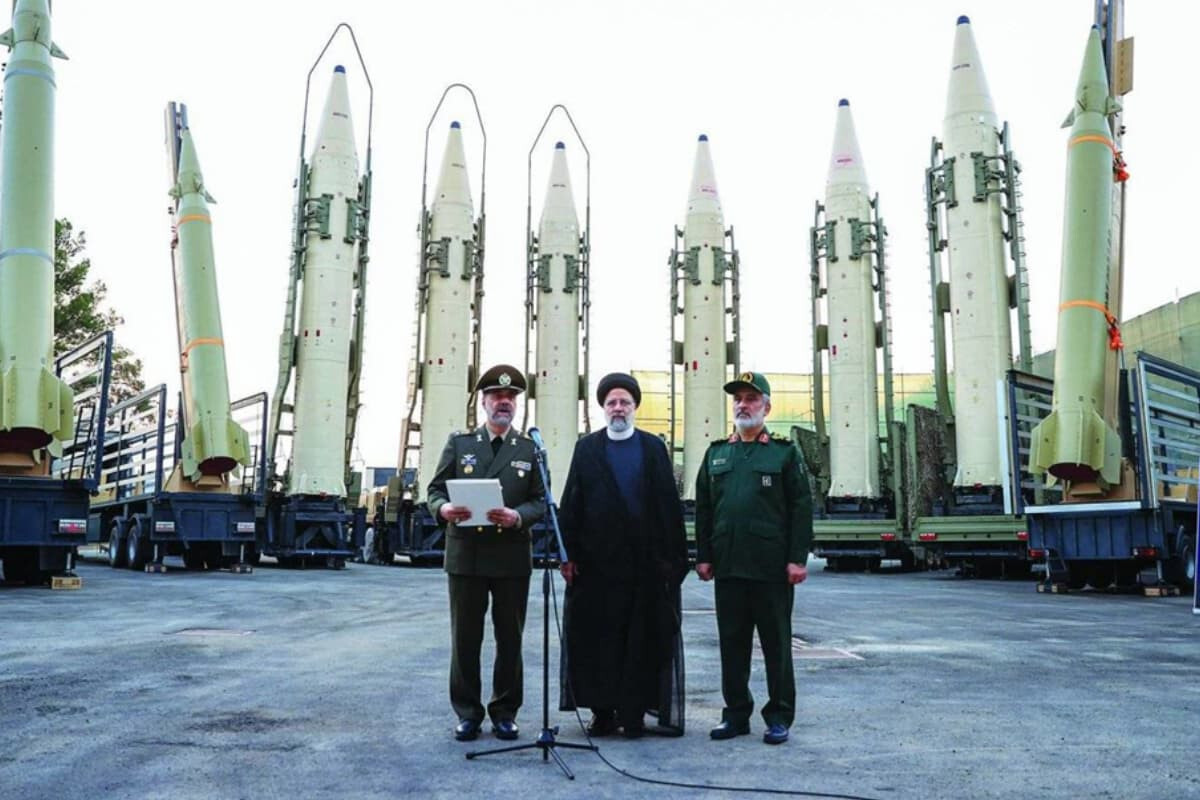
The skies over the Middle East have erupted in chaos as waves of Iranian missiles rain down, bypassing the renowned Iron Dome and Arrow defence systems of Israel. From Tel Aviv to Jerusalem, cities tremble under the thunderous impact of relentless attacks.
Iran’s military campaign against Israel is deploying a combination of conventional and advanced weaponry, some of which were previously confined to experimental or classified arsenals. Among these, the Sajjil, Khaybar Shekan, and the hyper-velocity Fattah missiles have emerged as central instruments of destruction.
The initial phase of the assault began with the deployment of the Shaheed-136 kamikaze drones. Though inexpensive—costing only a few thousand dollars each—their precision and operational impact are extraordinary. These drones swarm in coordinated waves, jamming and evading Israeli radar systems, effectively creating the first layer of attack. Analysts compare them to the similar drone tactics used by Russia in Ukraine, which had previously stunned global observers. Today, they represent a nightmare for Israel’s air defence planners.
Following the drone salvo, Iran escalated the offensive with ballistic missile strikes. Its Sajjil long-range missile can reach speeds up to 17,000 kilometres per hour, striking targets up to 2,500 kilometres away in mere minutes. Complementing this is the Khaybar Shekan, a manoeuvrable missile capable of mid-flight trajectory adjustments, making interception extremely difficult.
The weapon that has generated the greatest alarm in Israel is the Fattah, Iran’s first hypersonic missile. Travelling at roughly fifteen times the speed of sound, even Israel’s most advanced defence systems are reportedly unable to intercept it. Iranian officials claim the Fattah can reach and devastate Tel Aviv within 400 seconds, marking it as a significant strategic threat.
In addition to ballistic missiles, Iran possesses the long-range Paveh cruise missiles, designed to fly at low altitudes and evade radar detection. With a range of 1,650 kilometres, these cruise missiles specifically target military bases and strategic installations across Israel.
Western intelligence reports suggest that Iran retains additional “secret weapons” reserved for decisive escalation, and rumours circulate of underground nuclear testing bunkers. Collectively, these deployments signal Iran’s intention to leverage its full military capability against Israeli forces.
| Weapon | Type | Range (km) | Special Features |
|---|---|---|---|
| Shaheed-136 | Kamikaze Drone | 50-100 | Swarms, radar-jamming, low-cost precision strikes |
| Sajjil | Ballistic Missile | 2,500 | Long-range, hypersonic speeds, rapid strike |
| Khaybar Shekan | Ballistic Missile | 2,000+ | Mid-flight trajectory alteration, hard to intercept |
| Fattah | Hypersonic Missile | 1,500+ | 15× speed of sound, virtually unstoppable |
| Paveh | Cruise Missile | 1,650 | Low-altitude flight, terrain-following precision |
With a combination of swarming drones, long-range ballistic missiles, hypersonic projectiles, and stealth cruise missiles, Iran’s military appears to be unleashing an unprecedented campaign against Israel, signalling a dangerous new phase in regional hostilities.



Comments