Sunday, 5th April 2026

Khabor Wala Desk
Published: 24th January 2026, 7:12 AM
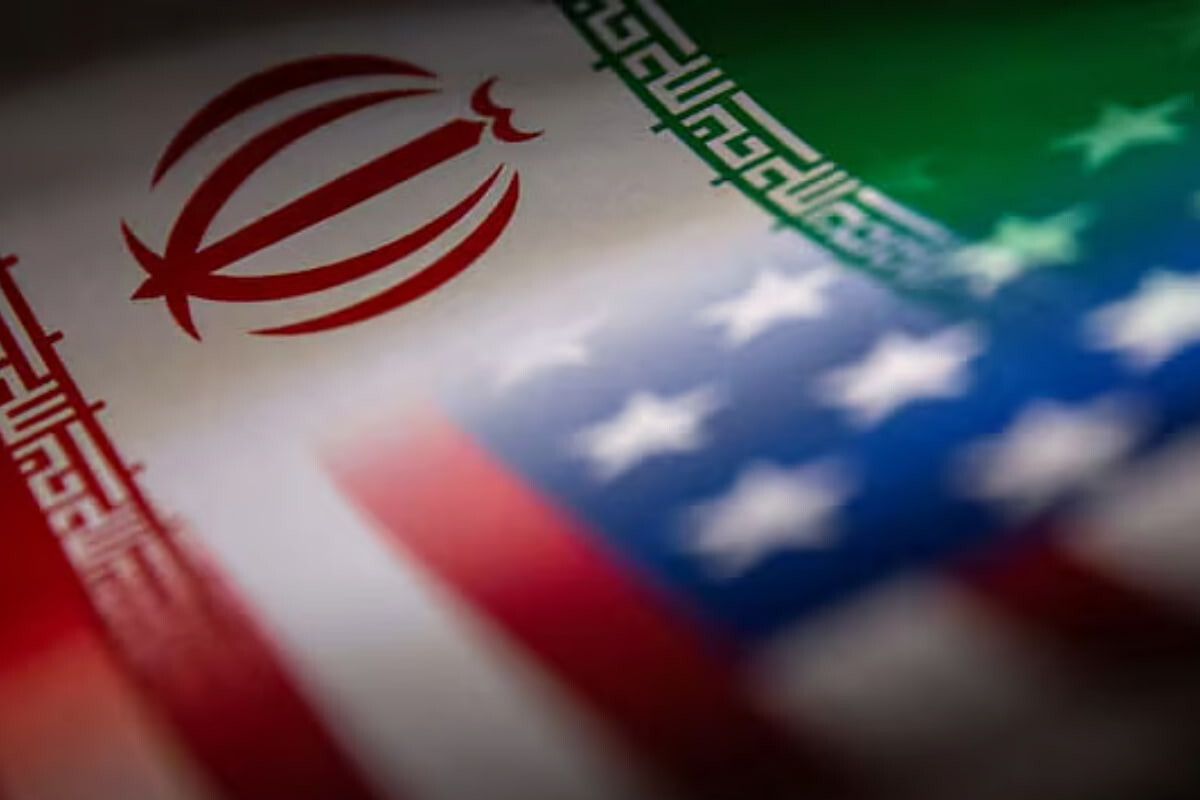
Iran has issued a stark warning that it will regard any form of attack against the country as an act of “full-scale war.” A senior Iranian official made the statement on Friday, 23 January 2026, emphasising that Tehran is prepared to respond with the strongest possible measures.
The announcement follows a declaration by U.S. President Donald Trump, who stated that a large fleet of American naval vessels is being deployed to the Persian Gulf. In response, Iranian authorities immediately issued alerts and placed their military forces on high alert.
Speaking on condition of anonymity, the senior official said, “We hope that this military deployment is not intended for direct confrontation. However, our preparations are complete for the worst-case scenario.” The official added, “If the United States attempts to violate Iran’s sovereignty or territorial integrity, we will respond decisively. The precise nature of our response will not be disclosed.”
Earlier, President Trump asserted, “There will be no need to use our fleet.” Yet, he reiterated warnings regarding Iran’s nuclear programme and recent regional unrest, highlighting ongoing concerns about security in the Gulf.
The following table summarises the recent military movements and corresponding reactions in the Persian Gulf:
| Date | U.S. Action | Iranian Response |
|---|---|---|
| June 2025 | Increased military presence in the Middle East | Defensive posturing |
| January 2026 | Deployment of naval fleet to Persian Gulf | Full-scale war warning |
| Current | Naval forces on standby to prevent conflict | Military on high alert |
Historically, the United States has periodically augmented its military presence in the Middle East, generally framed as precautionary measures. However, this latest escalation is notably different: Iran has explicitly stated that even a limited or surgical strike would be interpreted as triggering full-scale war.
Analysts warn that the combination of enhanced military manoeuvres and heightened diplomatic pressure increases the risk of confrontation. Experts also caution that the current tensions between Tehran and Washington could have serious implications for Persian Gulf security and global trade, particularly the movement of oil through one of the world’s most strategic waterways.
The situation underscores the fragility of regional stability, with both sides signalling that miscalculations could provoke far-reaching consequences. International observers continue to monitor the unfolding developments closely, noting that even minor incidents could rapidly escalate into a larger conflict.
Source: Reuters


Comments