Sunday, 5th April 2026

Khabor Wala Desk
Published: 23rd March 2026, 5:32 AM
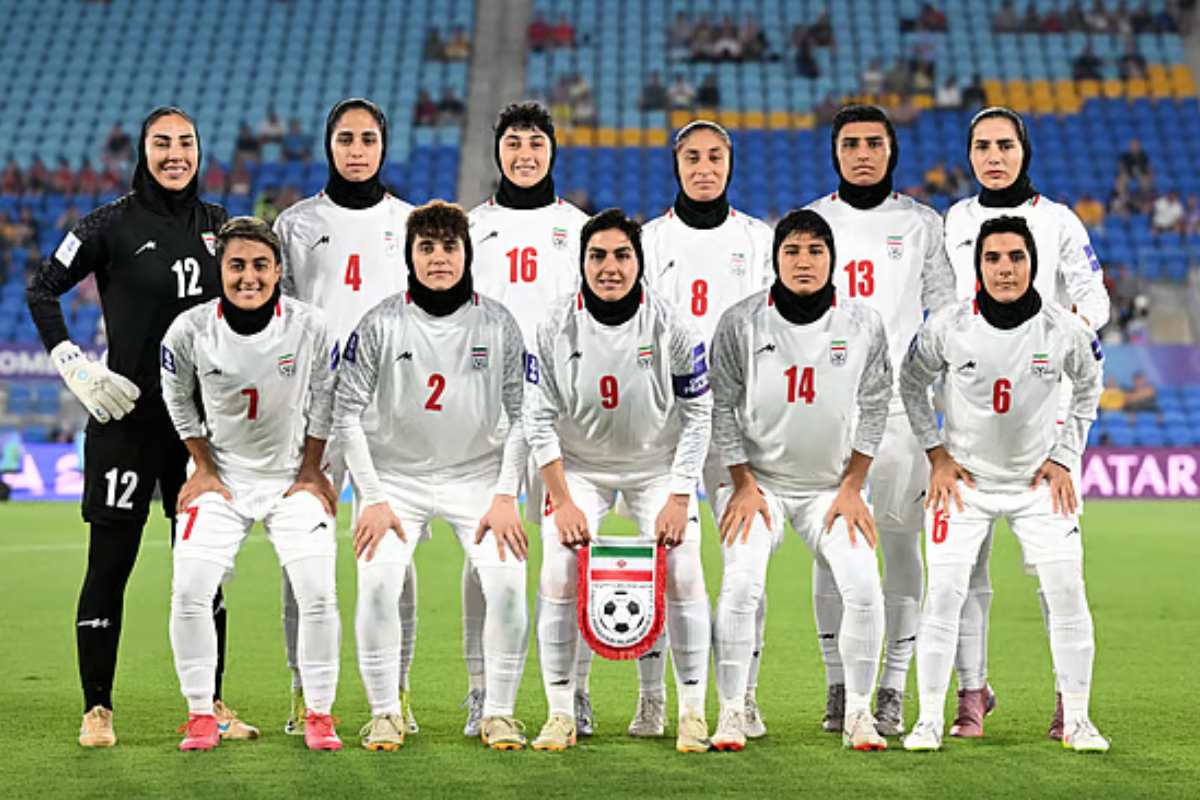
In the heart of Tehran, Valiasr Square was adorned with a towering billboard bearing the slogan, “My Choice, My Country”, while Iran’s national television broadcast a live reception for the women’s national football team. The players stood in formation, flanked by government officials, as a flag-bearing crowd cheered their courageous return.
Known as the ‘Lionesses’, akin to England’s women’s national side, Iran’s team faced crushing defeats in all three matches of the Women’s Asian Cup in Australia. Last Thursday’s ceremony was brief, overshadowed by nightly US and Israeli airstrikes on Iran. Yet, for the Iranian government, the return of the team was a symbolic victory. Only days earlier, the captain, five players, and the kit-woman had been at a safe house in Brisbane, contemplating asylum. Ultimately, only two chose to remain abroad.
Mehdi Taj, President of the Iranian Football Federation, stated, “These athletes remain loyal to their homeland, flag, leaders, and revolution.” Clad in their jerseys and compulsory black hijabs, the women sang the national anthem on stage. British newspaper The Times reported that their expressions appeared somber, reflecting uncertainty about their futures.
Just three weeks prior, during the opening match of the Asian Cup, the players’ silence during the national anthem prompted Iranian state television to brand them as “wartime traitors”. On that very morning, 19-year-old wrestler Saleh Mohammadi and two others were executed for participating in January protests, which reportedly claimed the lives of at least 30,000 people.
Most team members are under 21, facing a stark choice: stay in a war-torn, oppressive homeland where thousands of friends and peers have died, or accept asylum abroad, securing freedom but endangering family back home. Ex-national player Mohammad Taghavi, now exiled in England, remarked to The Times, “If they sense your weakness is family, that becomes a weapon. These girls are still children; imagine the mental strain when mothers beg for their lives.”
Until recently, Iranian women were barred from attending stadiums. Many resorted to disguising themselves as men to watch matches. In 2019, Sahar Khodayari, known as the “Blue Girl”, was arrested attempting to enter Azadi Stadium and later died after self-immolation.
FIFA regulations mandate women’s teams and female spectators for countries to maintain international membership. Without compliance, men’s teams risk exclusion from tournaments like the World Cup—a tournament Iran aims to contest in 2026, though ongoing regional conflict jeopardises participation.
| Date | Event | Location |
|---|---|---|
| 2 March 2026 | First Asian Cup match vs South Korea | Gold Coast, Australia |
| 2–4 March | Players remain silent during national anthem | Stadium & Hotel |
| 5 March | Some players take refuge in Brisbane | Safe house, Brisbane |
| 7 March | Remaining team members fly to Malaysia | Kuala Lumpur Hotel |
While in Australia, the team’s story sparked global attention. Local supporter Li Swansboro, a 55-year-old Australian who has followed Iranian women’s football for over a decade, located the team via Instagram and visited them. She noted that many of the players arrived carrying the traumatic memories of January’s mass killings, having lost friends and family.
As the Asian Cup began, the team’s silence during the national anthem and later military-style salutes drew sharp criticism from Iranian media. Meanwhile, political tensions grew, with some spectators chanting in support of Reza Pahlavi, Iran’s former crown prince, further complicating the players’ situation.
Ultimately, only two players—34-year-old Atefeh Ramazanzadeh and 21-year-old Fatemeh Pasandid—remained in Australia, training at Brisbane Roar. The rest returned under pressure, as their families were reportedly threatened or taken hostage.
Despite the ceremonial honours upon return, the players face continued uncertainty. Swansboro cautioned, “When calm returns, punishment may follow—ranging from sports bans to severe persecution. There is no way to know, as there is no internet access in Iran.”
The Iranian women’s football team’s journey, therefore, is not just about sport; it is a testament to courage, resilience, and the ongoing struggle for freedom in the face of political oppression.
Comments