Sunday, 5th April 2026

Khabor Wala Desk
Published: 13th March 2026, 6:45 AM
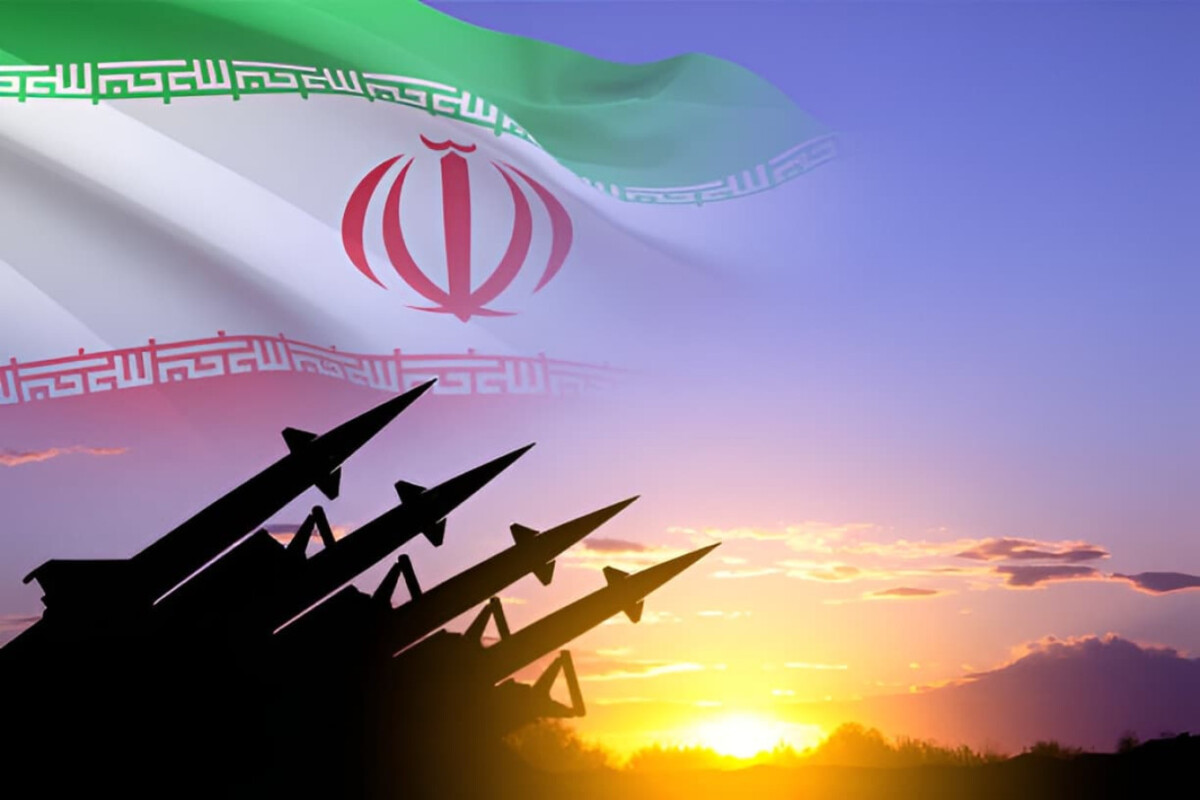
Intelligence analysts suggest that Iran is increasingly relying on China’s satellite navigation system to enhance the accuracy of its missile strikes targeting United States and Israeli military installations in the Middle East. Experts believe that the use of China’s BeiDou Navigation Satellite System (BDS) has significantly improved the precision of Iranian ballistic missiles compared to previous conflicts.
According to a report by Al Jazeera, former French foreign intelligence chief Alain Juillet stated in a podcast that “the accuracy of Iranian missiles has markedly improved compared to last year’s conflict. The adoption of advanced Chinese navigation technology is a likely contributing factor.”
Since 28 February, in response to U.S.-Israeli military operations, Iran has launched hundreds of ballistic missiles and drones. The targets included U.S. military bases in Israel and other Gulf regions. While many of these projectiles were intercepted by missile defence systems, several reached their intended targets, causing substantial damage and casualties.
Previously, Iran’s armed forces were heavily dependent on the U.S. Global Positioning System (GPS) for missile guidance. However, during conflict, GPS signals can be disabled or jammed by the United States, prompting Iran to seek alternative navigation technologies. China introduced its next-generation satellite navigation system in 2020, presenting a viable rival to GPS. The system was officially inaugurated in Beijing by Chinese President Xi Jinping.
| System | Operational Satellites | Key Features |
|---|---|---|
| GPS (USA) | 24 | Global coverage, standard accuracy |
| BeiDou (China) | 45 | High precision (<1 m), mid-flight corrections, long-range communications |
| GLONASS (Russia) | 24 | Jam-resistant, global coverage |
| Galileo (EU) | 30 | Enhanced accuracy and security, worldwide access |
Experts highlight that using satellite navigation significantly improves missile targeting accuracy. Missiles generally follow a predetermined course via the navigation system and refine their trajectory using satellite signals for precise targeting.
China–Iran relations analyst Theo Nencini noted that as early as 2015, Iran signed a memorandum of understanding to integrate BeiDou technology into its military infrastructure. After the strategic China–Iran partnership agreement in 2021, the adoption of BeiDou technology accelerated. Since then, Iran has gradually shifted from GPS reliance to BeiDou for the operation of missiles and drones.
Analysts further report that BeiDou’s precision can be less than one metre, allowing not only accurate target acquisition but also in-flight corrections for missiles and drones. Additionally, the system provides robust communication capabilities, enabling operators to control projectiles over distances of up to 2,000 kilometres, including changing targets mid-flight if required.
The combination of increased satellite coverage, precision navigation, and secure communication has made Iran’s missile programme far more sophisticated, marking a new phase in regional military dynamics.




Comments