Monday, 6th April 2026

Khabor Wala Desk
Published: 7th March 2026, 2:38 PM
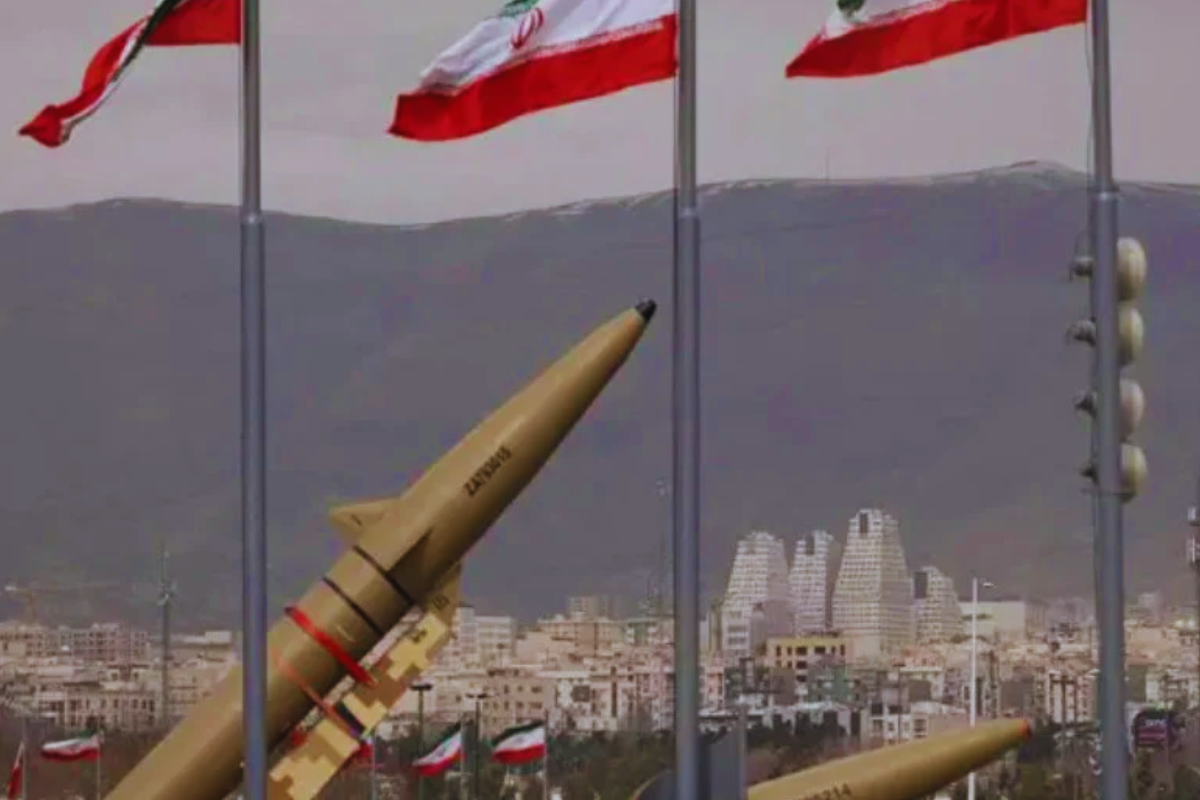
The United States and Israel claim that their recent joint air strikes have significantly weakened Iran’s military capabilities. According to Washington and Tel Aviv, key components of Iran’s defence structure—including air defences, air force units, and naval assets—have suffered severe damage during the campaign.
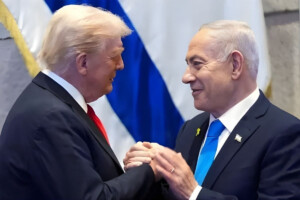
US President Donald Trump wrote on his social media platform Truth that Iran’s military infrastructure had been largely dismantled. “Their air defence, air force, navy and leadership—nothing is left,” he said. In the same message posted on Tuesday, 3 March, he added that Iran had attempted to seek negotiations but that he had rejected the proposal, saying, “They wanted to talk. I told them it’s too late.”
Iran, however, has responded by launching retaliatory strikes against Israeli targets and American military facilities located in several Middle Eastern countries. Iranian officials insist that these attacks are part of their right to self-defence. Yet most analysts agree that in conventional military terms Iran is at a disadvantage when compared with the combined capabilities of the United States and Israel.
Given this imbalance, a key question emerges: how does Iran intend to sustain a prolonged confrontation with two technologically superior military powers?
Security analysts argue that Iran is no longer trying to defeat its adversaries through conventional warfare. Instead, it is adopting a strategy designed to prolong the conflict and increase the cost of victory for its opponents.
Dr H. A. Hellyer, a Middle East security expert at the Royal United Services Institute in London, explains that Tehran’s objective is not outright victory but strategic endurance. According to him, Iran’s approach aims to stretch the conflict across multiple fronts while imposing economic and political costs on the United States and its allies.
“Iran understands it cannot win a traditional war,” Hellyer notes. “But it can make any potential victory for its adversaries extremely costly and uncertain.”
This interpretation is shared by Nicole Grajewski, assistant professor at the Centre for International Studies at Sciences Po in France. She argues that Iran has adopted a classic war of attrition strategy. Such an approach focuses on gradually eroding the opponent’s military resources—equipment, missiles, personnel and financial reserves—over an extended period.
A psychological dimension also plays a role. During last year’s twelve-day confrontation with Israel, Iranian missile strikes increasingly targeted civilian areas, a tactic that analysts say aimed to create fear and social pressure inside Israel.
Despite suffering damage to its ballistic missile stockpiles during previous clashes, Iran still maintains one of the largest missile arsenals in the Middle East. Israeli estimates suggest that by February this year Iran possessed roughly 2,500 missiles of varying ranges.
These weapons include both short-range systems and medium-range ballistic missiles capable of striking targets far beyond Iran’s borders.
| Missile Type | Estimated Range | Strategic Role |
|---|---|---|
| Short-range ballistic missiles | Up to 1,000 km | Regional strikes and battlefield use |
| Medium-range ballistic missiles | 1,000–3,000 km | Strategic deterrence against regional targets |
| Sejjil missile | About 2,000 km | Solid-fuel missile capable of rapid launch |
| Fattah hypersonic missile | High-speed manoeuvrable system | Designed to evade missile defence systems |
Iranian officials say that both the Sejjil and the newer Fattah missiles have been used during recent confrontations. The Fattah, in particular, has drawn attention because it is designed to travel at hypersonic speeds, potentially making interception more difficult.
Iranian media frequently refer to what they call “missile cities”—vast underground facilities where ballistic missiles and launch systems are stored. These installations are built deep beneath mountains or reinforced structures, making them difficult to detect and destroy through air strikes.
The precise size and number of these facilities remain unknown. However, their existence allows Iran to maintain a reserve capability even after significant losses in open conflict.
Nevertheless, American officials argue that Iran’s launch rate has sharply declined since the start of the current confrontation. General Dan Caine, a senior US commander, stated that ballistic missile launches dropped by approximately 86 percent after the first day of fighting on 28 February. According to US Central Command, the figure fell a further 23 percent by 4 March.
Beyond missiles, drones have become a central element of Iran’s military strategy. Analysts believe Tehran has produced thousands of one-way attack drones—particularly the Shahed series—well before the outbreak of the current conflict.
These drones serve several purposes. While they can strike infrastructure or military targets directly, they also force enemy air defence systems to respond. Intercepting drones often requires expensive interceptor missiles, which can cost far more than the drones themselves.
In effect, Iran can attempt to exhaust its adversaries’ defensive systems through sheer volume. This tactic has also been widely used by Russia during its war in Ukraine.
However, the United States claims that Iran’s drone launches have also decreased significantly, reportedly falling by around 73 percent since the first day of fighting.
Iran still maintains the largest standing military force in the Middle East. According to the Military Balance 2025 report published by the International Institute for Strategic Studies, the country has roughly 610,000 active personnel.
| Military Component | Estimated Personnel | Primary Role |
|---|---|---|
| Regular Army | 350,000 | Ground operations and territorial defence |
| Islamic Revolutionary Guard Corps (IRGC) | 190,000 | Strategic operations, missile and drone programmes |
| Other forces and reserves | Remaining personnel | Support and paramilitary roles |
In addition to its own forces, Iran has cultivated a network of allied groups across the region. These include the Houthi movement in Yemen, several armed factions in Iraq, Hezbollah in Lebanon and Hamas in Gaza.
Yet this so-called “axis of resistance” has suffered significant setbacks since the regional escalation that followed Hamas’s attack on Israel in October 2023.
One of Iran’s most powerful geopolitical levers lies in the Strait of Hormuz, the narrow maritime passage through which roughly 20 percent of the world’s oil supply is transported.
Even minor disruptions to shipping in this corridor could send global energy prices soaring and trigger wider economic consequences. Iranian officials have warned that vessels passing through the strait could be targeted if hostilities escalate further.
Iran’s ability to prolong the conflict may depend largely on internal political unity and military coordination. Analysts note that prolonged operations place enormous pressure on missile crews and command structures. Fatigue, miscalculation or technical errors could potentially escalate the conflict unexpectedly.
Regional diplomacy is also playing a role. Turkey reportedly attempted to mediate between Washington and Tehran before the war intensified. Turkish officials have urged all parties to avoid actions that could further widen the conflict.
For now, Iran’s strategy appears to rely on endurance—stretching the conflict long enough to increase its geopolitical leverage while avoiding a decisive military defeat. Whether this approach will succeed remains uncertain, but it illustrates how weaker powers sometimes seek survival not through victory, but through resilience and strategic persistence.


Comments