Sunday, 5th April 2026

Khabor Wala Desk
Published: 22nd February 2026, 8:23 AM
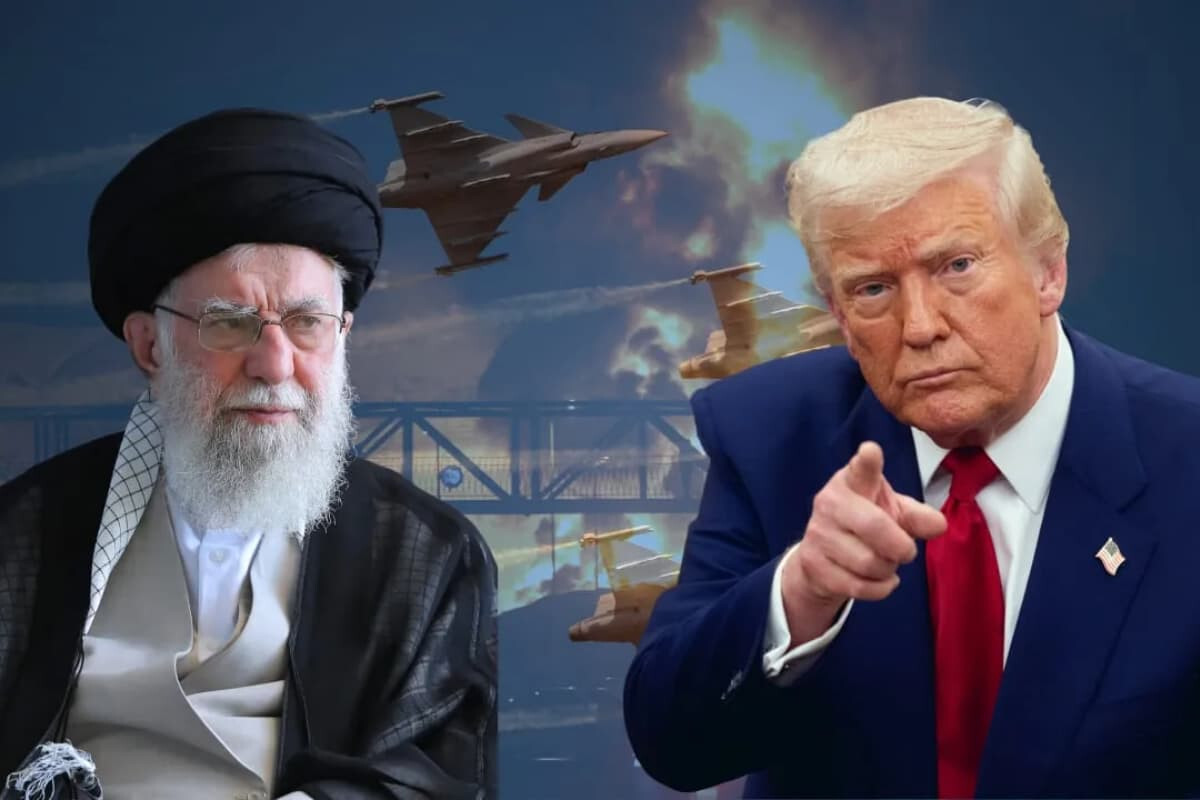
For decades, the United States has pursued a strategy of sustained pressure on Iran, combining successive rounds of economic sanctions, an enhanced naval presence in the Gulf, and political rhetoric portraying Tehran as a state whose policies could be coerced through persistent economic strain. Washington’s expectation was that prolonged pressure would destabilise Iran internally and compel the government to acquiesce to US demands. However, the outcomes have proven far more complex than anticipated.
Iran has leveraged its nuclear programme as a strategic asset while strengthening partnerships beyond the Western sphere. Internally, its resistance mechanisms have consolidated. Although sanctions have imposed significant hardships on ordinary citizens, the state apparatus remains intact, and the government has not yielded to foreign pressure.
Sustained economic measures often push targeted states to explore alternative strategies across economic, diplomatic, and military domains. Iran has adapted by diversifying trade, enhancing regional alliances, and reconfiguring its defensive posture. The following table summarises key adaptations:
| Area of Impact | Strategic Response |
|---|---|
| Economy | Increased bilateral trade in local currency, accumulation of gold reserves, exploration of alternative financial mechanisms |
| Diplomacy | Strengthening of strategic partnerships outside the Western bloc |
| Military | Development of network-based defensive strategies rather than engaging in direct conflict |
Western security discourses frequently describe Iran’s regional actors as “proxies.” Yet groups such as Hamas, Hezbollah, and Ansar Allah emerge from local political realities shaped by occupation, aggression, blockade, and systemic marginalisation. Their legitimacy is grounded in regional dynamics, not Western approval. Labels like “terrorist” or “proxy” reflect political framing rather than moral or legal certainties.
The United States possesses formidable strategic assets, including aircraft carriers, surveillance systems, and extensive alliances. Nonetheless, historical precedents from Vietnam to Afghanistan and Iraq demonstrate that technological superiority does not guarantee enduring political outcomes. NATO alliances, while symbolising unity, reveal internal divisions under protracted crises, as seen in Ukraine, complicating collective decision-making. Western appetite for major Middle Eastern conflicts has diminished in the face of economic and political constraints.
The US dollar remains central to the global financial system, yet repeated sanctions have incentivised alternative mechanisms. Platforms such as BRICS have encouraged trade in local currencies, while gold reserves are being expanded as a hedge against financial risk. This represents a gradual rebalancing of global economic influence rather than the decline of the dollar per se.
Iran understands that its geography and resources confer structural leverage in negotiations. Washington, in turn, recognises that instability in the region affects global markets. Israel’s security remains tightly interlinked with US political and military support, influencing regional calculations. Military operations, including in Gaza, may demonstrate power but do not provide lasting political solutions; durable security is achieved only through negotiated settlements.
The current environment reflects mutual recognition of limitations. The assumption that unilateral US pressure alone can reshape Iran’s behaviour has weakened. Power is increasingly distributed across multiple actors, and dialogue has become indispensable. Iran seeks stability, while the United States prefers to avoid prolonged entanglement. In this context, pressure without negotiation yields only limited impact, making diplomatic engagement essential.




Comments