Sunday, 5th April 2026

Khabor Wala Desk
Published: 11th November 2025, 9:14 AM
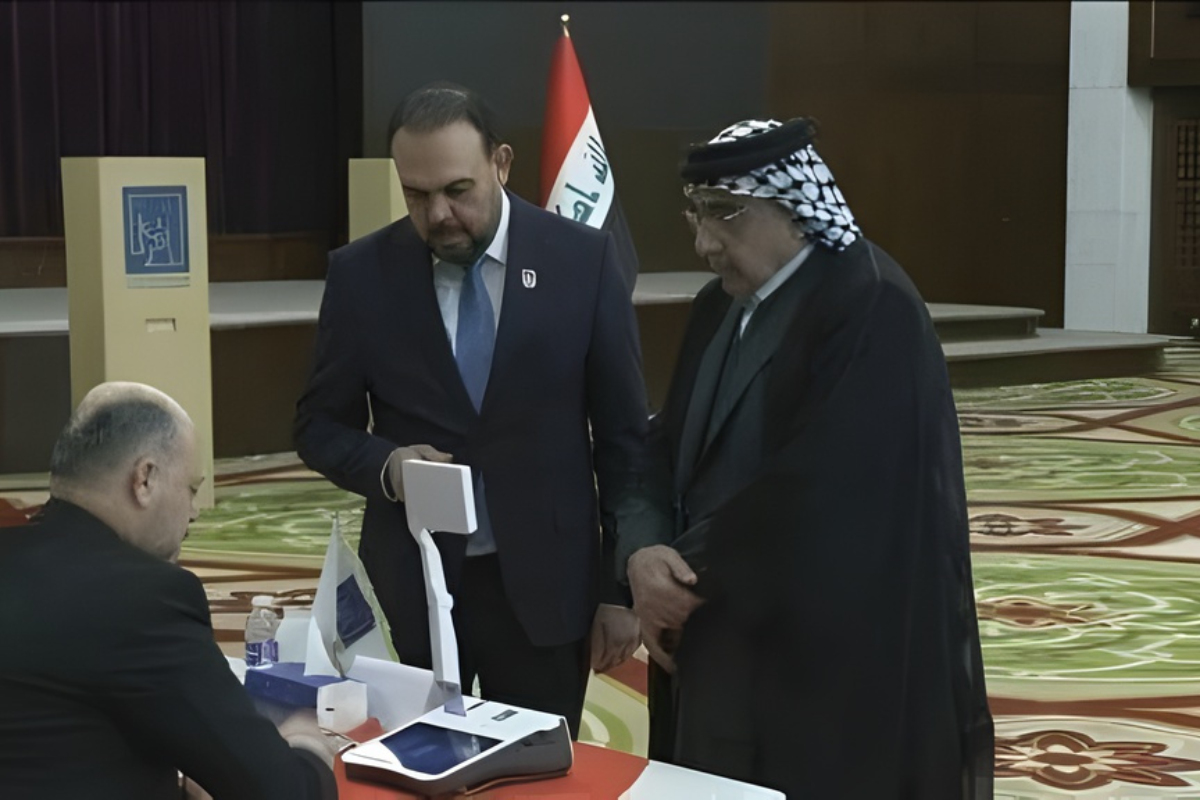
Iraqis began voting for a new parliament on Tuesday at a pivotal moment for both the country and the wider region, in an election that will be closely watched by both Iran and the United States.
Iraq has enjoyed an unusual period of stability in recent years as it seeks to move beyond decades of war following the US-led invasion that toppled Saddam Hussein. However, the country of 46 million people continues to struggle with poor infrastructure, failing public services, and widespread corruption.
Many Iraqis have grown disillusioned, believing elections cannot bring real change to their daily lives. For some, the vote is seen as a mere facade that benefits only political elites and regional powers.
Polling stations opened at 7:00 am (0400 GMT) and will close at 6:00 pm (1500 GMT), with preliminary results expected within 24 hours.
Shortly after the polls opened, several senior politicians cast their votes at the luxurious Al-Rasheed hotel in the capital, Baghdad. However, four hours later, AFP correspondents reported a generally low turnout in several major cities.
In Baghdad, the streets, lined with election posters, were largely empty, save for security forces. While polling stations in some areas saw a moderate number of voters, many other parts of the city remained quiet.
Over 21 million people are eligible to vote, but there are concerns that turnout could fall below the 41 percent recorded in 2021, the lowest since Iraq began holding elections.
For Mohammed Mehdi, a public servant in his thirties, voting is both a right and an opportunity for change. “I don’t blame those who decide to boycott, but politicians have spent a great deal to win votes, which shows that my vote has value — so I will use it,” he said after casting his ballot in Baghdad.
Sectarian Politics
More than 7,740 candidates, nearly a third of them women, are running for the 329-seat parliament. Only 75 independents are standing, under an electoral system many believe favours larger, established parties.
Since the US-led invasion, Iraq’s long-oppressed Shiite majority has dominated politics, with many parties maintaining ties to neighbouring Iran. By convention in post-invasion Iraq, a Shiite Muslim holds the post of prime minister, a Sunni Muslim is parliament speaker, and the largely ceremonial presidency is given to a Kurd.
Despite Iraq’s electoral diversity, few new faces have emerged, with the same Shiite, Sunni, and Kurdish politicians remaining at the helm.
Prime Minister Mohammed Shia al-Sudani, who hopes for a second term under the banner of stability and reconstruction, is likely to score a significant victory. Sudani rose to power in 2022 with the backing of the Coordination Framework, a Shiite-led alliance with close links to Iran. He has championed Iraq’s relative stability in a region torn by conflict.
However, with no party or coalition likely to secure an outright majority, Sudani will need to gain the support of whichever coalition can muster enough allies to form the largest bloc. Though the Shiite parties within the Coordination Framework run separately, they are expected to reunite after the election and select the next prime minister.
Where is Sadr?
One significant absentee from the ballot is influential Shiite cleric Moqtada Sadr, who has called on his followers to boycott what he describes as a “flawed election”. In 2021, Sadr’s political bloc secured the largest number of seats before withdrawing from parliament after a dispute with other Shiite factions, who did not support his bid to form a government. This rift eventually led to deadly clashes in Baghdad.
Sunni parties are contesting the election separately, with former parliament speaker Mohammed al-Halbussi expected to perform well. In the autonomous Kurdistan region, the rivalry between the Kurdistan Democratic Party (KDP) and the Patriotic Union of Kurdistan (PUK) remains fierce.
A Delicate Balance Between Iran and the US
Iraq, a key battleground for proxy wars, remains a close ally of both Iran and the United States. The country has long tried to balance its ties with both powers, but this task has become increasingly complex as the Middle East undergoes significant shifts, with new alliances forming and old powers weakening.
Despite its waning influence, Iran still aims to preserve its presence in Iraq, which has remained a rare ally outside Israel’s military focus in recent years, unlike its allies in Lebanon, Yemen, and Gaza, who have suffered heavy losses since 2023.
Earlier in 2024, pro-Iran factions in Iraq, which are designated as terrorist groups by Washington, responded to both internal and US pressure by ceasing attacks on American forces after months of escalations linked to the Gaza war.
Iraq has faced growing pressure from the US to disarm these pro-Iran groups, which still wield significant power in the country. The United States, which has both military forces stationed in Iraq and considerable influence over its political landscape, has long called for Iraq to free itself from Iran’s influence and the interference of its proxies.

Comments