Sunday, 5th April 2026

Khabor Wala Desk
Published: 27th July 2025, 1:18 PM
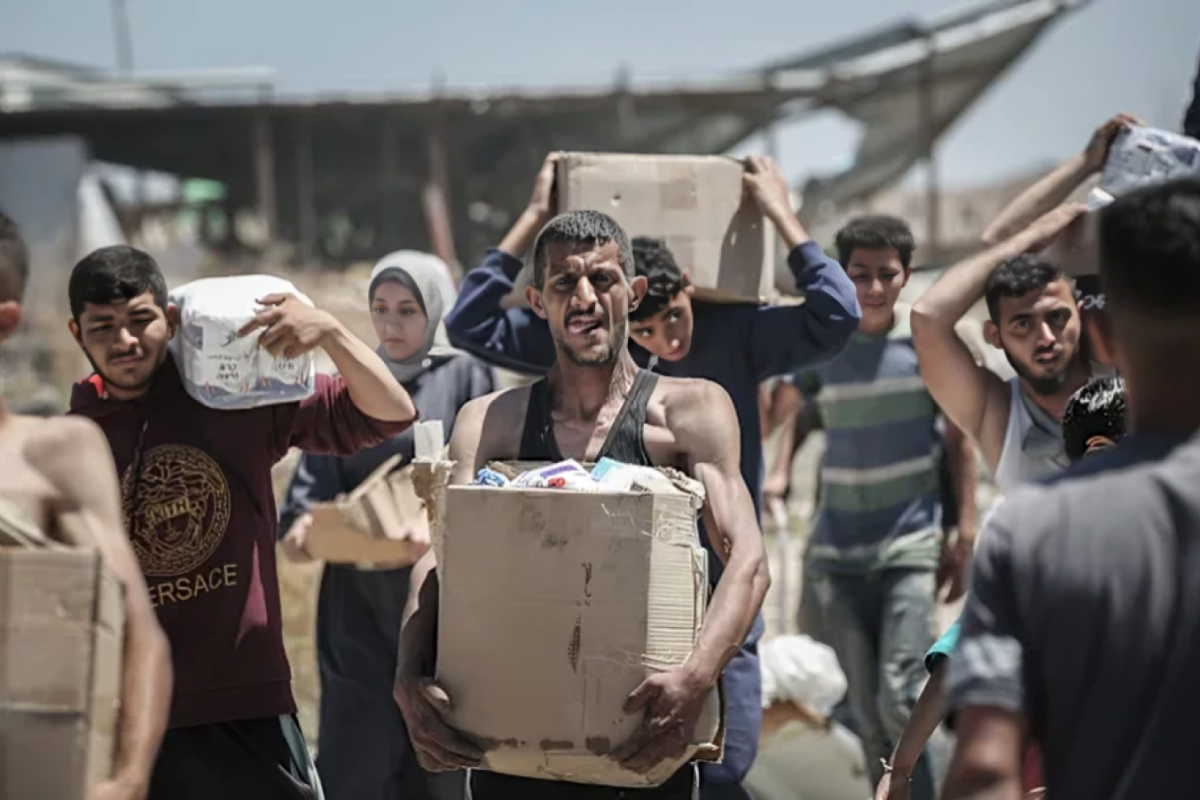
Israel announced on Saturday that it had conducted airdrops of humanitarian aid into the Gaza Strip and would soon establish humanitarian corridors, amid escalating international condemnation over the worsening hunger crisis in the besieged Palestinian territory.
Israel has enforced a total blockade on Gaza since 2 March, following the collapse of ceasefire negotiations. While a limited flow of aid resumed in late May, the humanitarian situation has continued to deteriorate sharply.
The announcement of seven aid deliveries came shortly after:
These developments coincided with reports from Palestinian civil defence authorities, who said over 50 Palestinians were killed in Israeli strikes and shootings, some while waiting near aid distribution points.
Airdrop and Corridor Operations
The Israeli military, via Telegram, stated:
“As part of ongoing efforts to allow and facilitate the entry of aid into the Gaza Strip, an airdrop of humanitarian aid was carried out.”
It also said designated humanitarian corridors would be opened to allow UN aid convoys to deliver food and medical supplies. The Israeli military added that this would disprove what it called “false claims of deliberate starvation”.
The Israeli Foreign Ministry further posted on X (formerly Twitter) that a “humanitarian pause” would take place in certain areas of Gaza on Sunday morning, to ease aid distribution.
Summary: Humanitarian Efforts and Conditions in Gaza
| Aspect | Details |
| Blockade Imposed | 2 March 2025 |
| Recent Aid Flows | Minimal resumption since late May |
| Airdrop Initiatives | Conducted by Israel, UAE, UK, and Jordan |
| UN Position on Airdrops | Deemed costly, inefficient, and potentially dangerous |
| Death Toll (Palestinians) | 59,733 (mostly civilians), per Gaza Health Ministry |
| Death Toll (Israelis) | 1,219 killed in October 2023 Hamas attack |
| Aid Convoy Restrictions | Israel denies limits; humanitarian groups cite strict military controls |
International Responses and Concerns
British Prime Minister Keir Starmer expressed support for the initiative, stating he would coordinate with France, Germany, and Jordan to aid deliveries and help evacuate children needing medical care.
“The UK will be taking forward plans to work with partners such as Jordan to airdrop aid and evacuate children requiring medical assistance,” Starmer’s office confirmed following a multilateral call.
UAE Foreign Minister Sheikh Abdullah bin Zayed Al Nahyan declared in a statement on X:
“The humanitarian situation in Gaza has reached a critical and unprecedented level. Air drops are resuming once more, immediately.”
Aid Drops Criticised by Humanitarian Leaders
Despite the intensified airdrop operations, humanitarian leaders have expressed serious doubts about the effectiveness of such methods.
Philippe Lazzarini, head of UNRWA, warned:
“Air drops will not reverse the deepening starvation. They are expensive, inefficient, and can even kill starving civilians.”
While the Israeli military claims it does not limit the number of trucks entering Gaza, aid organisations counter that strict Israeli military restrictions and road access controls severely hinder humanitarian delivery on the ground.
A separate operation through the Israeli- and US-backed Gaza Humanitarian Foundation has also faced widespread international criticism, particularly after Israeli fire killed hundreds near distribution sites.
Naval Blockade and Freedom Flotilla Interception
Meanwhile, a boat from the Freedom Flotilla Coalition, attempting to deliver aid by sea, was intercepted by Israeli forces on Saturday evening. The Handala, streaming live as it approached Gaza, had its feeds cut shortly after Israeli troops boarded the vessel.
This followed a similar interception last month of another aid boat, the Madleen, operated by the same activist group.
Ongoing Violence and Civilian Casualties
The Palestinian civil defence agency reported over 50 deaths on Saturday, including 14 near aid centres, allegedly due to Israeli strikes.
Due to media restrictions and limited access, independent verification by international media outlets, including AFP, remains challenging.



Comments