Sunday, 5th April 2026

Khabor Wala Desk
Published: 3rd March 2025, 5:19 AM
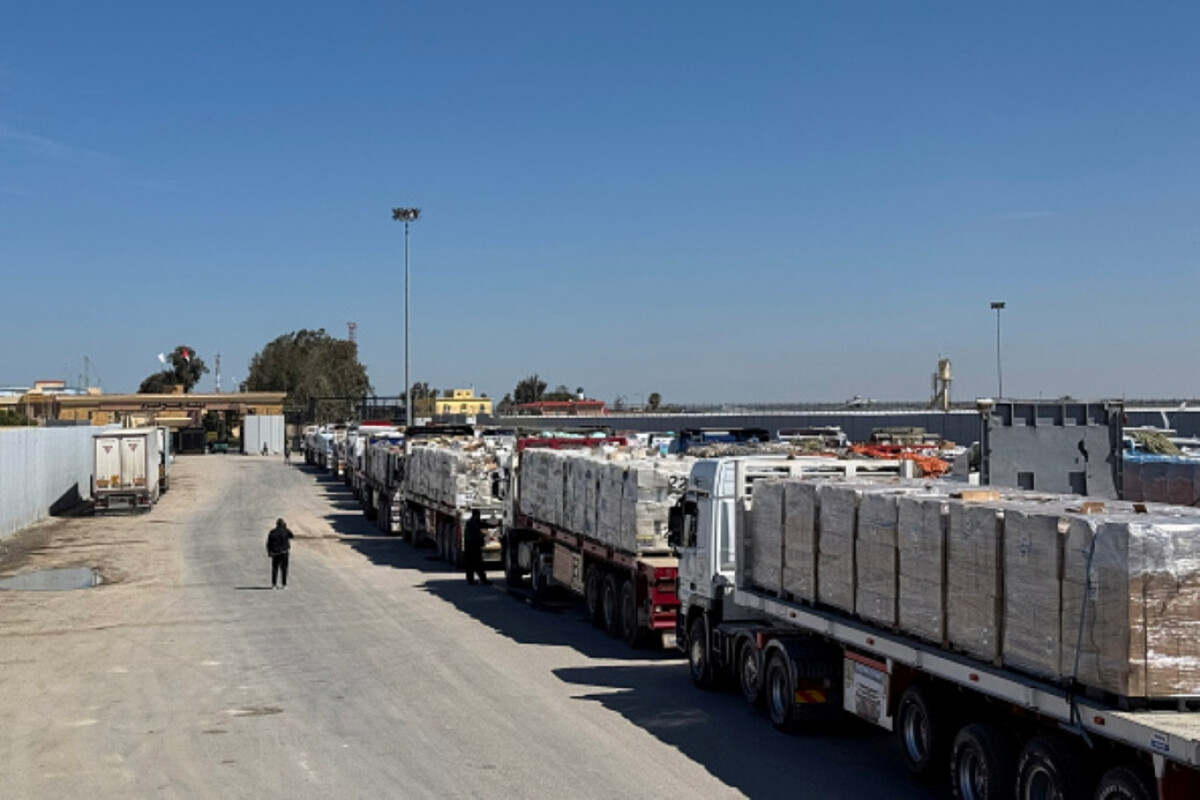
JERUSALEM, March 3, 2025 (AFP) – On Sunday, Israel halted the flow of aid into Gaza, where a six-week truce had allowed the entry of critical food, medical supplies, and shelter. This decision has prompted the United Nations to call for an immediate restoration of humanitarian assistance.
The move came as discussions over extending the ceasefire appeared to have reached an impasse, with the 42-day first phase of the truce officially coming to an end. Mediators from Egypt and Qatar have accused Israel of breaching the truce by halting the aid, leaving trucks filled with essential goods stranded at the Rafah crossing on the Egyptian side.
Earlier on Sunday, Israel had announced a truce extension until mid-April, proposed by US Middle East envoy Steve Witkoff. However, Hamas has consistently rejected the idea of an extension, preferring to shift to the truce’s second phase, which they believe could lead to a permanent end to the war.
As the situation remains uncertain, both Israeli and Palestinian sources reported military strikes within Gaza. According to Gaza’s health ministry, at least four individuals were killed in the latest escalation.
Hamas, which initiated the ongoing conflict with its October 7, 2023 attack on Israel, condemned Israel’s decision to suspend humanitarian aid, calling it “cheap blackmail, a war crime, and a blatant coup against the ceasefire agreement”. Egypt accused Israel of using starvation as a “weapon against the Palestinian people”, while Qatar and Saudi Arabia also strongly denounced the action. Jordan warned that Israel’s move could reignite fighting in Gaza.
UN Secretary-General Antonio Guterres called for the immediate resumption of humanitarian aid to Gaza. The European Union also condemned Hamas’s refusal to accept the truce extension and expressed concern over Israel’s decision, citing potential humanitarian consequences.
Panic in Gaza as Prices Surge
Residents of Gaza expressed concern over rising prices, with many fearing shortages. Belal al-Helou, a 56-year-old resident of Gaza City, said, “Prices are rising and people are panicking about food supplies.”
Over 15 months of war in Gaza have caused widespread destruction, displacing almost the entire population and causing significant hunger, according to the UN.
Israeli Foreign Minister Gideon Saar dismissed concerns about starvation, calling such warnings “a lie”. Meanwhile, Israeli Prime Minister Benjamin Netanyahu’s office confirmed that it had suspended the entry of all goods and supplies into Gaza, warning of “consequences” if Hamas did not accept the temporary truce extension.
Despite the uncertainty, Gaza residents like 21-year-old Mays Abu Amer expressed hope for the ceasefire’s continuation, saying, “I wish it could go on forever.”
The Fate of Hostages and Calls for Action
According to Israel, the extension of the truce would allow the release of half of the hostages still held in Gaza, with the remainder freed if a permanent ceasefire is reached. Out of the 251 captives taken during Hamas’s October 2023 attack, 58 remain in Gaza, with 34 confirmed dead by the Israeli military.
In Israel, mourners gathered to honour Shlomo Mansour, an 85-year-old whose body was recently returned from Gaza. Mourners and protesters, including the family of other hostages, have called for the immediate return of all remaining captives.
Under the first phase of the truce, Gaza militants had released 25 living hostages and eight bodies in exchange for approximately 1,800 Palestinian prisoners held in Israel.
In Israel, the decision to block aid was welcomed by many, who saw it as a strategy to pressure Hamas. Neria, a 27-year-old teacher, described it as a “smart move” that could lead to the release of more hostages and an end to the war.
Ongoing Conflict and Human Cost
In southern Gaza, Israeli military activity continued, with reports of shelling and drone strikes. The Palestine Red Crescent reported casualties from these strikes. The Gaza health ministry has recorded a total of 116 fatalities since the ceasefire began on January 19, 2025.
The war, which was ignited by the October 2023 Hamas attack, has resulted in over 1,200 Israeli deaths, mostly civilians, while Israeli airstrikes and operations in Gaza have claimed the lives of over 48,300 people, also primarily civilians, according to data from both sides.
Supplementary Information:
The humanitarian situation in Gaza remains dire, with essential supplies at a critical shortage due to both the ongoing conflict and the block on aid. Over a year of fighting has devastated infrastructure, leaving millions in desperate need of food, water, and medical care. The political landscape remains volatile, as discussions about a lasting peace agreement continue to falter amid the ongoing hostilities and geopolitical pressures.


Comments