Sunday, 5th April 2026

Khabor Wala Desk
Published: 27th July 2025, 4:20 PM
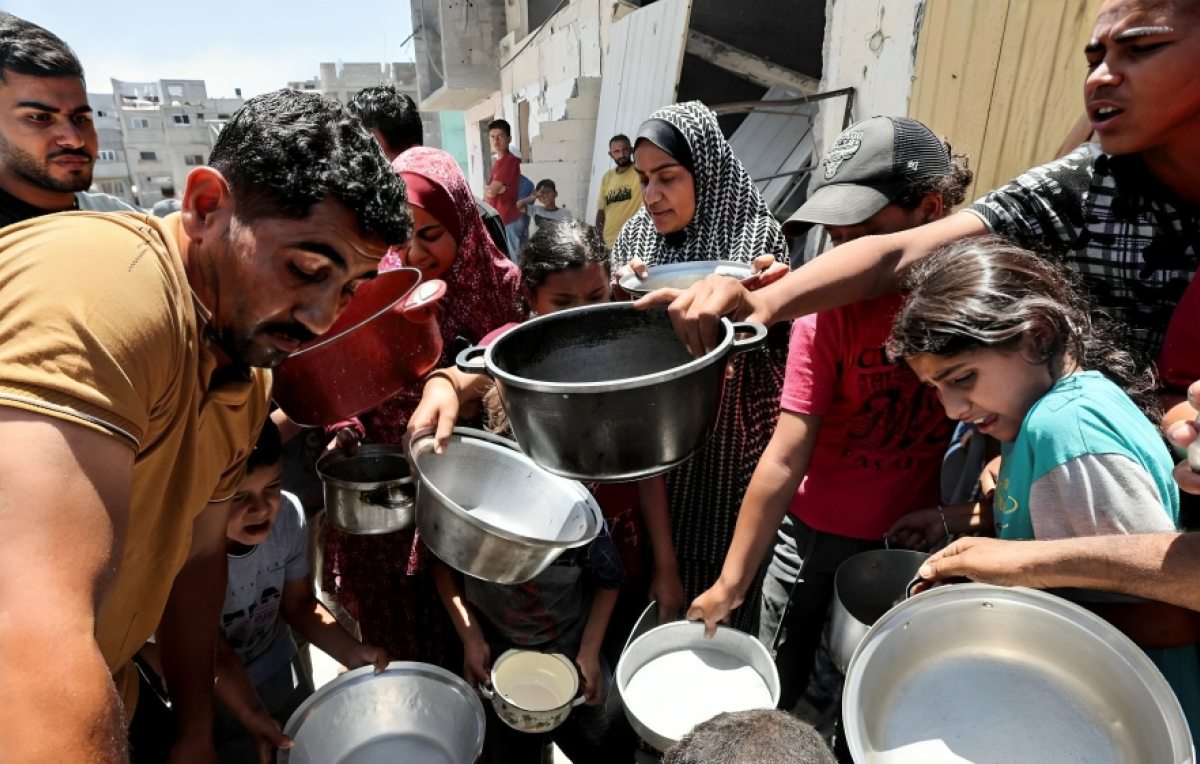
Israel has announced a “tactical pause” in military operations across parts of Gaza, aiming to facilitate the delivery of humanitarian aid and address a worsening hunger crisis that has drawn sharp international concern.
The Israeli military stated the move was coordinated with the United Nations and other international organisations to increase the scale of humanitarian assistance entering the Gaza Strip. It also began air-dropping aid supplies into the besieged territory, while forcefully rejecting accusations of deliberately using starvation as a weapon against Palestinian civilians.
Scope of the Tactical Pause
| Region | Fighting Pause Time (Daily) | Status of Military Presence |
| Al-Mawasi | 10:00 – 20:00 (local) | No active operations |
| Deir el-Balah | 10:00 – 20:00 (local) | No active operations |
| Gaza City | 10:00 – 20:00 (local) | No active operations |
The military noted that “designated secure routes” have been opened across Gaza to ensure the safe passage of UN and humanitarian aid convoys, enabling the distribution of critical supplies such as food and medicine.
The army stated these steps should refute the “false claim of deliberate starvation in the Gaza Strip.”
Humanitarian Situation Worsens
Despite Israel’s announcement, aid organisations remained cautious, awaiting proof of tangible improvements on the ground. Humanitarian sources expressed private scepticism, citing past experiences of restricted access and delivery.
Israel’s total blockade on Gaza began on 2 March, following the collapse of ceasefire talks. While a limited trickle of aid resumed in late May, mass starvation warnings have been increasing sharply. The situation remains dire:
International Aid Efforts and Air Drops
In response to the crisis, various international actors have stepped in:
| Country | Action Taken |
| United Arab Emirates | Announced immediate resumption of air drops |
| United Kingdom | PM Keir Starmer pledged cooperation with Jordan on aid drops |
| Jordan | Partnering with Britain for aerial aid missions |
Despite this, humanitarian leaders remain highly sceptical of air drops as a viable solution:
“Air drops will not reverse the deepening starvation,”
said Philippe Lazzarini, Head of UNRWA.
“They are expensive, inefficient and can even kill starving civilians.”
The Israeli army contends that UN agencies and relief groups are not collecting the aid once it enters Gaza, while humanitarian bodies counter that Israeli restrictions and internal road controls have made operations almost impossible.
A separate aid initiative, backed by Israel and the United States under the Gaza Humanitarian Foundation, has also drawn criticism after Israeli fire killed hundreds near aid distribution points.
Maritime Blockade and Activist Confrontation
As the crisis intensifies, efforts to breach Israel’s naval blockade also escalated. On Saturday, Israeli forces boarded a boat from the Freedom Flotilla Coalition, a pro-Palestinian activist group, attempting to reach Gaza by sea.
The Handala boat, which was broadcasting a live feed, showed Israeli soldiers boarding just before the feed was abruptly cut. This latest interception highlights the continuing tight blockade by land and sea.
Due to media restrictions and access limitations, independent verification of casualty numbers and on-the-ground conditions by agencies like AFP remains extremely limited.
Calls for Ceasefire and Humanitarian Relief
Voices from within Gaza paint a harrowing picture. Local resident Hossam Sobh recounted a near-death experience while retrieving flour:
“We ask God and our Arab brothers to work harder to reach a ceasefire before we all die.”
With food supplies scarce and violence unrelenting, international leaders are under mounting pressure to not only scale up humanitarian delivery, but also broker a lasting ceasefire.
As Gaza teeters on the brink of famine, and with aid delivery fraught with risk and political complexity, the global community’s response in the coming days may prove pivotal to averting a broader humanitarian catastrophe.




Comments