Sunday, 5th April 2026

Khabor Wala Desk
Published: 17th March 2026, 2:35 AM
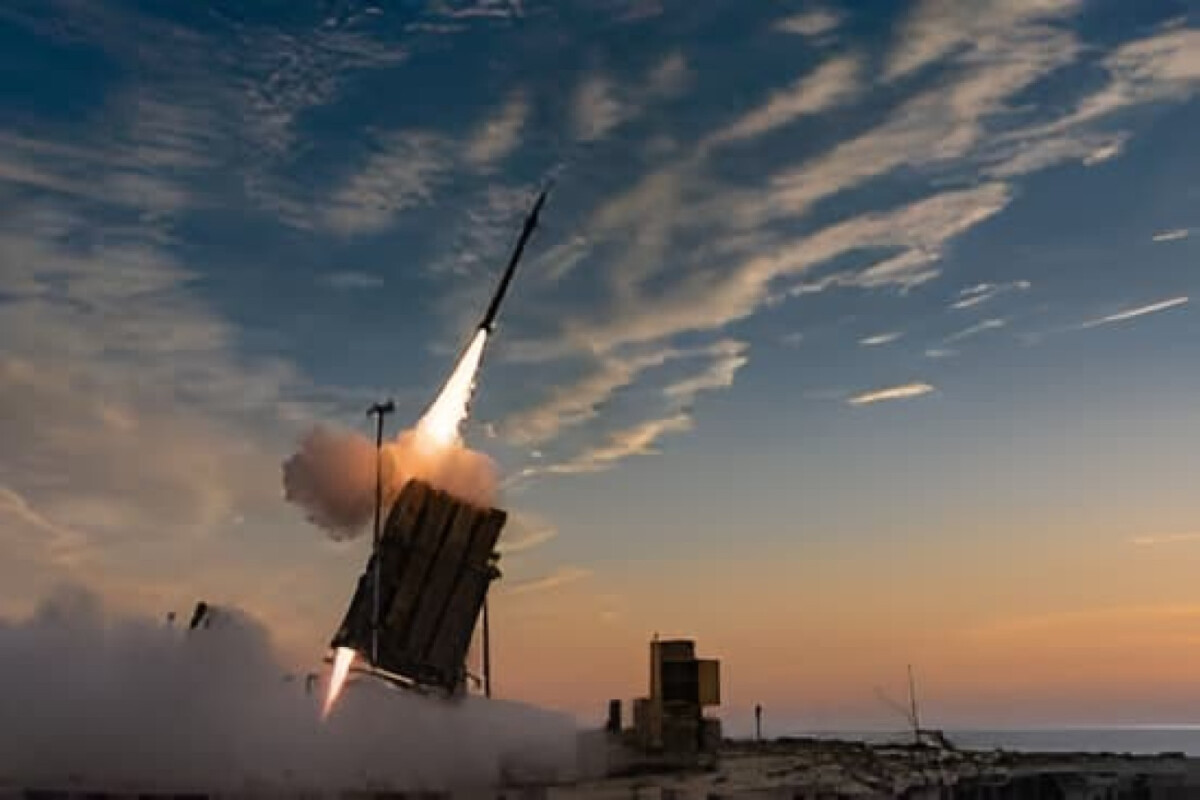
Israel is reportedly grappling with a growing shortage of missile interceptors as its air defence systems come under sustained pressure from waves of incoming projectiles launched by Iran. Now in the third week of the conflict, the strain on Israel’s defensive capabilities has become increasingly apparent, prompting officials to alert the United States to the potential risks of dwindling stockpiles.
According to informed sources, the roots of the current challenge lie partly in earlier hostilities. During last year’s confrontation with Iran, Israel expended a substantial number of interceptors, leaving its reserves already diminished. The present escalation—marked by persistent and large-scale missile barrages—has further intensified the burden on Israel’s multi-layered, long-range air defence network, which includes some of the most advanced systems in operation.
The situation has been exacerbated by Iran’s evolving missile tactics. Notably, some of the projectiles now reportedly carry cluster munitions, significantly complicating interception efforts. Such weapons can disperse multiple submunitions mid-flight, requiring defensive systems to engage several targets simultaneously. This not only increases the likelihood of penetration but also accelerates the depletion of interceptor stocks.
A summary of the current operational pressures is outlined below:
| Key Aspect | Details |
|---|---|
| Conflict duration | Entering third week |
| Primary threat | Sustained Iranian missile barrages |
| Tactical complication | Use of cluster munitions |
| Operational impact | Rapid depletion of interceptors |
| Strategic concern | Long-term sustainability of defence |
Officials in Washington had reportedly anticipated such a scenario months in advance. One senior US official noted that the strain on interceptor supplies was neither unexpected nor unforeseen. Nevertheless, he emphasised that the United States maintains sufficient reserves and is not facing similar shortages. It remains unclear, however, whether Washington will commit to supplying Israel with additional interceptor systems in the near term, a decision that could carry significant strategic implications.
Concerns are mounting among defence analysts that, should the conflict persist, both Israel and its allies may face increasing logistical and operational challenges in maintaining effective missile defence coverage. The cost, production timelines, and deployment complexities of advanced interceptors further complicate rapid replenishment.
Adding a new dimension to the conflict is Iran’s reported deployment of the Sejjil-2 missile, dubbed by some analysts as a “dancing missile” due to its unpredictable flight behaviour. This marks the first known instance of its use against both Israeli territory and United States military installations in West Asia.
Iran’s Revolutionary Guard has claimed responsibility for coordinated missile and drone strikes targeting key American bases in the region, including Al-Harir Air Base in Iraq, Ali Al Salem Air Base in Kuwait, and Camp Arifjan. These attacks underscore a broader escalation, extending beyond bilateral confrontation into a wider regional security challenge.
The Sejjil-2 missile presents a formidable challenge to existing missile defence systems. Capable of altering its trajectory mid-flight, it can evade traditional radar tracking methods. As radar systems attempt to predict its path, the missile reportedly executes sudden directional shifts, thereby reducing interception accuracy. Additionally, it is believed to incorporate anti-radar coatings, further diminishing detectability.
In its terminal phase, the missile may accelerate to hypersonic speeds, leaving minimal time for defensive response. Analysts suggest that these combined features render interception extremely difficult, even for sophisticated systems such as those deployed by Israel and the United States.
Taken together, these developments point to a rapidly evolving battlefield in which technological adaptation and logistical endurance are becoming as निर्णative as firepower.




Comments