Sunday, 5th April 2026

Khabor Wala Desk
Published: 2nd August 2025, 1:39 PM
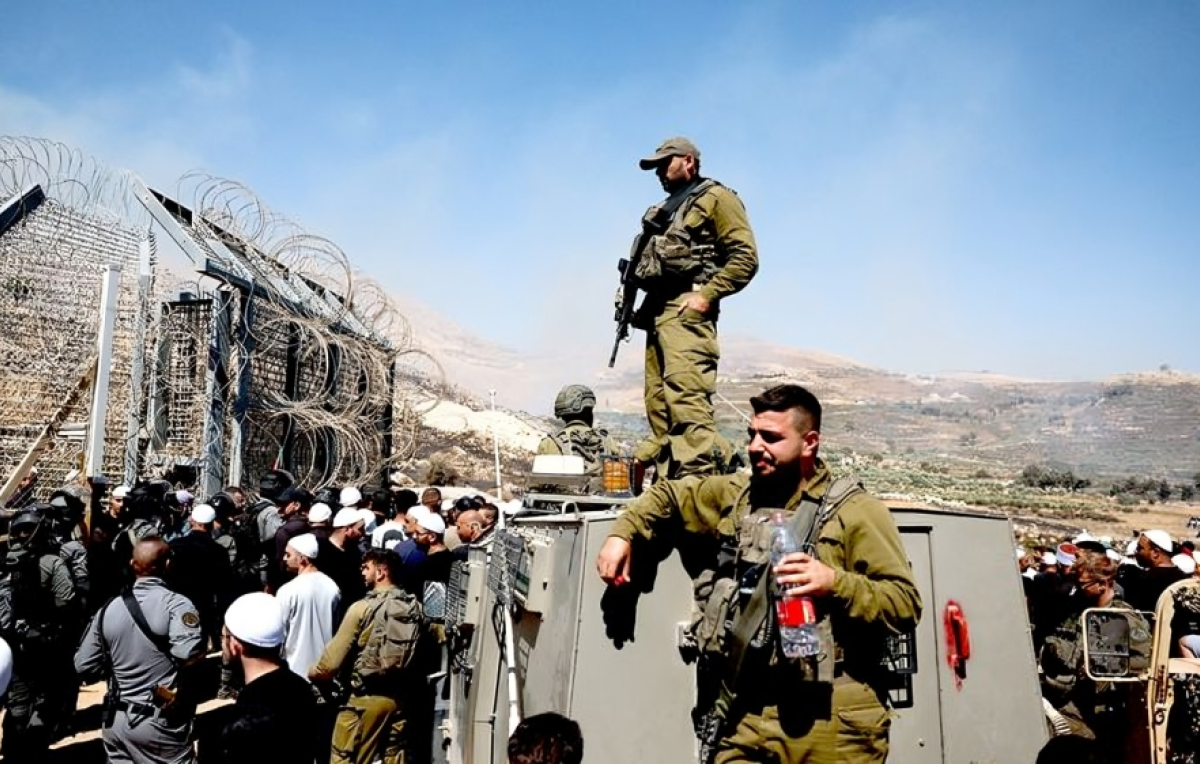
In the tranquil village of Julis in northern Israel’s Galilee region, members of the Israeli Druze community are rallying support for their religious kin in Syria’s Sweida province, following a surge of deadly sectarian violence.
At the heart of the relief effort lies a modest community centre, adorned with the Druze flag and a Hebrew sign reading “Druze Community Emergency Room”, situated near the revered tomb of Sheikh Amin Tarif, a former spiritual leader of the faith.
Relief Operations and Coordination
| Location | Julis, Galilee, Israel |
| Lead Coordinator | Sheikh Mowafaq Tarif (Current Spiritual Leader) |
| Primary Concern | Supporting Druze in Sweida, Syria |
| Activities | Aid collection, intelligence gathering, online awareness |
“We’ve established a situation room to monitor developments in Sweida and the wider region, so we can offer necessary help to our brothers and sisters,” said Sheikh Mowafaq Tarif.
Sweida, a predominantly Druze province in southern Syria, witnessed fierce clashes last month. According to war monitors, over 1,400 people — mostly Druze — were killed. Though a ceasefire is now in effect, main roads to Sweida remain blockaded, leaving many communities cut off and under de facto siege.
Crisis Snapshot: Sweida, Syria
| Issues | Details |
| Fatalities | 1,400+ (mostly Druze) |
| Displaced Residents | Approximately 175,000 |
| Infrastructure | Power cuts, empty shelves, and blocked main highways |
| Aid Deliveries | First convoy arrived 20 July; deliveries remain delayed |
| Aid Organisations Involved | Red Crescent, Israeli Druze, and possibly Israeli Govt |
Volunteer Mobilisation in Julis
Within Julis, activity hums in the call centres and warehouses. Volunteers, both Druze and Israeli Jews, coordinate everything from collecting real-time updates in Syria to packaging food and essential items. The effort also involves a media campaign to raise awareness about the plight of Syrian Druze.
Sleeman Amer, a 35-year-old engineer, shared his dedication to the cause:
“As soon as we heard the situation room was set up, we came straight away… We’re tracking attacks, deaths, and kidnappings across villages.”
Israeli Druze: Bridging Borders
Israel hosts over 150,000 Druze, including those residing in the occupied Golan Heights. As tensions in Sweida escalated, Israel conducted air strikes on Syrian government forces, positioning itself as a protector of Druze interests. In parallel, Druze citizens of Israel held protests and, in rare cases, crossed into Syria, despite the lack of formal peace between the two nations.
“Being Druze in Israel gives you a voice… It’s a democratic state,” said Akram, a young volunteer and former IDF soldier. He criticised the international community’s silence and expressed concern that Syria’s Islamist leadership hadn’t truly severed ties with their jihadist past.
Political Undertones and Humanitarian Commitment
The Julis centre’s walls bear posters of Ahmed Al-Sharaa, Syria’s interim president following the overthrow of Bashar al-Assad in December, labelling him “a terrorist in a suit” — language that echoes Israeli government rhetoric.
Still, the aid effort strives to remain firmly rooted in humanitarian values.
“Today we’re shipping aid via planes, and also working with the Red Crescent,” said Sheikh Tarif, though the exact logistics remain unverified.
According to social media posts by Israel’s health ministry, some aid pallets have been parachuted into Sweida, though this has not been independently confirmed.
Civilian-Military Collaboration
The situation room in Julis operates as a hybrid civilian-military setup, leveraging the expertise of former soldiers like Akram for logistics and field coordination.
Despite speculations that Israel is leveraging the Druze crisis to further military objectives along the Syrian frontier, residents in Julis express a deeply personal motivation.
A young student volunteer summarised the sentiment:
“Even if it’s in another country, this is our community.”
Sheikh Anwar Hamudi, 62, added:
“With our shared humanity, we must stand by them and help as much as we can.”
The mobilisation in Julis exemplifies how ethnic and religious solidarity can transcend borders, politics, and conflict — with a community rising to support its own in a time of desperate need.


Comments