Sunday, 5th April 2026

Khabor Wala Desk
Published: 30th July 2025, 1:47 PM
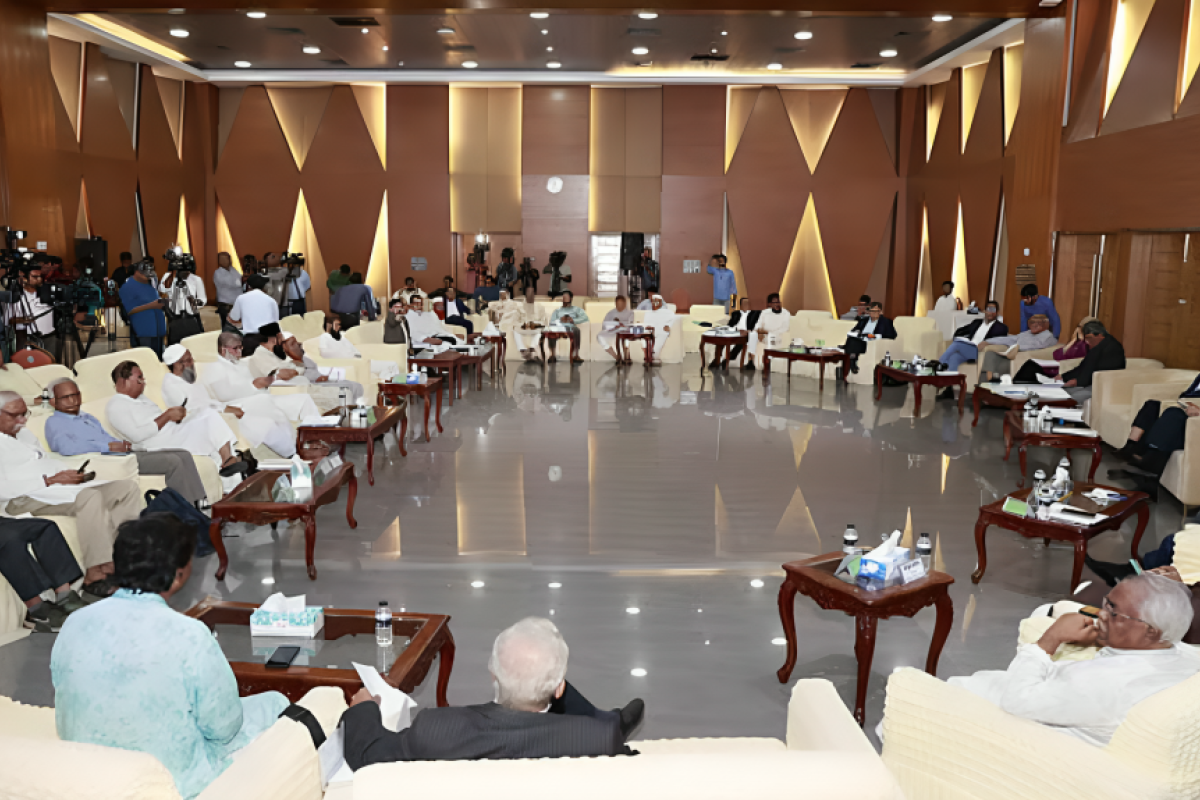
Three political parties—Jamaat-e-Islami, National Citizens’ Party (NCP), and Islami Andolan Bangladesh—have raised objections to the draft of the National Consensus Charter, citing its lack of legal enforceability. Meanwhile, the Bangladesh Nationalist Party (BNP) has expressed general agreement with most of the draft’s content.
The core concern lies in the draft’s clause stating that reforms will be implemented within two years of forming a government through elections. The objecting parties argue that, without a solid legal framework, the charter will lack any practical impact.
On Tuesday, during discussions held at the Foreign Service Academy with the National Consensus Commission, several political parties shared their reactions to the proposed draft. All participating parties have been asked to submit formal feedback by Wednesday.
Key Objections and Party Positions
| Political Party | Position on Draft | Key Concerns or Proposals |
| Jamaat-e-Islami | Objection | Described parts of the draft as “dangerous”; called for legal backing through ordinance or referendum. |
| National Citizens’ Party (NCP) | Objection | Demanded inclusion of all major reforms; proposed a ‘Legal Framework Order’; wants enforceability. |
| Islami Andolan Bangladesh | Objection | Criticised lack of legal obligation and omission of Sheikh Hasina’s name; deems the charter insignificant. |
| Bangladesh Nationalist Party (BNP) | Broadly supportive | Agrees in principle; plans to submit feedback on wording and phrasing. |
Remaining Issues of Disagreement
The Consensus Commission is aiming to finalise the second phase of the charter by Thursday. However, consensus has yet to be reached on at least eight proposed reforms.
The draft asserts that political parties forming the next elected government must commit to implementing reforms within two years. However, it does not specify which reforms have already been agreed upon; the Commission stated that these details will be incorporated later.
Key Outstanding Topics
Jamaat-e-Islami’s Deputy Amir, Syed Abdullah Mohammad Taher, labelled parts of the draft “dangerous” and insisted on legal guarantees for implementation. He recommended that a legal framework be formed via ordinance, approved either by Parliament or public referendum.
NCP’s Secretary-General, Akhtar Hossain, stressed that all fundamental reforms must be included in the charter, without which the party may not sign. He also advocated for a ‘Legal Framework Order’ to ensure legal backing, asserting that the future government should not be able to bypass these reforms.
NCP’s Joint Convenor, Javed Raseen, criticised the lack of prior discussion on the structure of the dialogue itself, calling the premature release of the draft “unacceptable.”
Islami Andolan’s Secretary General, Maulana Yunus Ahmed, declared the draft weak due to the absence of legal obligations. Additionally, he criticised the document for not mentioning Sheikh Hasina even once, considering this omission to undermine the draft’s relevance.
BNP Standing Committee member Salahuddin Ahmed confirmed that the party agrees with the principles and commitments outlined in the draft. However, they plan to submit formal suggestions regarding wording and phrasing.
Disagreement Over Reserved Women’s Seats
The structure and distribution of reserved parliamentary seats for women remain unresolved. The Consensus Commission has proposed that one-fourth or one-fifth of the 300 parliamentary seats should be contested by women candidates.
Jamaat-e-Islami has stated that it supports direct elections for these seats, though some “technical” challenges may arise for Islamic parties.
Commission’s Response
Professor Ali Riaz, Vice-President of the Consensus Commission, confirmed that efforts are underway to finalise the charter based on the feedback received. Although no major objections have been raised so far, he expressed hope that a comprehensive final draft will be prepared by 31 July, incorporating all party inputs.

Comments