Saturday, 4th April 2026

Khabor Wala Desk
Published: 21st March 2026, 2:16 PM
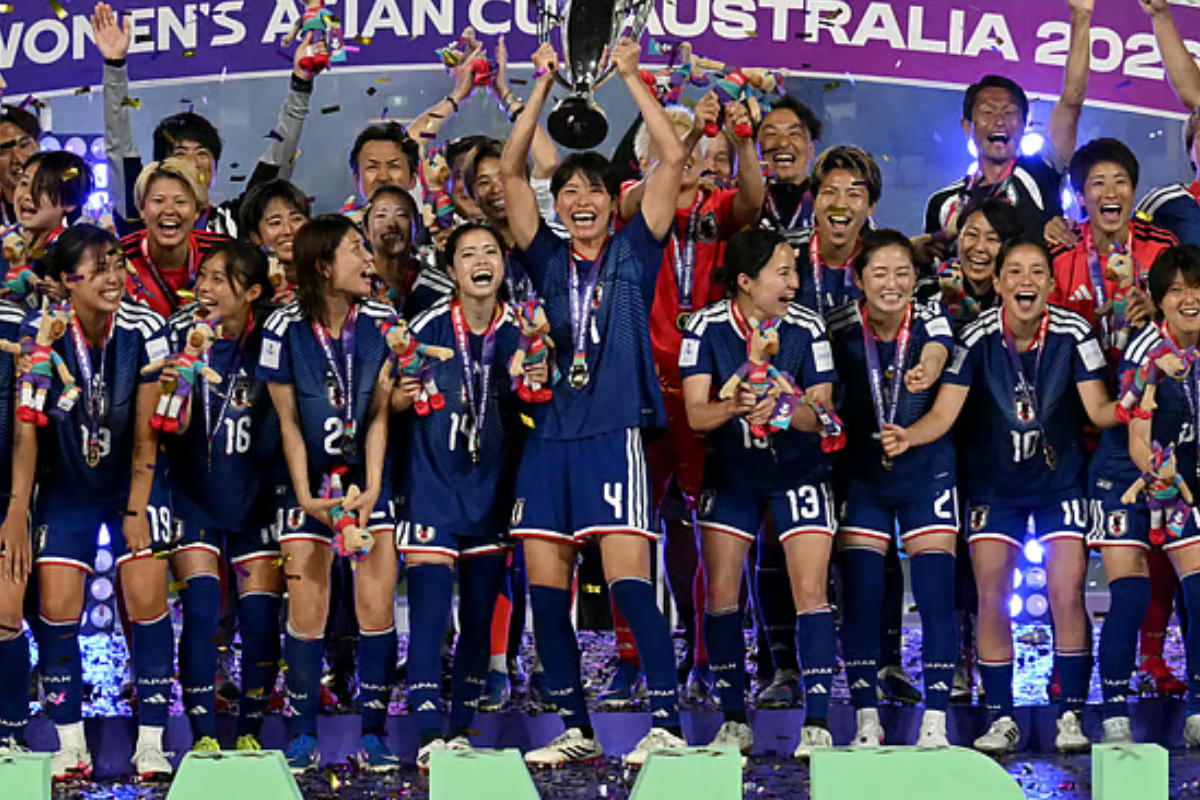
Sydney’s streets seemed to flow towards the stadium as if the entire city had converged for one momentous occasion. The historic venue of the 2000 Sydney Olympics came alive once again, hosting the eagerly awaited final of the 21st Women’s Asian Cup. Amid the sea of gold from the home supporters, it was Japan who emerged victorious, silencing the Australian roar with a decisive 1–0 triumph.
The Stadium Australia, with an 80,000 capacity, was packed to the brim. From early afternoon, fans streamed in from all corners of the city. Even the train ride from residential Minto revealed the excitement; by the time the carriage reached Glenfield station and passengers switched lines, it was clear that this day was extraordinary. Among the crowd, an Australian couple with two young children beamed with anticipation, reflecting the day’s unique atmosphere.
A ten-minute journey from Lidcombe station brought fans to Olympic Park, where the crowd’s energy was palpable. While around 95 per cent of the audience donned Australian yellow, clusters of Japanese supporters in blue were also noticeable, adding a striking contrast. From the press box, the sheer scale of the sea of fans was overwhelming, with deafening cheers and a pre-match cultural display that set the tone for an unforgettable evening.
Historical Context and Team Overview:
| Team | Key Achievements | Strengths | Star Players |
|---|---|---|---|
| Japan | 2011 World Cup Champions; 2014 & 2018 Asian Cup winners; 2015 World Cup runners-up | Precise passing, tactical discipline, balanced attack and defence | Mika Hamano, Yuui Hasegawa, Ayaka Yamashita |
| Australia | 2023 World Cup semi-finalists; 2010 Asian Cup winners | Physicality, pace, aggressive pressing | Sam Kerr, Alanna Kennedy, Caitlin Foord |
Japan, with a record of World Cup glory in 2011 and two previous Asian Cup victories (2014, 2018), faced a formidable Australian side, semi-finalists of the 2023 World Cup and 2010 Asian Cup champions. Though history favoured Japan, the contest on the pitch was tightly matched, with Japan’s intricate passing game pitted against Australia’s strength and speed.
Australia’s women’s team, known as the Matildas, were invigorated by the stadium’s relentless support. Captain Sam Kerr, 32, and a key player for Chelsea FC, orchestrated attacks from the front, while veteran defender Alanna Kennedy, with 145 international caps, anchored the backline. The opening exchanges saw relentless end-to-end play from both sides.
The breakthrough came in the 17th minute when Japan’s forward Mika Hamano, currently at Tottenham Hotspur, unleashed a long-range strike from outside the box, beating the Australian goalkeeper with remarkable precision. The stadium erupted in jubilant celebration as the blue-clad Japanese players exulted. This solitary goal ultimately determined the match, securing Japan’s third Women’s Asian Cup title. Historically, Australia had also lost to Japan 1–0 in the 2014 and 2018 finals, making this a repeat outcome despite the home advantage and the hopes of revenge.
In the second half, Australia’s determined attacks were thwarted repeatedly. Japan’s goalkeeper Ayaka Yamashita and her resolute defence maintained their clean sheet, ensuring Japan returned home with the trophy. Despite opportunities for Caitlin Foord and other Matildas, key chances were missed, reinforcing the fine margins at this elite level.
Japan’s performance across the tournament was formidable: a 11–0 victory over India in the group stage, a 17-goal haul across three matches, and a 4–1 semi-final win against South Korea. Australia reached the final after defeating North Korea 2–1 and reigning champions China by the same margin in the semi-final.
Under Danish coach Nils Nielsen, Japan became the first team to be led to the Women’s Asian Cup title by a foreign manager. With tactical discipline, midfield control by Yuui Hasegawa, and the attacking prowess of Hamano, Japan remained unbeaten throughout, exemplifying technical mastery and strategic execution.
When South Korean referee Kim Yu-r blew the final whistle, Australian players collapsed on the pitch in disappointment, while Japan’s squad celebrated their triumph. Although the victory went to Japan, the atmosphere in Olympic Park reaffirmed that football’s true victor is its spirit. For Bangladeshi expatriates in Sydney, the festive occasion coincided with Eid celebrations, offering a memorable experience even as their national team exited the tournament at the group stage.




Comments