Sunday, 5th April 2026

Khabor Wala Desk
Published: 9th August 2025, 4:03 PM
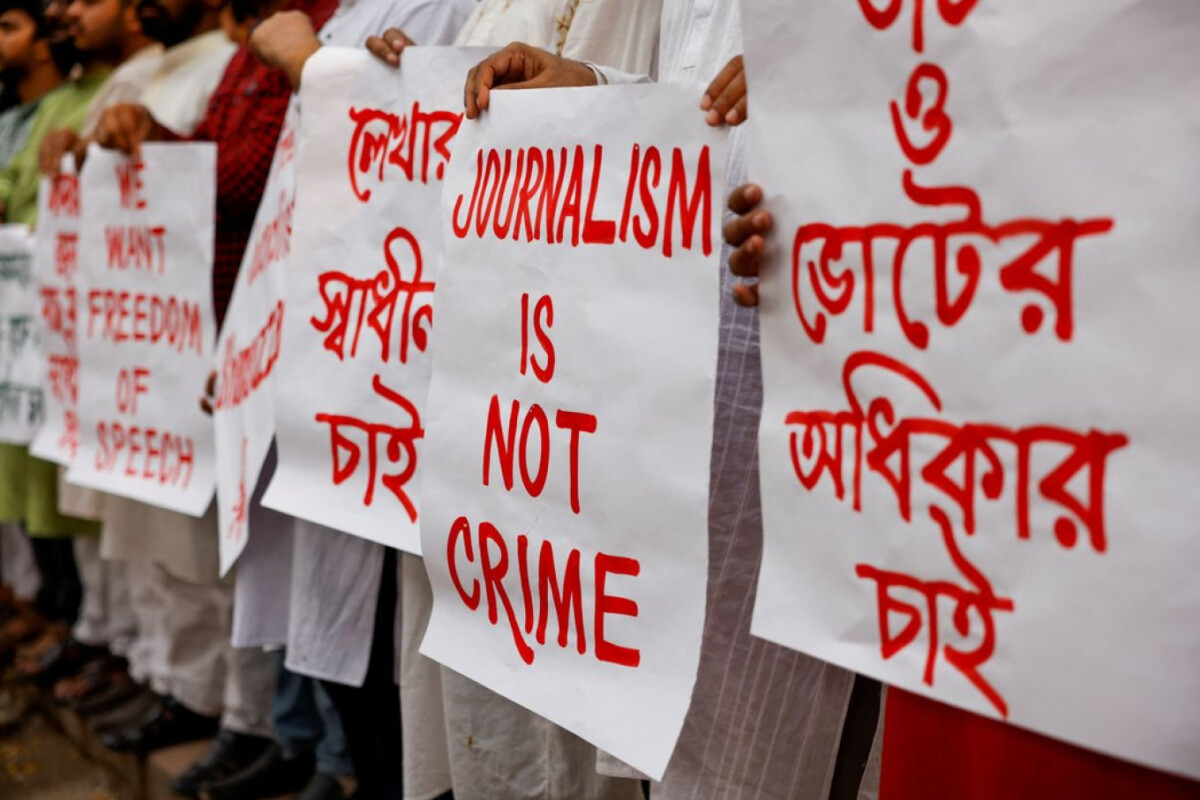
Journalists across Bangladesh are facing severe threats as they attempt to expose extortion, criminal activities, and corruption involving influential individuals. In their pursuit of truth, they are being obstructed in multiple ways—frequently receiving death threats, and even facing violence after reporting on misconduct by government officials or police personnel. Many are being summoned, assaulted, or, in some cases, even murdered.
Widespread outrage has erupted nationwide following the brutal killing of journalist Asaduzzaman Tuhin, who was hacked and slaughtered in Gazipur on Thursday night. Protest gatherings have taken place in several regions in response to the heinous act. According to Transparency International Bangladesh (TIB), between August 2024 and July of this year, 496 journalists have faced harassment. During this same period, at least three journalists were killed in the line of duty—now increased to four following Tuhin’s murder.
Reports from various organisations reveal a deeply concerning pattern of violence. From January to July this year, 126 journalists were injured in 274 reported attacks. In contrast, from 9 August to December last year, 95 journalists were injured in 165 incidents. Disturbingly, in March of this year, a female journalist in the capital was gang-raped while on duty collecting news.
The Human Rights Support Society (HRSS) has reported that between January and June, 20 journalists were physically assaulted, 34 received direct threats, and 10 were arrested. Additionally, under the Cyber Security Act, at least 16 cases were filed, leading to the arrest of 12 journalists and accusations against 23. HRSS also revealed that in July alone, 17 attacks resulted in the abuse of 27 journalists, with 15 injured and 5 subjected to threats and humiliation.
Human rights group Odhikar has documented 165 incidents of attacks and harassment targeting journalists between 9 August last year and June of this year. Similarly, legal rights organisation Ain o Salish Kendra (ASK) has recorded 196 cases of violence, repression, lawsuits, and attacks on journalists from January to June this year.
According to police and family sources, journalists killed in the past year include Tanzil Jahan Tamim of Deepto TV, Swapan Kumar Bhadra of Tarakanda Press Club, and journalist Rahnuma Sarah. Beyond these murders, journalists have also faced threats, abductions, bomb attacks, and torture from political figures, municipal mayors, union council chairmen, students, ward councillors, and even some members of law enforcement agencies.
In a recent example, journalist Likhan Raj from Rupganj was summoned for questioning by the Narayanganj PBI (Police Bureau of Investigation) after publishing a report on bribery. Police have claimed that the summons was part of a routine information verification process.
Ijazul Islam, Executive Director of the Human Rights Support Society, stated,
“The murder of journalist Tuhin is a direct assault on media freedom, freedom of expression, and the safety of journalists.”
The Newspaper Owners’ Association of Bangladesh (NOAB) also expressed serious concern, declaring:
“Without ensuring the freedom of the press, the very foundation of democracy will be weakened.”


Comments