Thursday, 9th April 2026

Khabor Wala Desk
Published: 9th April 2026, 9:52 AM
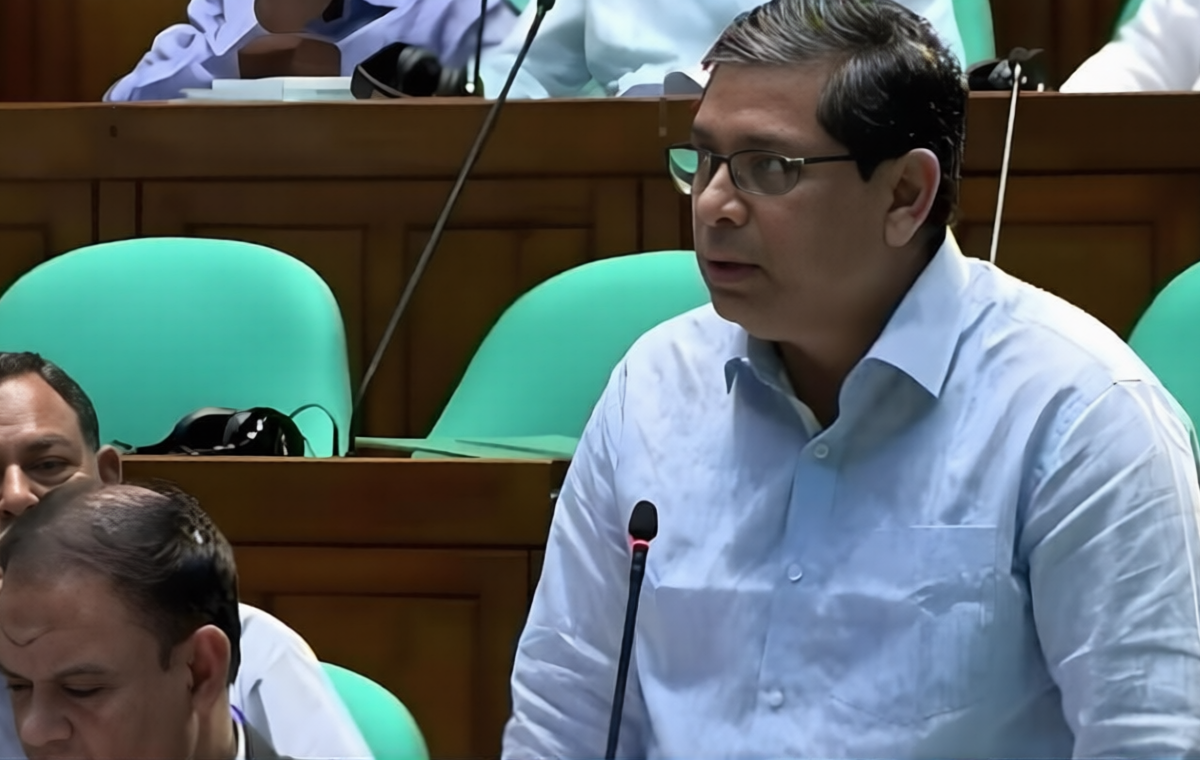
In a heated parliamentary exchange during the debate on the motion of thanks to the President’s address, Local Government State Minister Mir Shah-e-Alam made a series of controversial remarks concerning the political history of Bangladesh and the role of successive administrations.
The minister alleged that former Prime Minister Khaleda Zia had, at one point, facilitated the placement of national flags on the vehicles of leaders of the Jamaat-e-Islami, a move he claimed effectively conferred legitimacy and honour upon them. According to him, this act symbolised political “rehabilitation” and was intended to grant them social and political acceptance.
Speaking in the House on the tenth day of the first session of the 13th National Parliament on Tuesday (7 April), he argued that such actions had not been adequately acknowledged by those concerned. He further asserted that certain political narratives were being selectively presented, particularly in relation to the country’s liberation history and subsequent democratic movements.
The minister also referred to the symbolic significance of the Speaker’s position in Parliament, describing it as representative of the spirit of the 1971 Liberation War. He emphasised that the legacy of independence, in his view, was closely associated with the political tradition of the Bangladesh Nationalist Party, linking it to the role of the late President Ziaur Rahman.
He went on to highlight the presence of several Members of Parliament who, according to him, had participated in both the 1971 Liberation War and the 1990 anti-autocracy movement. He named a number of opposition and ruling party lawmakers, describing them as veteran political figures who had contributed to key historical struggles in the country’s political evolution.
In a broader political comparison, he argued that different political parties represented varying historical narratives. He claimed that the Bangladesh Nationalist Party embodied the legacy of three major political milestones—1971, 1990, and the recent July–August movement—while suggesting that other parties did not hold the same combined historical representation.
| Issue Raised | Minister’s Claim | Political Context |
|---|---|---|
| National flag on vehicles | Allegedly provided to Jamaat leaders during BNP tenure | Described as political rehabilitation |
| Liberation War legacy | Linked strongly to BNP leadership | Reference to 1971 independence |
| 1990 movement | BNP leaders credited with frontline participation | Anti-autocracy uprising |
| Comparative political narrative | BNP said to represent three major movements | 1971, 1990, and recent unrest |
The remarks drew attention within the chamber as part of a wider debate reflecting contrasting interpretations of Bangladesh’s political history. The session underscored continuing divisions over how different governments and parties frame the country’s liberation struggle, democratic transitions, and recent political movements.
While the speech primarily focused on historical and symbolic assertions, it also reflected the ongoing rhetorical contest between the ruling and opposition blocs over legitimacy, legacy, and public perception in Bangladesh’s parliamentary politics.

Comments