Sunday, 5th April 2026

Khabor Wala Desk
Published: 3rd December 2025, 11:57 AM
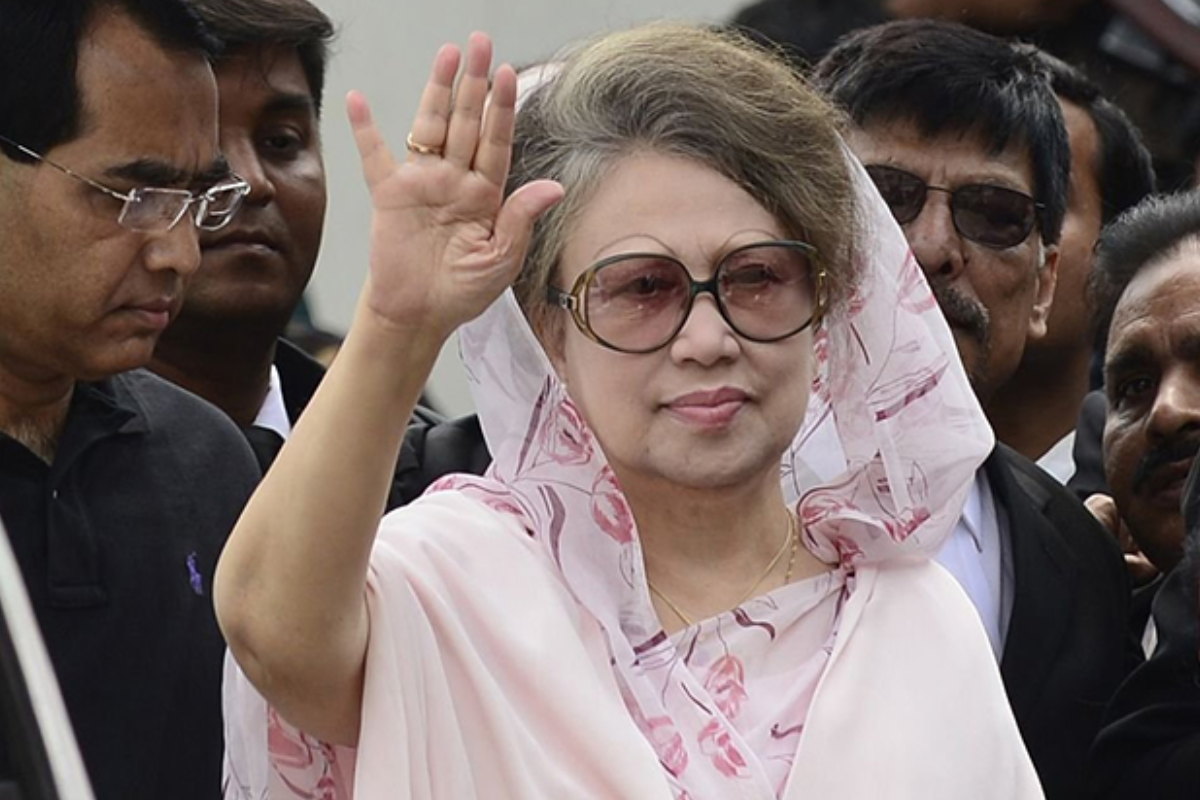
In Bangladesh, very few public figures possess the ability to stir collective sentiment with their mere presence. Khaleda Zia is undoubtedly one of them. The scenes witnessed over the past several days around the former prime minister, who is currently in a critical condition at a hospital in Dhaka, reflect the profound emotion she evokes among the public.
People from almost every stratum of society have gathered along the pavements, courtyards and surrounding streets – some in prayer, others offering silent words of respect for a woman who has remained at the heart of the country’s turbulent political history for decades.
Regardless of political affiliation, the emotion unfolding around her signifies something deeper: for many in Bangladesh, Khaleda Zia still embodies a living symbol of democratic aspiration. Their affection is anchored in memory.
Many forget that before becoming one of South Asia’s most influential political figures, she lived an ordinary life. The assassination of her husband, President Ziaur Rahman, thrust her onto a political path for which she was wholly unprepared. Yet, in the years that followed, she assumed the leadership of the Bangladesh Nationalist Party (BNP). She endured arrest, surveillance and intimidation, and rose unexpectedly as a symbol of democratic resistance against Hussain Muhammad Ershad’s military rule.
She led movements, faced repeated detentions and spent long periods in isolation. Still, she refused to yield to authoritarianism. Her role in the mass uprising that toppled the military regime in 1990 was pivotal. Her election as prime minister in 1991 marked the restoration of parliamentary democracy after years of military influence.
Her administration prioritised everyday realities: food-for-education initiatives, rural development programmes, employment schemes and structural reforms. These gradually steered Bangladesh towards a more open economy.
Critics have described her as cautious, while admirers have seen her as steady-handed. Either way, she carved a path for leadership within a deeply patriarchal society. In the political history of South Asia, her place remains unique. She was among the first democratically elected female leaders in the Muslim world. Her leadership style lacked personal cult-building; she was neither a dynastic heir nor an imposing figure.
If Sheikh Hasina’s approach is often described as power-centralising and politically dominant, Khaleda’s style has always stood apart – quiet, measured and restrained. Many have therefore labelled her the ‘gentle lady’, signifying dignity rather than frailty. Her legacy is both political memory and emotional heritage. For those who recall the democratic transitions of the 1980s and 1990s, her leadership resurfaces vividly – a time when Bangladesh could breathe a little more freely, when democracy felt tangible rather than aspirational. Many remember her governance as more open, pluralistic and tolerant, despite its imperfections.
This is why the crowds at her hospital bedside reflect more than concern for an ailing political leader – they express a yearning for a less vengeful, less repressive and less intolerant political culture.
Public reaction to her illness stands as a quiet acknowledgement – a remembrance of her contributions and a longing for a more courteous political era. Even those who never voted for her speak with respect, while former rivals now offer prayers for her recovery. Political rivalry often obscures such sentiments, but moments like this reveal that some leaders become custodians of collective national memory, even for their opponents.
Most striking is the absence of toxicity in these expressions of support. Bangladesh has endured deep political polarisation for years, split into two camps by the Hasina–Khaleda rivalry. Yet her illness has momentarily softened these harsh divides. It is a reminder that long before court cases or political humiliation, she was a woman who endured personal loss, political storms and public criticism with quiet resilience.
Her humanity has shaped her political imprint. She was never an iron-fisted ruler nor a fiery orator. She did not turn politics into theatre. She led with a calm, maternal composure that resonated with ordinary citizens.
The people waiting outside the hospital do not speak of ideology; they speak of dignity and decency. They see in her someone who upheld humanity within an often dehumanising political landscape.
Whether she survives this crisis or not, her influence will not fade. Bangladesh will remember her not only as a political strategist but as a custodian of civic aspiration – a leader whose approach was wrapped in humility.
For many, her presence symbolises a different model of leadership – less vindictive, less calculating. That is why even in frailty, she remains revered in people’s hearts.
Perhaps this is the ultimate measure of a political life – not the positions held or years spent in power, but the depth of emotion one leaves in the nation’s collective memory.
(The writer is the Press Minister at the Bangladesh High Commission in New Delhi. This article is a translation of his piece published in Asia Times.)
Khaborwala/SS




Comments