Sunday, 5th April 2026

Khabor Wala Desk
Published: 2nd March 2026, 12:47 AM
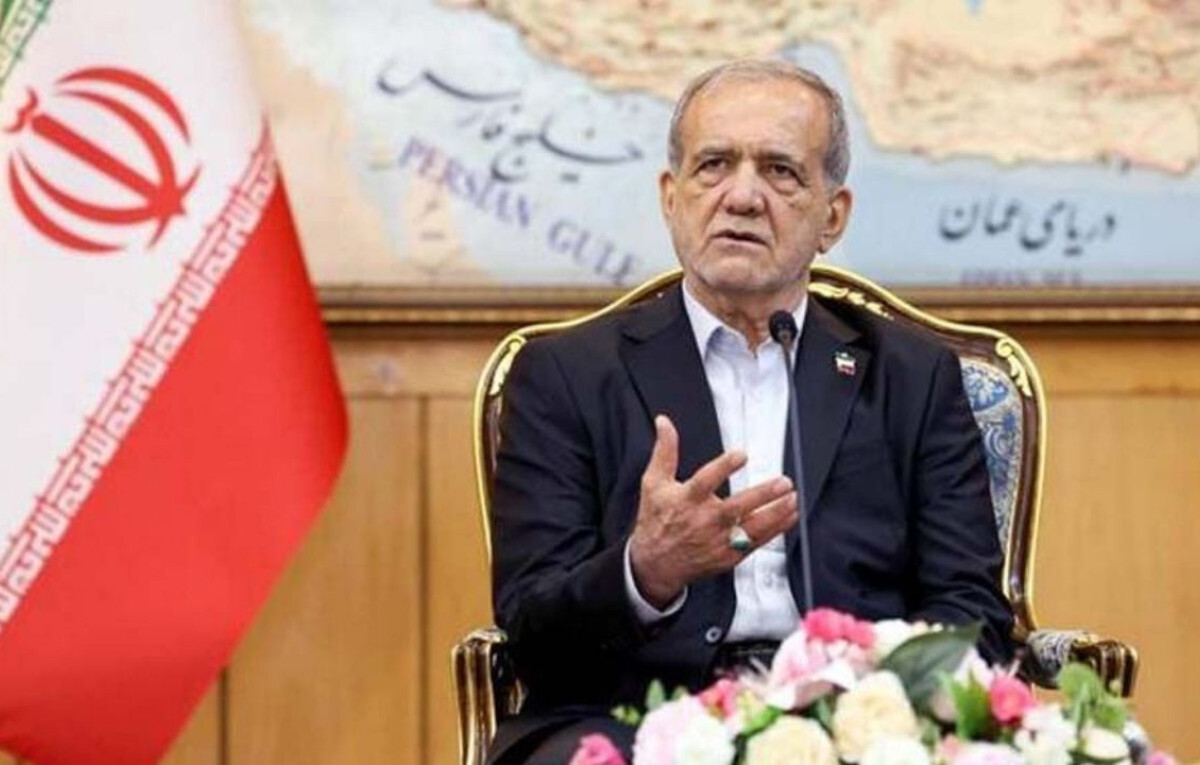
The Middle East has reached a perilous crossroads following the confirmed assassination of Iran’s Supreme Leader, Ayatollah Ali Khamenei, in a coordinated strike by United States and Israeli forces. In a televised address that has reverberated across the globe, Iranian President Masoud Pezeshkian characterised the act not merely as a political assassination, but as a formal “declaration of war against the entire Muslim world.”
Speaking on Sunday, 1 March, President Pezeshkian delivered a somber yet incendiary message via state media. He asserted that by targeting the highest political and spiritual authority of the Islamic Republic—a figure revered by millions of Shia Muslims worldwide—Washington and Tel Aviv have crossed an irrevocable line.
“This heinous crime against the vanguard of the Islamic Revolution is an open provocation against Muslims in every corner of the globe,” Pezeshkian stated. “It is a direct assault on the dignity of the Ummah and specifically a declaration of hostilities against the Shia faith.”
The President’s rhetoric seeks to frame the conflict beyond the borders of Iran, potentially mobilising a transnational religious response that could destabilise Western interests from North Africa to Southeast Asia.
The Iranian executive leadership has made it clear that a military response is not merely a policy choice but a “sacred obligation.” Pezeshkian emphasised that the Islamic Republic views retaliation as both a legal right under international frameworks of self-defence and a moral duty to its citizens.
Table: Strategic Context of the Assassination and Response
| Key Factor | Iranian Official Stance | Implications |
|---|---|---|
| Status of Deceased | Supreme Leader & Marja (Spiritual Guide) | Massive civil unrest; vacuum in the Assembly of Experts. |
| Legal Justification | “Legitimate Defence” against state terrorism. | Potential for full-scale kinetic strikes on US/Israeli assets. |
| Target Audience | Global Muslim Ummah (Community) | Increased risk of asymmetric attacks globally. |
| Aggressors Identified | USA and Israel (Joint Command) | Total breakdown of diplomatic channels or nuclear deal prospects. |
The implications of Pezeshkian’s “War on Islam” narrative are profound. Intelligence analysts suggest this terminology is designed to trigger the “Axis of Resistance”—comprising Hezbollah in Lebanon, the Houthis in Yemen, and various militias in Iraq and Syria—into a unified offensive.
By framing the death of Khamenei as an attack on the faith itself, Tehran is effectively dismantling the “red lines” that previously governed regional skirmishes. The international community now faces a scenario where the conflict may no longer be contained within the borders of Iran or Israel, but could evolve into a protracted ideological and military struggle involving multiple state and non-state actors.
The Iranian President concluded his address by assuring the nation that the “planners and perpetrators of this historic crime” would face a reckoning that would redefine the geopolitical order of the Middle East.

Comments