Sunday, 5th April 2026

Khabor Wala Desk
Published: 26th December 2025, 11:17 PM
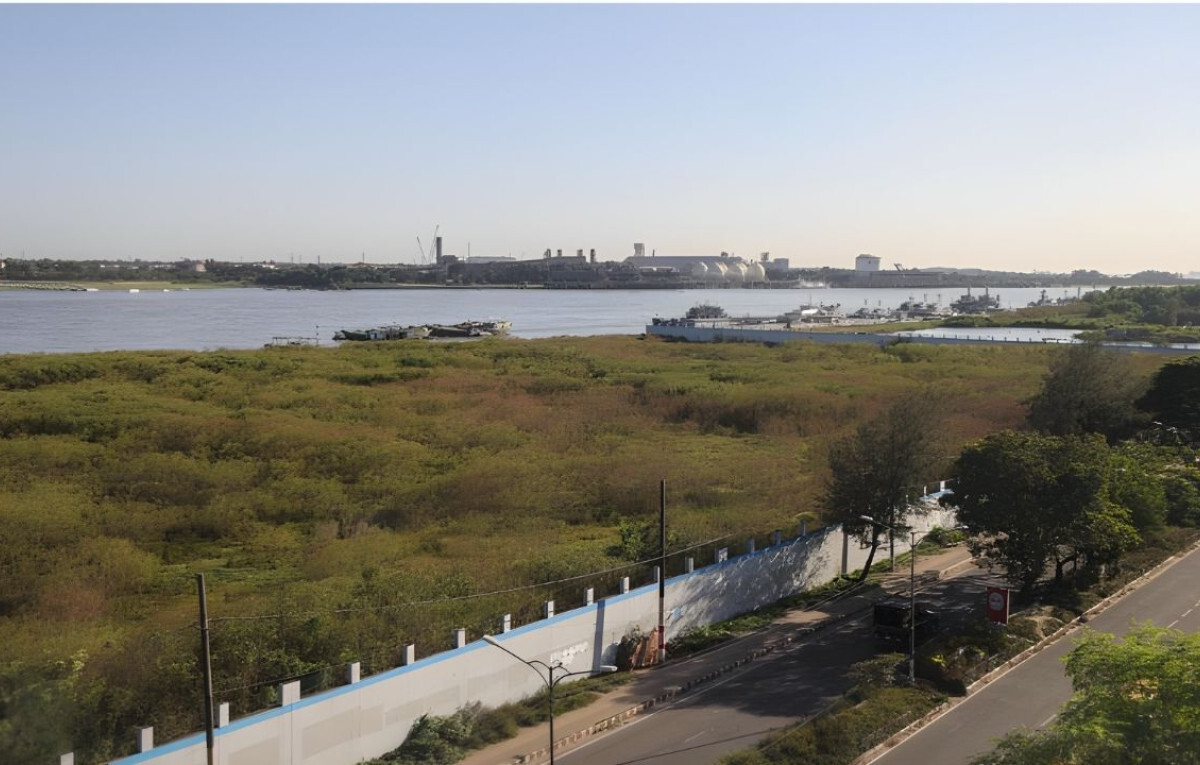
The “drumsticks remain inside the drum,” as the old Bengali adage goes, suggesting that despite superficial changes, the core mechanics of power often remain concealed from public view. Following the July mass uprising, the overarching expectation for Bangladesh’s new administration was that transparency and accountability would serve as the bedrock of every executive decision. However, the recent haste surrounding the 30-year agreement with Denmark’s APM Terminals for the construction, financing, and management of the Laldia Container Terminal in Chattogram suggests that old habits die hard. The timeline of the agreement and the scarcity of publicly available details bear a haunting resemblance to the controversial 25-year power purchase agreement signed by the fallen Awami League regime with India’s Adani Group. While the modernisation of the Chattogram Port is undeniably vital for national development, the opaque manner in which this contract was finalised has cast a long shadow over the project.
The project originated in 2023 following an unsolicited proposal from the Maersk Group, the parent company of APM Terminals—a proposal personally approved by the then-Prime Minister Sheikh Hasina. By early 2024, the Public-Private Partnership (PPP) Authority had appointed the International Finance Corporation (IFC) as a transaction advisor through a direct procurement method, bypassing the gold standard of open competitive bidding. When the interim government, led by Nobel Laureate Professor Muhammad Yunus, took the mantle of power, it initially promised to review or scrap non-competitive deals from the previous era. Contracts involving renewable energy, Summit Group’s LNG terminal, and Chinese crude oil facilities were indeed cancelled to ensure better value for the taxpayer. However, for reasons that remain unexplained, the Laldia Terminal deal was not only spared but significantly accelerated.
| Feature | Best Practice (Swiss Challenge/Open Tender) | Laldia Terminal Deal (Current) |
|---|---|---|
| Procurement Style | Competitive bidding or alternative counter-proposals. | Direct procurement (unsolicited proposal). |
| Duration | Market-benchmarked lease terms. | 33 years (extendable by 15 years). |
| Political Consensus | Broad involvement of major political stakeholders. | Major parties (BNP/Jamaat) kept in the dark. |
| Approval Timeline | Several months of rigorous multi-agency vetting. | Compressed into approximately 14 days. |
| Public Disclosure | Active publication of contract summaries. | Non-disclosure citing “confidentiality clauses.” |
The velocity at which the Chittagong Port Authority (CPA) processed this multi-billion dollar agreement is staggering and, frankly, unbelievable in the context of the Bangladeshi bureaucracy. APM Terminals submitted their technical and financial proposals on 4 November. Within just 48 hours, evaluations were complete, and negotiations began. Despite a weekend intervening, the CPA Board approved the proposal by 9 November. By 12 November, the Cabinet Committee on Economic Affairs (CCEA) gave its nod, and the Chief Adviser provided final approval on 16 November. In a move that mirrors the strategic timing of the past, the formal contract was signed on 17 November—the very day the nation’s attention was transfixed by the International Crimes Tribunal’s landmark rulings against the fugitive Sheikh Hasina. This tactical scheduling has raised eyebrows, suggesting a deliberate attempt to avoid public and media scrutiny.
Furthermore, the government has shielded the terms of the deal using the confidentiality provisions of the PPP Act 2015—a law enacted by the very regime the current administration seeks to differentiate itself from. International norms in Brazil, Chile, and the UK now dictate that PPP contracts, once signed, become public documents. By excluding major political stakeholders like the BNP and Jamaat-e-Islami from the discourse, the interim government risks creating a fragile agreement. Any future elected government, finding themselves bound by a contract they did not vet, may feel inclined to challenge its legitimacy, creating significant sovereign risk for international investors. While the Laldia Terminal might indeed be a high-quality project that serves the national interest, the lack of transparency has stripped it of the public mandate it deserves, leaving the interim government’s commitment to “accountability” looking remarkably like the shadows of the past.



Comments