Sunday, 5th April 2026

Khabor Wala Desk
Published: 25th October 2025, 3:04 AM
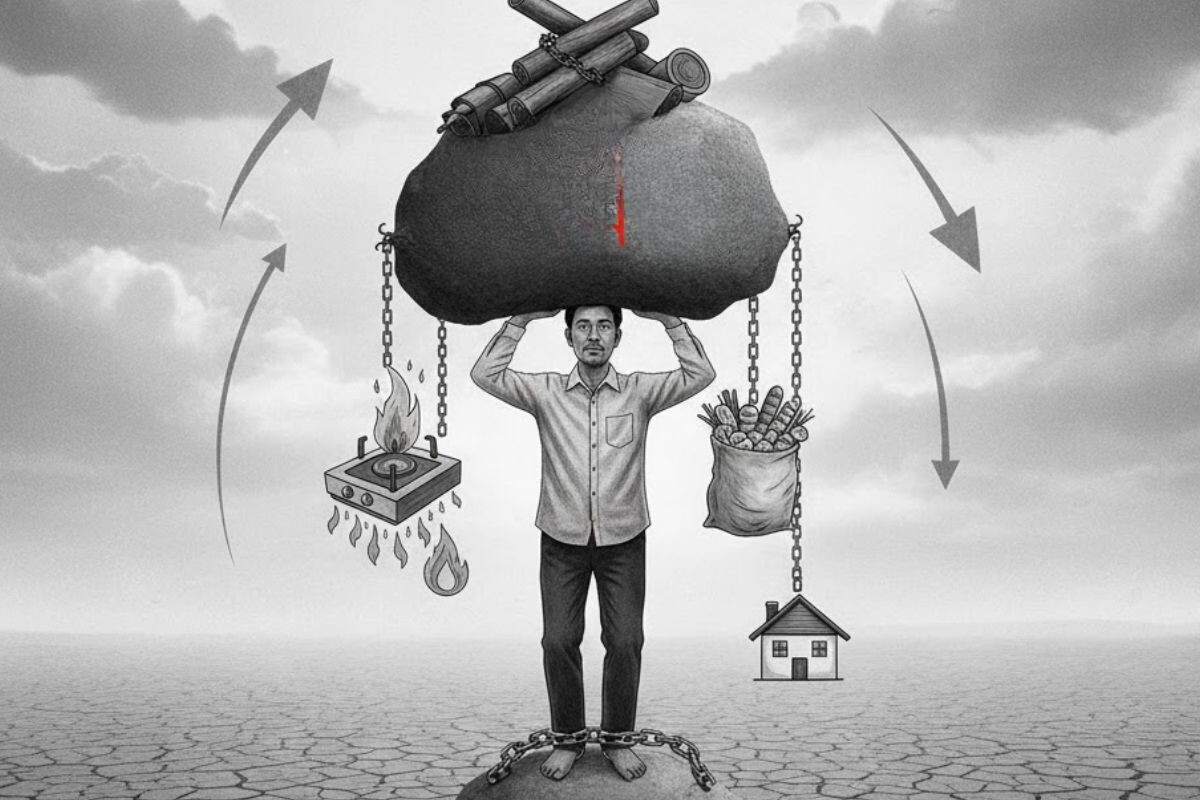
The country’s economy is now under intense, multi-layered pressure. For 44 consecutive months, workers’ wages have failed to keep pace with inflation, resulting in a continuous erosion of purchasing power among low- and middle-income groups. The uncontrolled rise in the cost of food, rent, and transportation has placed unbearable pressure on ordinary households. With incomes declining, many are breaking into their savings to survive, cutting down even on basic expenses.
According to the latest data from the Bangladesh Bureau of Statistics (BBS), in September 2025, the average wage rose by 8.02%, while overall inflation stood at 8.36% — meaning that in real terms, workers’ earnings have fallen. This gap has widened over the past three months: wage growth was 8.19% in July, 8.15% in August, and dropped further to 8.02% in September.
Economists describe this as a form of “silent crisis” in the labor market.
Dr. Zahid Hussain, former lead economist at the World Bank’s Dhaka office, told “Workers are being hit from both sides — prices are rising, while wage growth is slowing. It’s like being struck on both the head and the feet.”
He noted that in September, wage growth declined in all divisions, with the sharpest drop in Khulna (0.18 percentage points lower than August).
According to Dr. Hussain, “Without controlling inflation or improving productivity, there is no quick escape from the real income crisis.”
Dr. Mohammad Lutfor Rahman, professor of economics at Jahangirnagar University, said, “This sluggish wage growth signals deeper economic weaknesses. Investment and hiring have both declined, reducing labor demand. Political uncertainty has only made things worse.”
The runaway rise in prices of daily essentials is putting them beyond people’s reach. According to BBS, overall inflation climbed to 8.36% in September 2025, higher than the previous month. Prices of rice, lentils, edible oil, vegetables, medicines, and house rent have all increased steadily.
Meanwhile, as wages have not risen proportionately, real incomes have fallen — pushing lower- and middle-income families to the brink. Many now rely on loans or credit to get through the month, while cutting back on essentials such as food, healthcare, and education.
Economists warn that prolonged high inflation is reducing consumer spending, which may lead to a contraction in overall economic demand. They stress the need for stronger supply-chain management and effective market regulation to stabilize prices.
The UN Food and Agriculture Organization (FAO) reports that the number of people facing acute food insecurity in Bangladesh rose to 23.6 million by December 2024 — an increase of 7 million in just one year.
Costs of food, rent, transport, medicine, and education have all been climbing for the past three years.
A retired government official said, “What used to cost one amount a month now takes nearly 50% more. My pension hasn’t increased, but prices rise every day.”
Under this economic pressure, Bangladesh’s growth has fallen to its lowest level in five years. According to BBS, GDP growth in the last fiscal year was 3.69%. The IMF, in its latest World Economic Outlook, cut its growth forecast for Bangladesh for FY2025–26 from 5.4% to 4.9%.
Private investment has stagnated. Data from Bangladesh Bank shows private-sector credit growth at 6.35% in August — the lowest in 22 years. High interest rates, credit shortages, and political uncertainty are discouraging new projects.
Dhaka Chamber of Commerce President Taskin Ahmed said, “High interest rates and uncertainty are deterring entrepreneurs. We hope investment will pick up once a stable post-election environment is restored.”
Foreign direct investment (FDI) is also shrinking. In the second quarter of 2025 (April–June), new FDI dropped by around 62% — down to $81 million, compared to $214 million a year earlier.
However, there’s a silver lining: reinvestment by existing foreign firms quadrupled to $258 million.
Economists interpret this as a sign that “existing firms are trying to survive, but new investments are not coming — a worrying trend for the future.”
Taufiq Ahmed Chowdhury, former DG of the Bangladesh Institute of Bank Management (BIBM), said, “The investment climate is not favorable. Both foreign and domestic investors are on pause. Stability is the key to restoring confidence.”
According to BBS Labor Force Survey, the unemployment rate now stands at 4.63%, meaning about 2.7 million people are jobless. Youth unemployment is the highest — about one in six young people are out of work.
ILO data indicates that stagnant investment and reduced export orders have nearly halted job creation. Economists warn this trend could lead to growing social pressure and frustration.
High inflation and stagnant incomes have sharply reduced household savings. In August 2025, sales of government savings certificates plummeted to just Tk 289 crore, down about 88% from a year earlier.
Experts say, “People simply don’t have spare cash. Many are breaking their savings to cover daily expenses. This is risky for the government, as it increases pressure on the banking system.”
According to Finance Ministry and Bangladesh Bank sources, savings certificate sales have shown negative growth for several months, meaning the government is failing to raise expected funds from the public.
Economists warn that unless purchasing power is restored, consumer confidence will erode further — slowing both investment and economic growth.
According to the Export Promotion Bureau (EPB), Bangladesh’s export earnings fell for two consecutive months — down 3% in August and 4.61% in September.
Exports of garments, home textiles, agricultural goods, and jute products all declined. Analysts cite US trade tariffs, weakened European demand, and rising raw material costs as major causes.
The World Bank’s “Bangladesh Development Update 2025” warns that ongoing economic stagnation could push an additional 3 million people into extreme poverty.
BBS data shows that poverty has risen from 18.7% to 21.2%.
According to PPRC, around 40 million people now live in multidimensional poverty.
Prof. Mustafizur Rahman, Distinguished Fellow at the Center for Policy Dialogue (CPD), said, “Four years of persistent inflation and investment stagnation have broken the path of inclusive growth. Without good governance and targeted assistance, recovery will be very difficult.”
Political uncertainty, high interest rates, energy shortages, import costs, and revenue deficits have combined to put the economy in a “zone of pressure.”
Many factories have cut production, the construction sector has slowed, and credit flows are tightening — leaving the macroeconomy in a fragile state.
Economists warn this is not just an economic problem, but also a social crisis: as purchasing power falls, people cut spending; demand weakens; businesses suffer; and employment contracts further — creating a vicious cycle.
Experts call for coordinated policy measures:
Create conditions for wage growth
Strengthen supply chains to control inflation
Expand food aid and cash subsidies for low-income groups
Ensure political stability to encourage investment
Professor Lutfor Rahman concludes, “Once a stable post-election government is formed, investment and employment will gradually recover, leading to higher wages. Until then, the government must expand OMS and ration programs to provide some relief for workers.”

Comments