Sunday, 5th April 2026

Khabor Wala Desk
Published: 16th May 2025, 11:20 PM

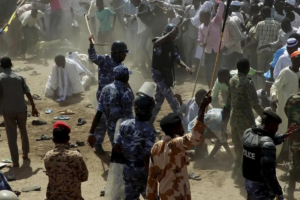
Approximately 90% of Myanmar’s western Rakhine State is now under the control of the Arakan Army (AA). Military forces deployed by the ruling junta have lost numerous strongholds and have effectively withdrawn from the northern and coastal port areas.
This significant shift in geopolitical dynamics is mirrored by developments in neighbouring Bangladesh. On 5 August last year, Prime Minister Sheikh Hasina fled to India amid mass protests. Recently, intense discussions have surfaced around the possibility of establishing a humanitarian corridor through Bangladesh into Rakhine.
Against this backdrop, old speculations have resurfaced with new vigour: Is the United States, alongside its allies, planning to initiate a proxy war in Myanmar? Analysts, however, maintain that there is no concrete evidence or factual basis to support this narrative. In reality, the US and its allies have a minimal presence in Myanmar, in stark contrast to the widespread rumours.
Sources of the Proxy War Speculation
Experts attribute the renewed speculation to a few recent developments:
| Trigger Event | Impact on Speculation |
|---|---|
| Increased intelligence-level contact between India and the Arakan Army | Fuelled concerns about regional coordination against the Myanmar junta |
| Proposal for a humanitarian corridor via Bangladesh | Triggered fears of foreign intervention under a humanitarian guise |
These events have led obscure websites, YouTube channels, and social media platforms to resurface the theory of a proxy war.
Geopolitical Conspiracy Narrative
Certain diplomatic blogs, self-proclaimed security analysts, and pro-nationalist channels are promoting the theory that the United States aims to intervene in Myanmar through Bangladesh in order to disrupt China’s strategic economic corridor. According to these claims:
However, none of these claims are substantiated by credible sources, nor is there any verified evidence of direct US military intervention in Myanmar.
Lowy Institute’s Assessment: “Highly Implausible”
The Lowy Institute, a respected international think tank specialising in global politics, security, economics, and diplomacy, has reviewed the situation. Their observations state unequivocally:
“All current rumours concerning a proxy war in Myanmar are highly speculative and lack credibility.”
These “ghost stories”, according to the report, have thrived largely due to the lack of international scrutiny. While Democratic Voice of Burma (DVB) has debunked some of these theories with factual evidence, mainstream media outlets have mostly ignored them.
The assessment further states:
“No verifiable evidence exists that the United States or any Western nation is engaged in a proxy war in Myanmar. None of the parties named in these claims have acknowledged any such activity.”
Strategic Constraints and Political Impossibility
While US strategic interests in countering China may be apparent, the Lowy Institute argues that a complex military intervention of this nature is nearly impossible to execute in the region. The geopolitical risks and military realities are so convoluted that even a covert operation would be difficult to keep secret for long.
Furthermore:
Expert Insights: A Culture of Misinformation
According to Professor Andrew Selth, an expert on Myanmar at Griffith Asia Institute, Griffith University:
“Myanmar has long suffered from a lack of free-flowing, reliable information. This has made it fertile ground for conspiracy theories and unverified claims.”
He points out that pseudo-news blogs and politically motivated sources, combined with the lack of verified facts and ongoing conflict, are actively competing to shape public narratives. One particular group, he notes, seems intent on amplifying mistrust among global powers and further complicating regional tensions.
US Foreign Policy Limitations
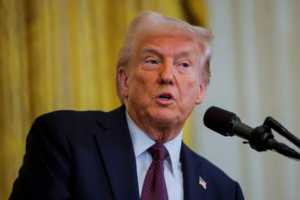
Analysts believe that under the influence of Trump-era policies, particularly the emphasis on avoiding foreign wars, the likelihood of direct US military aid in Myanmar is minimal.
According to the US-based think tank Council on Foreign Relations:
A Fiction, Not a Fact
Despite vivid conspiracy theories, no proof supports the notion of a US-backed proxy war in Myanmar. The situation remains primarily a domestic resistance struggle against an authoritarian regime. External involvement—if any—has so far been limited to humanitarian and diplomatic efforts.
Conclusion: The myth of a proxy war in Myanmar appears to be a product of misinformation, speculation, and political opportunism rather than a reflection of geopolitical reality.


Comments